Build the kit around permitted tasks
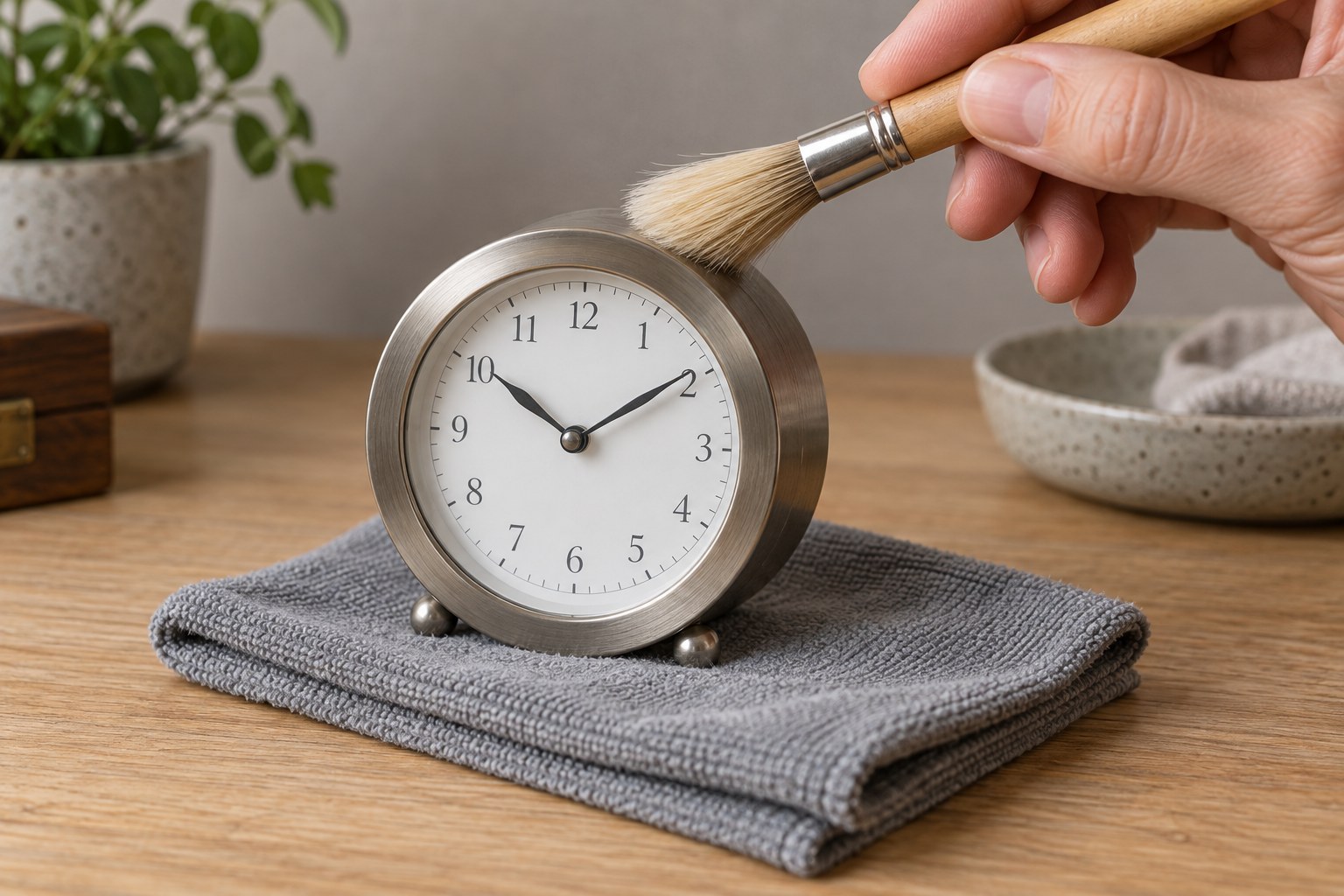
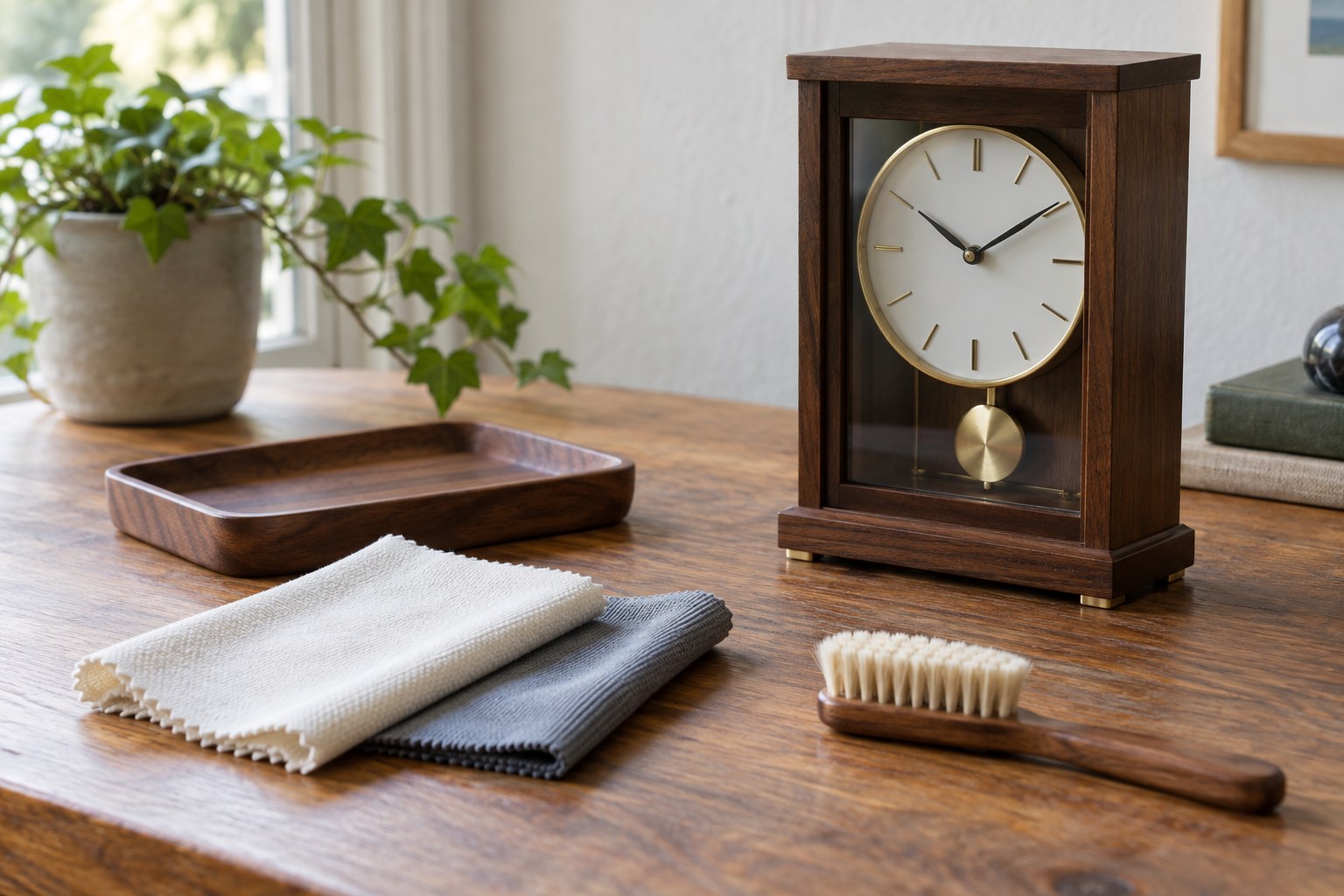
Start with the clock's care instructions, a clean soft cloth and a clear padded resting surface. A soft brush may be useful for a sound outer case if the maker allows it, but it is not a tool for sweeping an exposed dial or movement. Keep a small tray for an owner-removable battery-lid screw and a labelled envelope for paperwork. Include the correct screwdriver only where the manual calls for one. There is no need to fill the kit with movement tools for a clock whose mechanism you will not be servicing.
Keep materials separate and identifiable
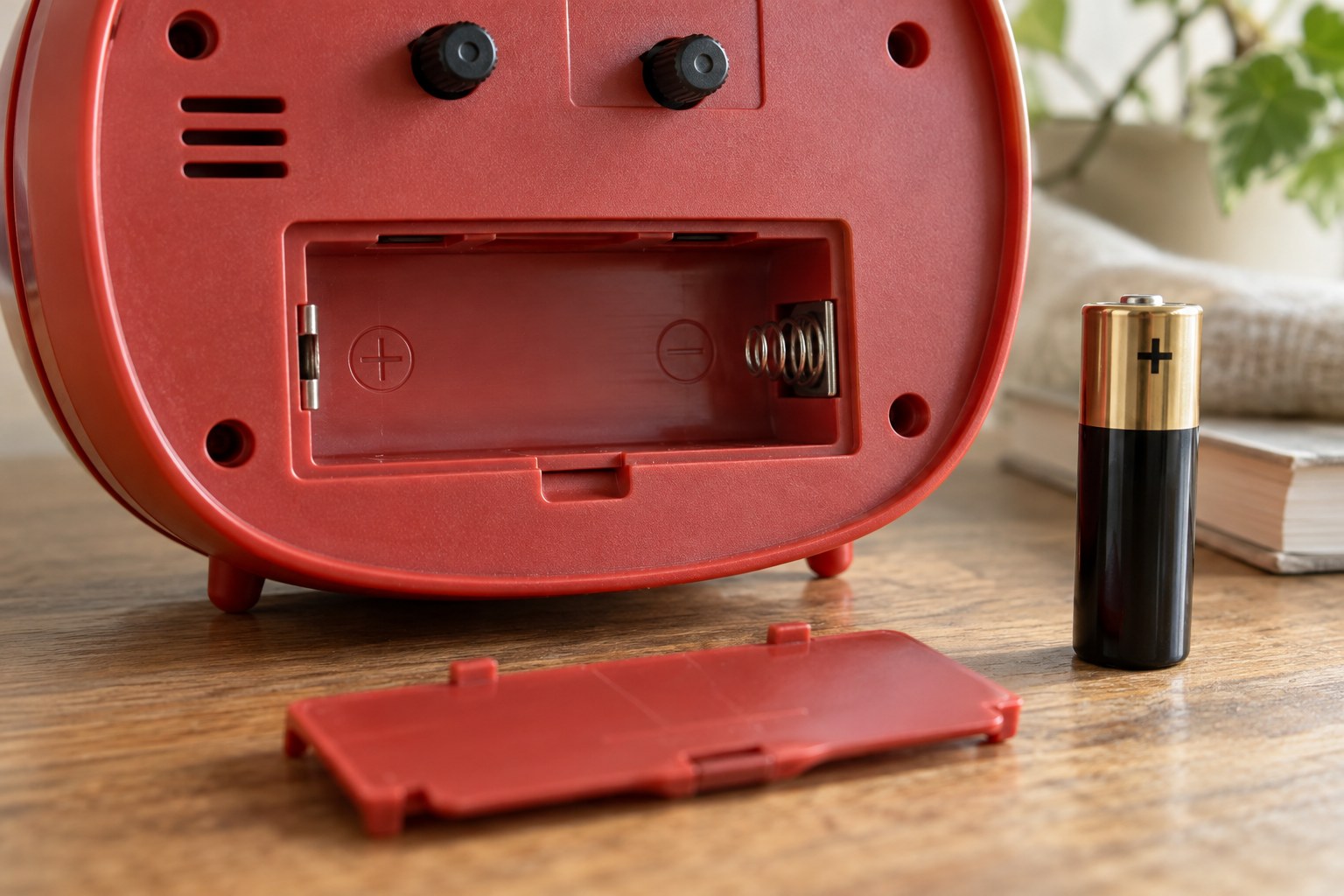
Use cloths and brushes that have not been used with furniture polish, paint or abrasive cleaners. Store them in a clean container so they do not collect grit between jobs. Do not add a general-purpose oil, spray cleaner or solvent on the assumption that it will eventually be useful. For a permitted damp-wipe method, prepare the cloth away from the clock and use only what the manufacturer specifies. Keep fresh batteries in their original protective packaging, separate from metal tools. A tidy kit should prevent accidental contamination and shorting, not merely look organised on a shelf.
Know when the kit stays closed
Cracked covers, flaking finishes, unknown old luminous markings, battery leakage and loose structural parts are reasons to pause. Photograph the condition and seek appropriate advice rather than trying every item in the box. Plan safe access before taking down a wall clock; a cloth is of little use if the clock cannot be handled securely. After a routine exterior job, put the manual and any small parts back together and note anything unusual. The purpose of the kit is to make limited, repeatable care easier while keeping repair work clearly outside that routine.