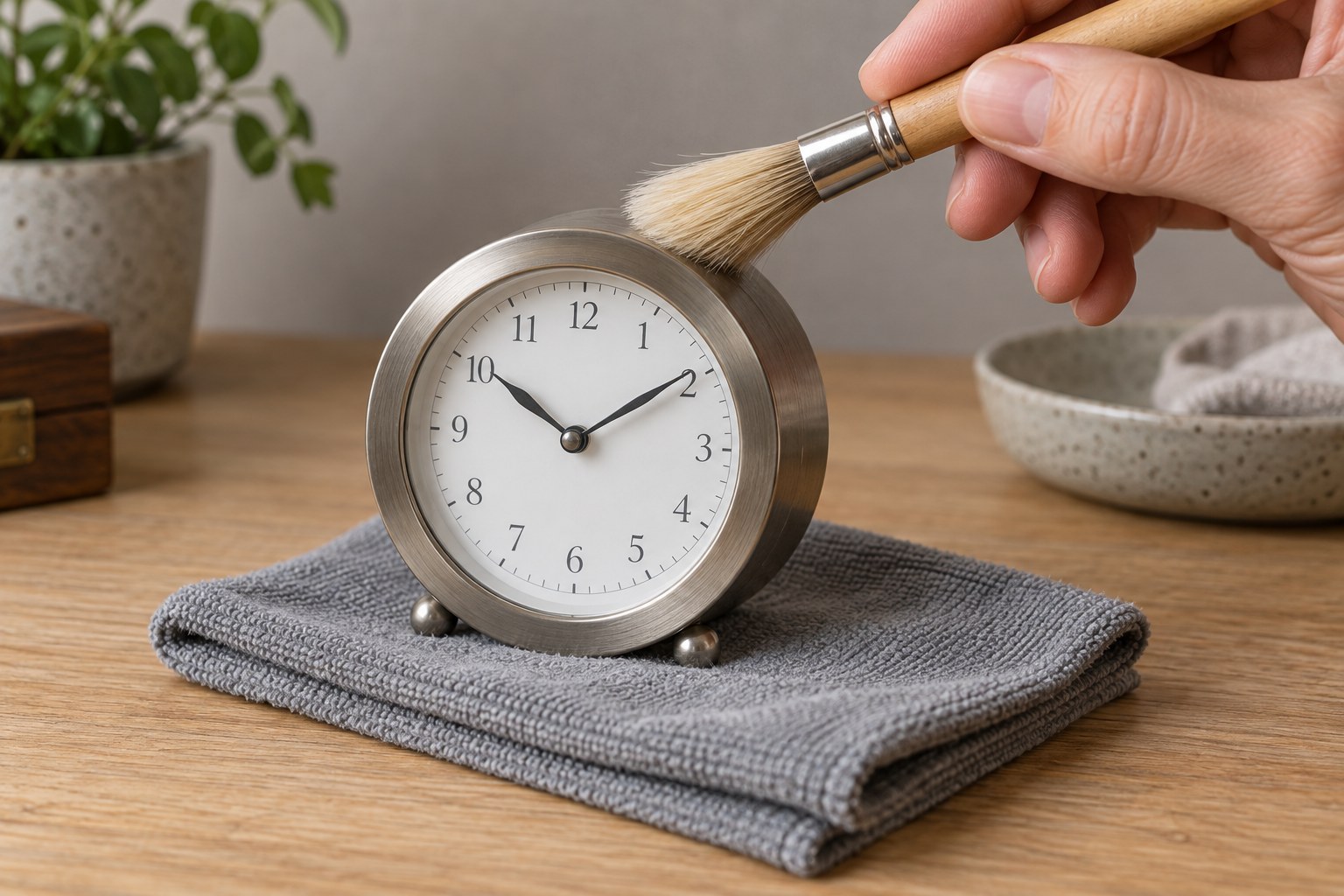
Prepare the clock for its type
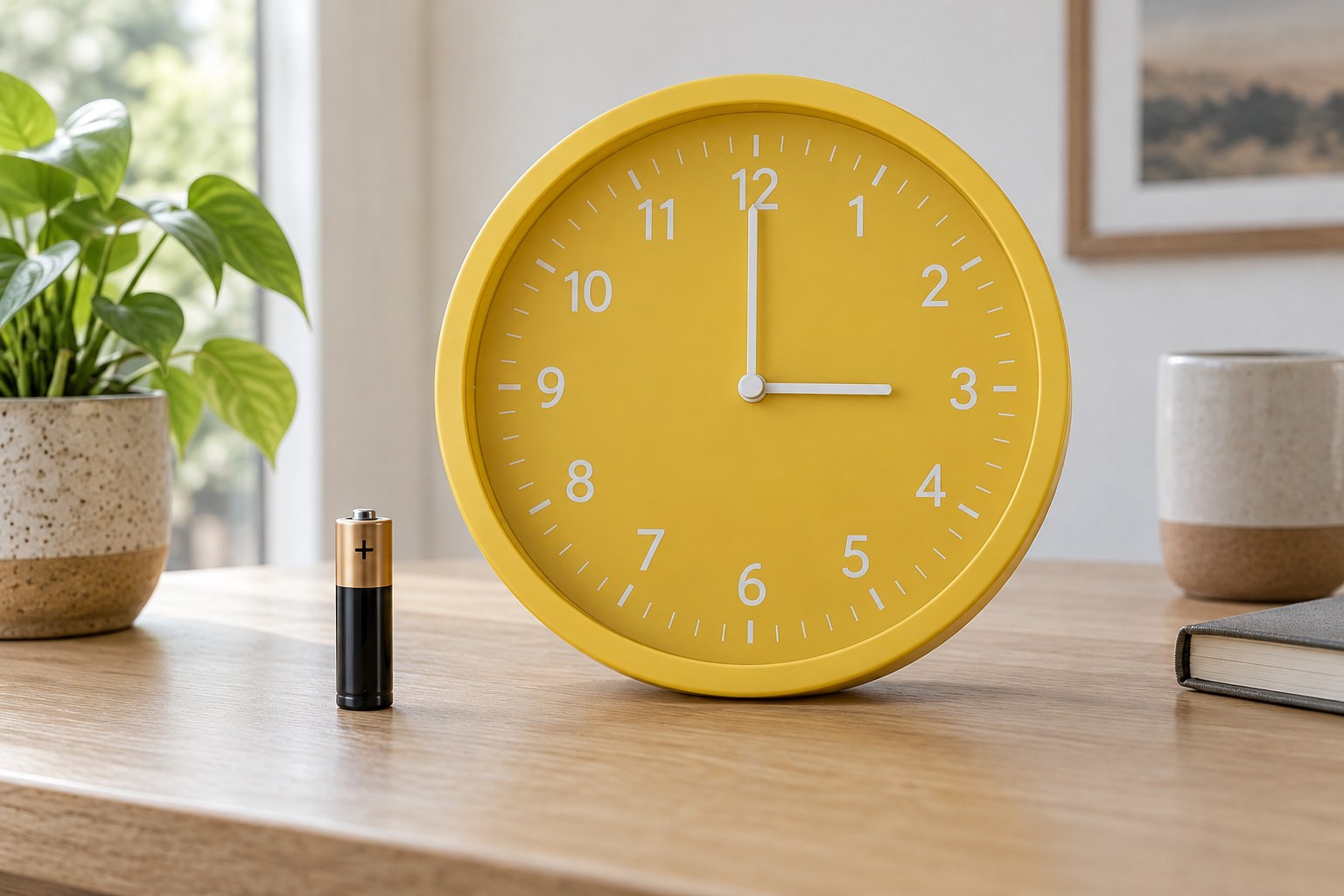
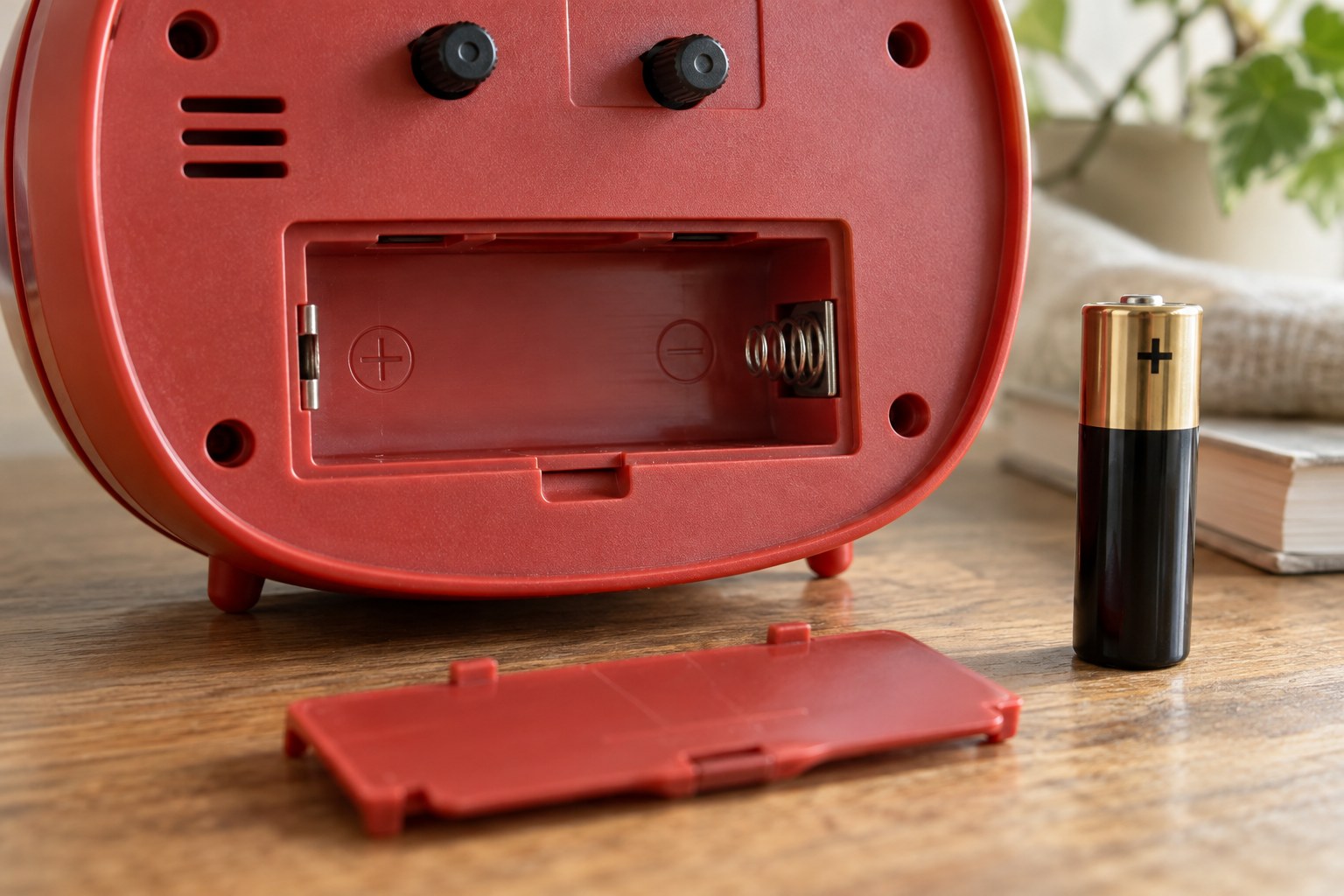
Read the manufacturer's storage advice before packing a modern clock. Remove batteries for a long unused period where directed, and keep them separately in suitable packaging rather than loose inside the case. Photograph the condition and label any owner-removable accessories. Do not apply the same procedure to an antique mechanical clock with weights or springs; ask for specialist preparation and restart advice. If the clock is already damp, damaged or showing battery leakage, deal with that issue before putting it away. A closed box should not conceal an unresolved problem.
Choose a stable place
Use a clean, dry indoor location within the maker's stated conditions. Avoid a loft or shed if temperature and damp fluctuate beyond those limits. Keep the clock away from direct heat, strong sunlight and the risk of items falling onto it. The original sound packaging is helpful, but check that it supports the case without pressing on the hands or controls. For an open-face design, maintain clear space in front of the dial. Do not place heavy boxes on top simply because the outer carton appears sturdy.
Make retrieval straightforward
Label the box with the model and orientation if the packaging requires one. Store the instructions and a note of any removed battery or part where they can be found without unpacking everything. Keep a dated photograph of the packed arrangement if it is complicated. When bringing the clock back into use, inspect its visible condition before adding power or hanging it. Follow the documented setup process rather than assuming it will resume from its old settings. A long-stored mechanical clock may need professional assessment, so do not use a fresh winding as a quick test of whether storage went well.