Prepare before the box appears
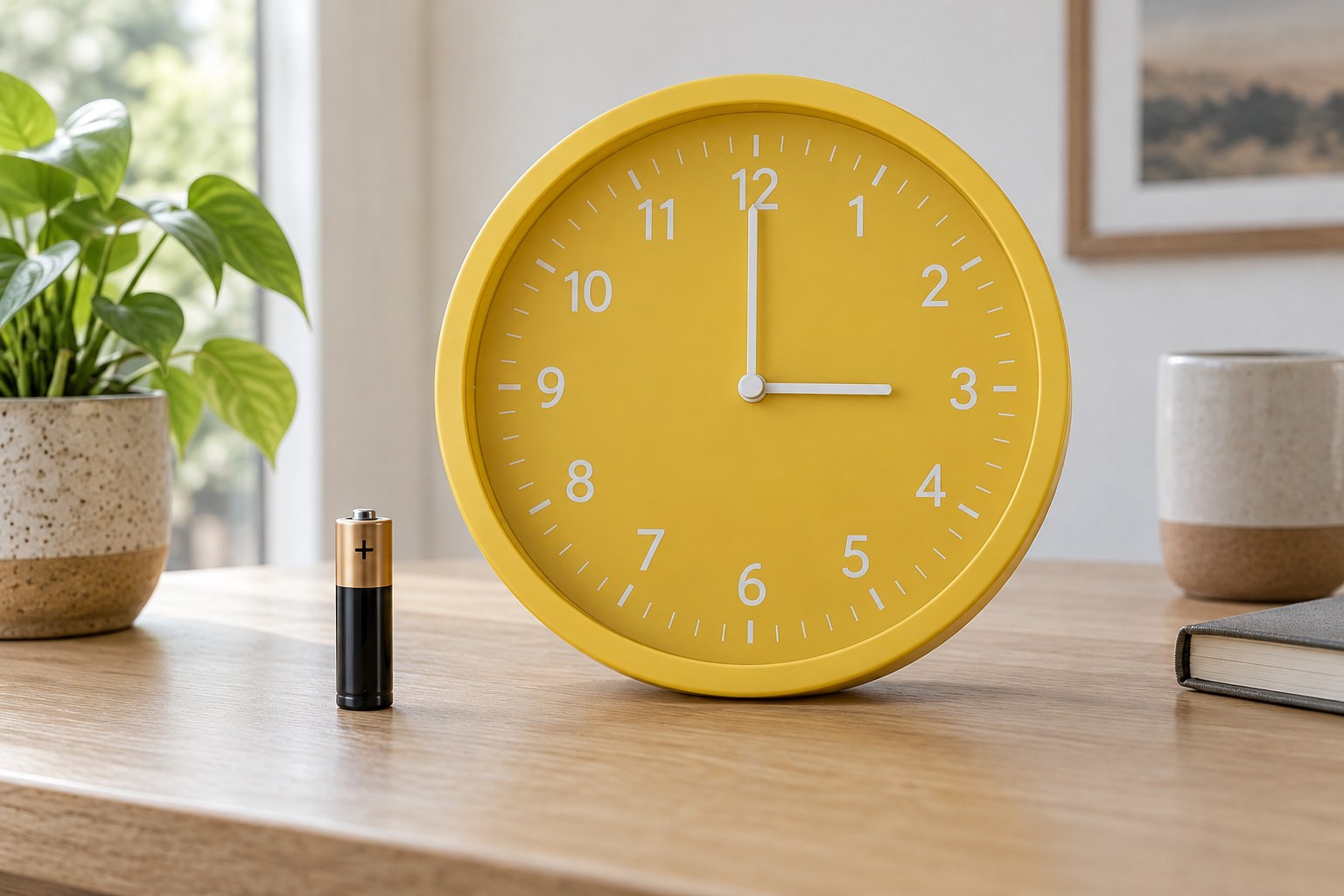
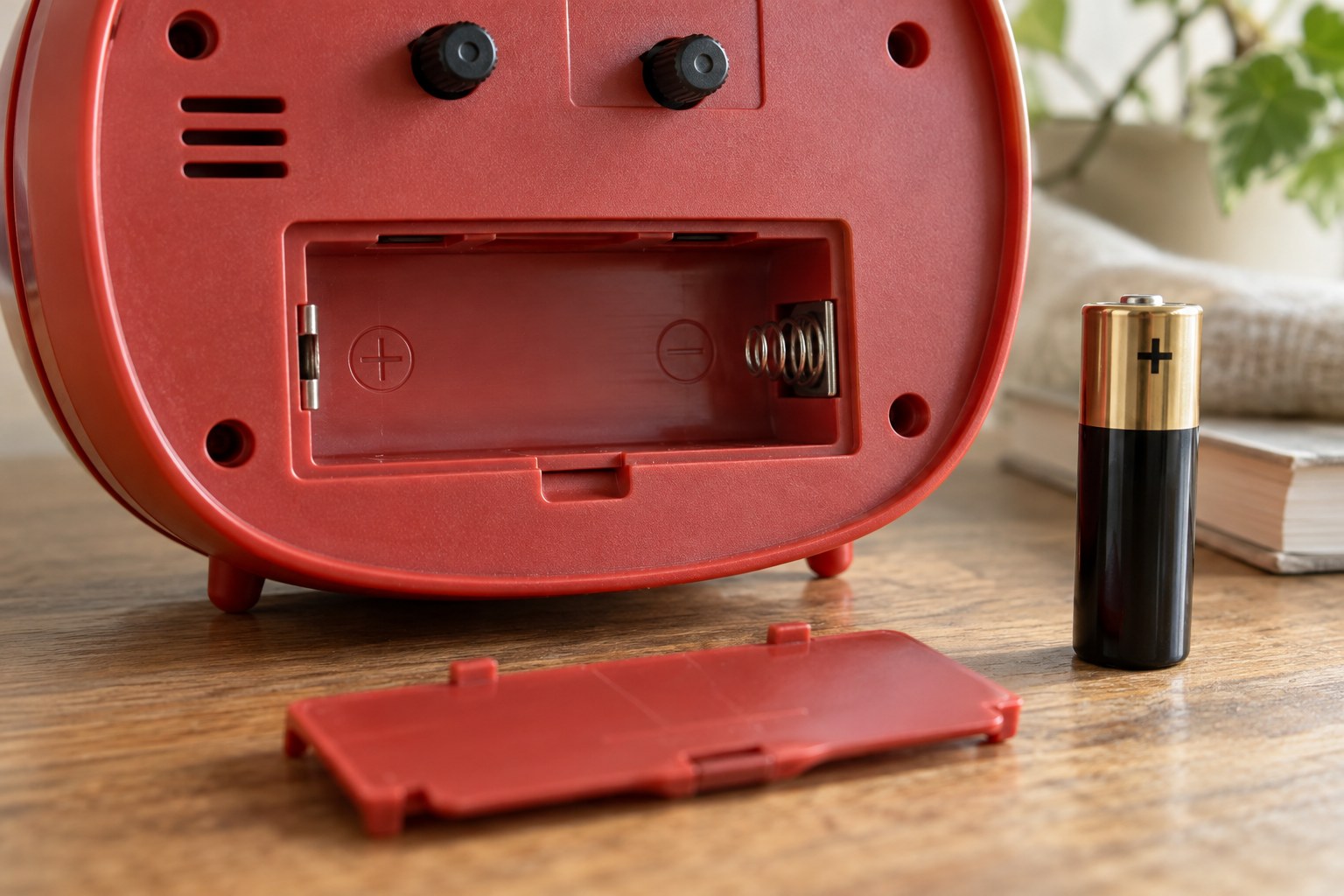
Photograph the clock from the front and back, including its hanging arrangement and any existing marks. Read the transport instructions if available. For a modern battery wall clock, remove the battery when the maker directs and pack it separately in suitable protective packaging. Keep the model details and setting instructions with the household paperwork. Do not apply this simple routine to a weight-driven, spring-driven or valuable antique clock; those may need specialist preparation. If your clock has a removable pendulum or other moving decoration, follow the exact transport directions rather than guessing what should detach.
Support the right parts
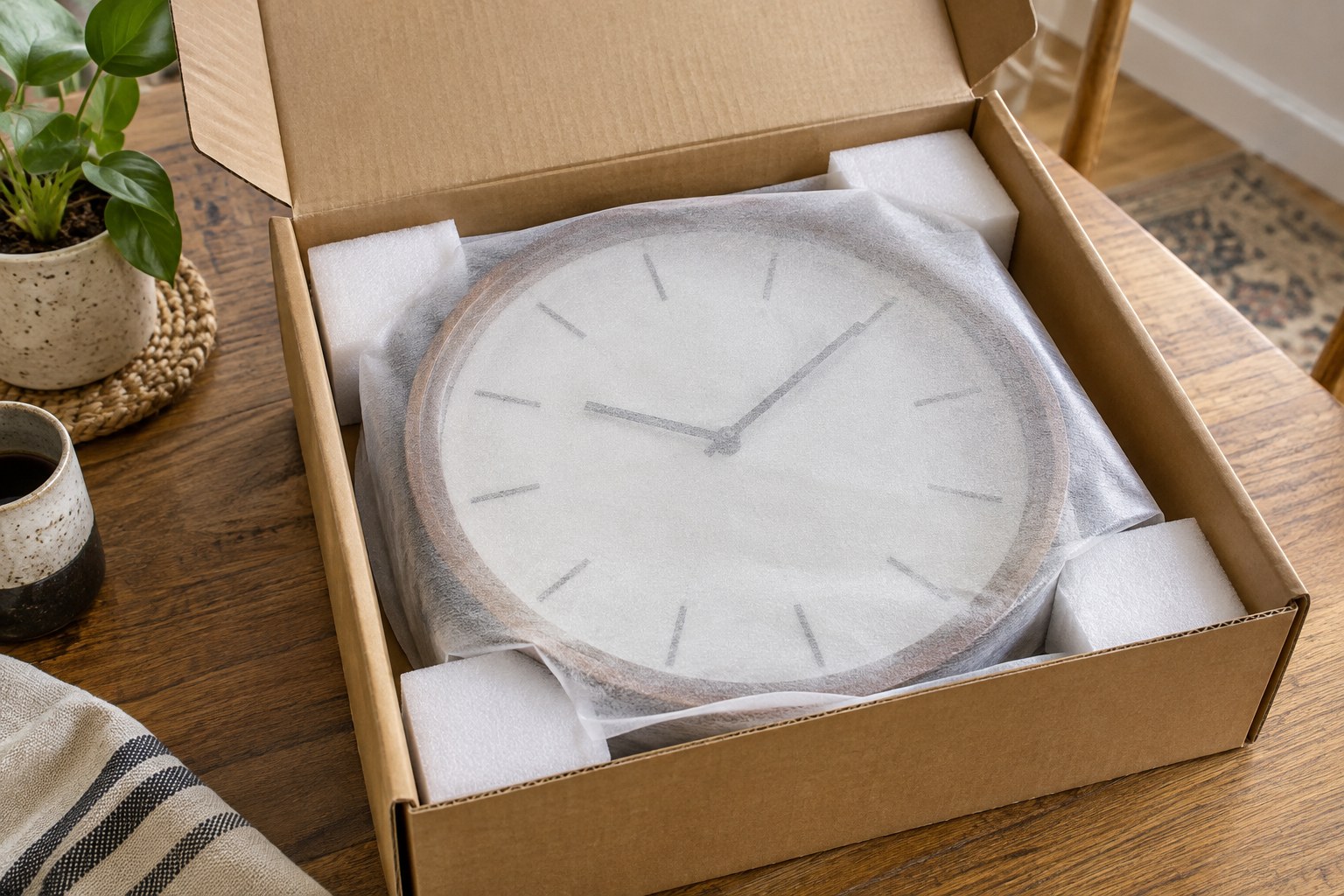
The original fitted packaging is useful when it is complete and in sound condition. Otherwise, choose a sturdy box and cushioning that supports the case without pressing on the face, projecting controls or hands. An open-face clock needs a protective arrangement that maintains a gap in front of it. Do not pack crumpled paper against exposed hands or rest the clock face down on them. Prevent the case from shifting inside the box, but avoid squeezing a fragile rim. Label any small owner-removable parts so they do not become anonymous pieces in another carton.
Unpack before returning it to service
Keep the box where it will not be crushed by heavier items. At the destination, open it on a clear surface and compare the condition with your photographs. Check the visible hanging point and cover before fitting the clock to its new wall. The old fixing may not be suitable for the new substrate, even if the clock has not changed. Reinstall batteries and restore settings according to the manual. If something rattles or a hand now touches the cover, investigate through the manufacturer or repairer rather than tapping the clock until it runs.