Notice the local conditions
A room's general description can hide very different conditions within it. The wall above a working radiator, a sunny windowsill and a shaded internal wall do not offer the same environment. Look at where heat reaches the clock directly and where moisture gathers during normal household activity. A position beside a kettle or frequently opened bathroom door may expose it to more damp than expected. Read the maker's operating limits, especially for a clock placed in a conservatory, utility room or other space with larger seasonal changes.
Move the position, not the problem inside
If the location is unsuitable, find a permitted alternative rather than adding an improvised cover or sealing openings. A closed front does not mean the whole clock is protected against condensation. Keep it away from splashes and direct heat sources, and make sure any relocation preserves secure mounting. If moisture is already visible inside the cover, stop ordinary use and ask the manufacturer what to do. Do not use a hairdryer, radiator or oven to force the clock dry. Heating the case can create another problem while leaving the original cause unresolved.
Separate modern care from old materials
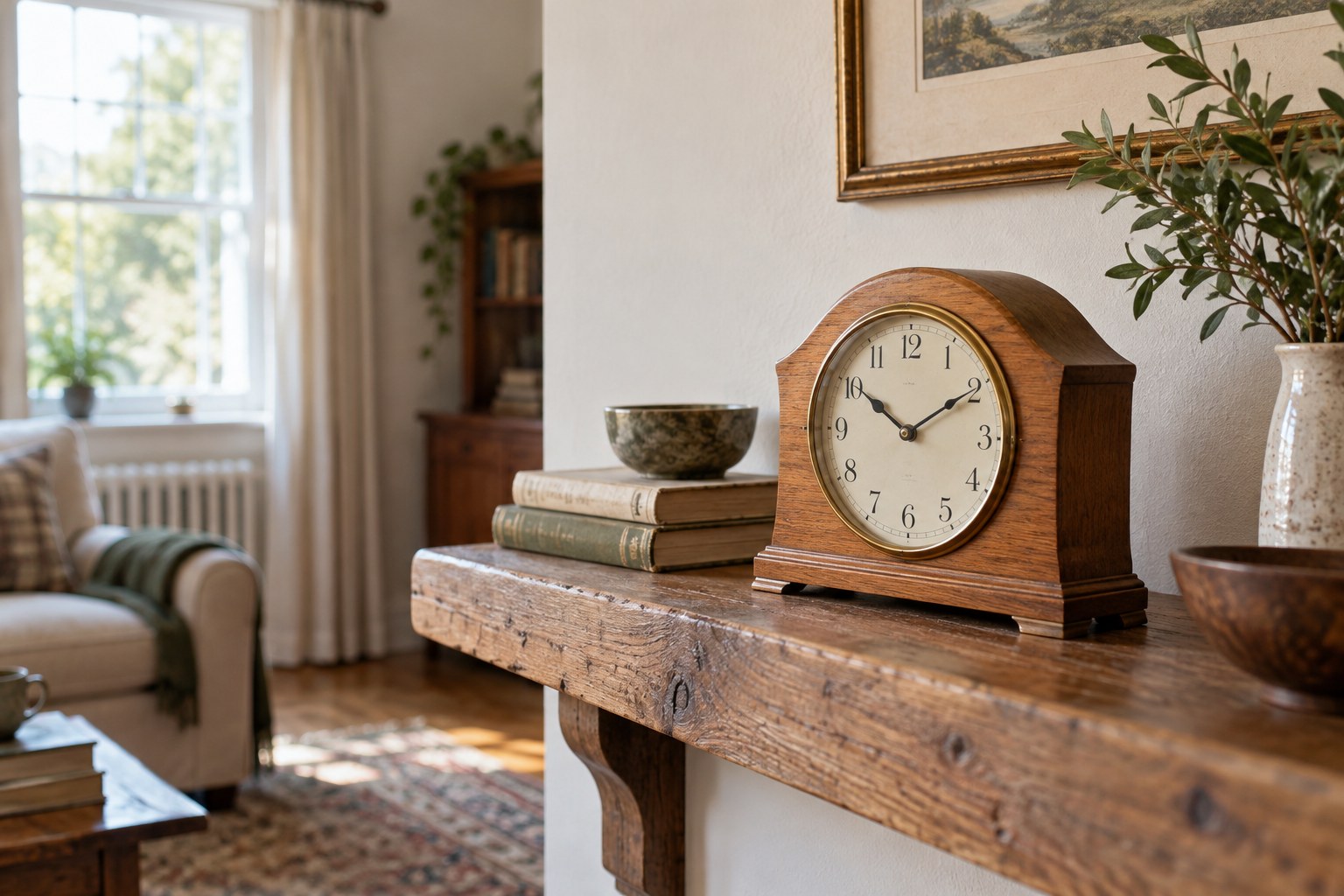
Older clocks may contain finishes, adhesives and mechanisms that need a more individual assessment. Icon's conservation guidance highlights the risk from heat and strong sunlight to cases and movements. Treat a vintage clock's location as a conservation question rather than assuming the limits for a new plastic clock apply. Keep a simple record of where an older clock has lived and any visible changes such as lifting veneer or a new cloudy patch. That history can help a conservator assess the issue without unnecessary handling or exploratory cleaning.