Measure the whole footprint
A mantel clock may flare at the feet or have a rear door that extends beyond the outline seen from the front. Measure the full depth and width of the base, then compare them with the usable flat part of the mantel. Decorative moulding at the edge does not provide dependable support.
Set a paper rectangle down to represent the footprint. It should sit fully on the shelf with space around it, rather than straddling a joint or leaning over an edge. A deep clock on a shallow mantel is a poor fit even when its face looks perfectly proportioned above the fireplace.
Give neighbouring objects separate space
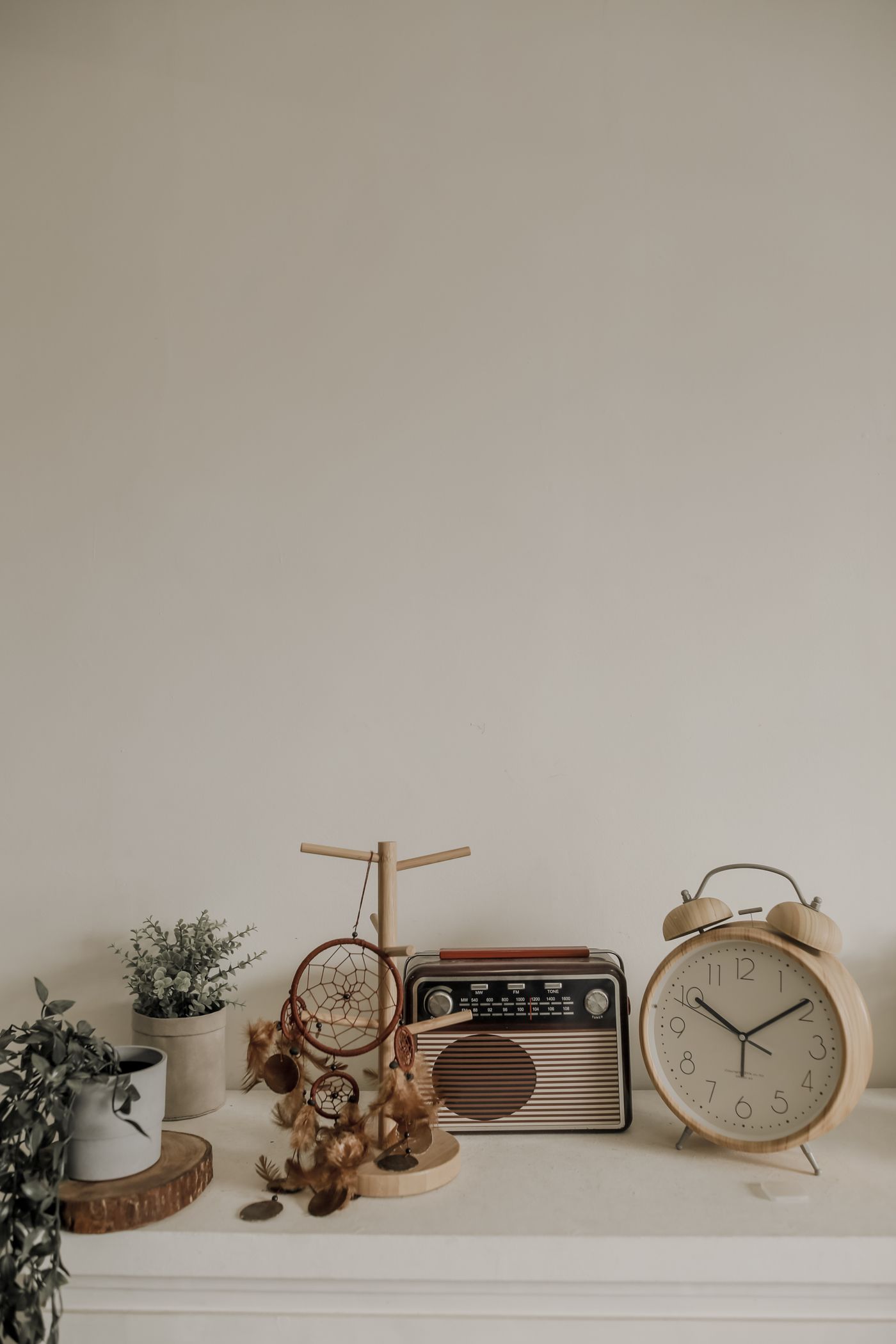
Start with the clock alone. Add one object at a time, checking that a vase or picture frame does not overlap the dial from a seated position. Height can vary; what matters is that the clock remains recognisable as a complete shape. A small gap between objects is often more effective than arranging everything in a tight symmetrical row.
Leave enough room to lift the clock without brushing fragile ornaments. Do not use books, folded fabric or improvised wedges to compensate for an unsuitable base. If the clock needs levelling or position-specific setup, follow its instructions or ask a repairer, particularly for a mechanical example.
Treat an active fireplace differently
A mantel above a working fire can expose objects to heat and changing conditions. Follow the clock's environmental requirements and choose another location if the mantel becomes warm or sooty. Attractive placement is not a reason to accept a damaging environment.
Check the rear access before completing the arrangement. Battery replacement, winding access or a service inspection should not require dismantling the whole display. Photograph the finished grouping from across the room, then remove anything that crowds the hands or creates a distracting reflection in the glass.