Save identification with the manual
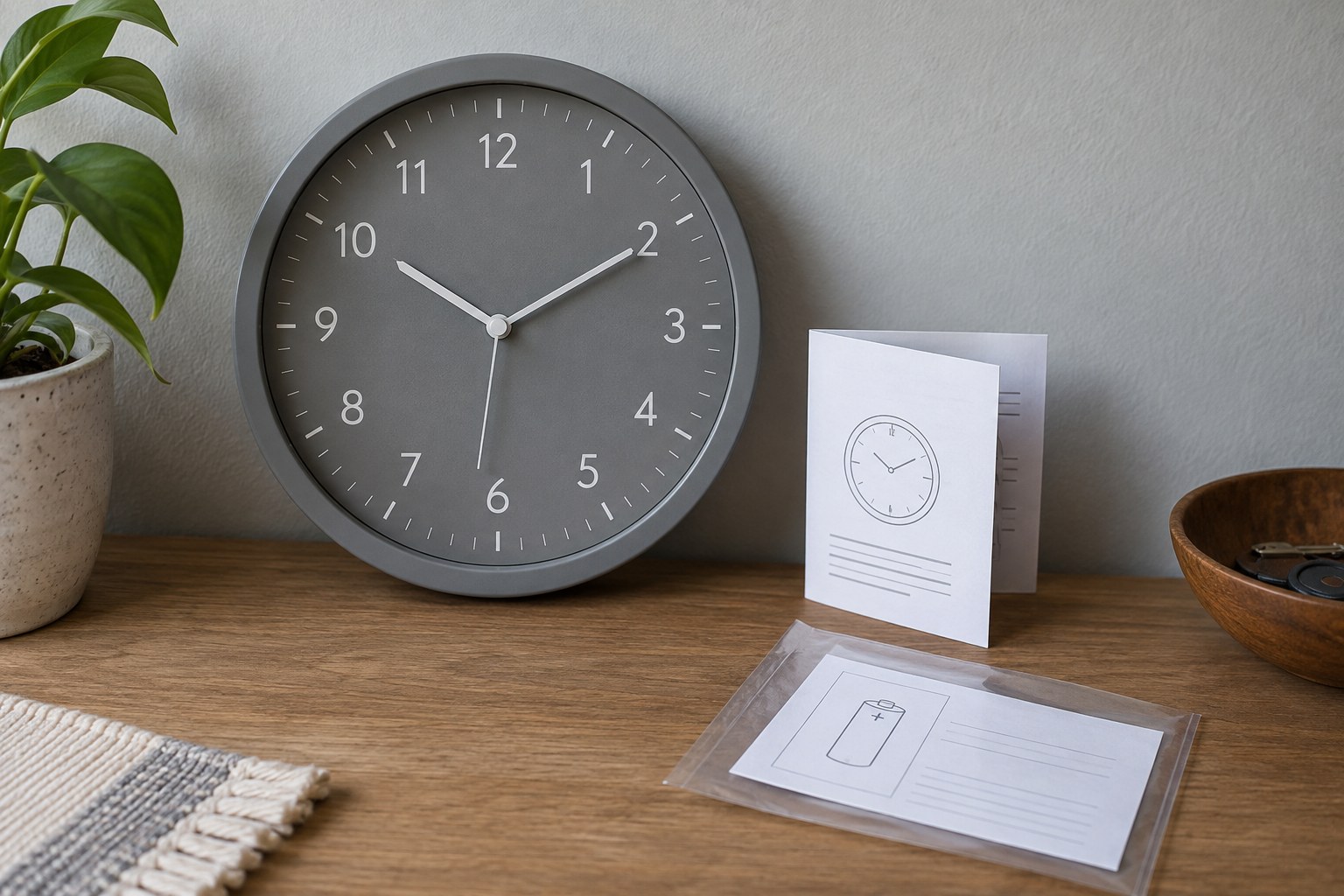
Record the model number from the clock itself and check that the instructions match it. A product range may contain several versions with different controls or regional receivers. Save a digital copy locally, not only a bookmark that may later disappear. Keep a photograph of the label with the file and use a name you will recognise, such as the room and model. If you retain the paper sheet, store it with the receipt or other purchase record rather than inside a battery compartment or against the mechanism.
Mark the instructions you will reuse
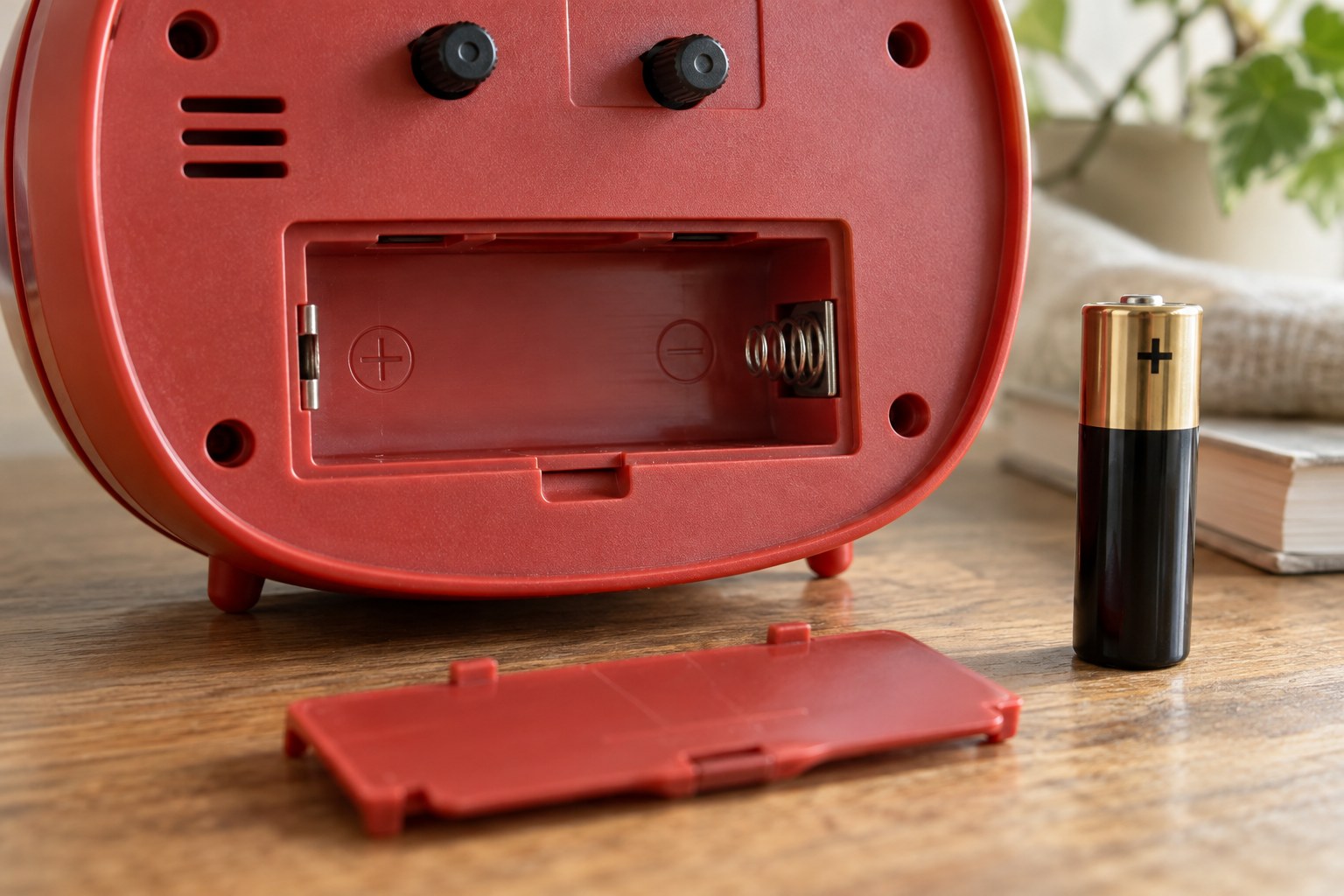
The battery specification, polarity diagram, setting procedure and mounting requirements are likely to matter repeatedly. For an alarm clock, include the difference between snooze and permanent dismissal. For a radio-controlled model, retain the reset sequence, supported signal and reception indicator explanation. Note any cleaning restrictions and operating-environment limits. These details are more useful than keeping only the attractive front page. Do not rewrite a complex sequence from memory if the original diagram can be saved alongside your note; an omitted pause or switch position can make the summary misleading.
Add a modest ownership record
Write down the purchase date and any support reference you receive. Record battery changes or an unusual fault when it happens, without turning routine ownership into elaborate paperwork. If a repairer gives model-specific advice, keep their written instruction with the manual and make clear which clock it concerns. Before passing the clock to someone else, include this information and mention known faults honestly. A folder containing the correct manual, label photograph and brief history often answers the first questions that arise after a move, a power interruption or an unfamiliar alarm setting.