Look without improving anything
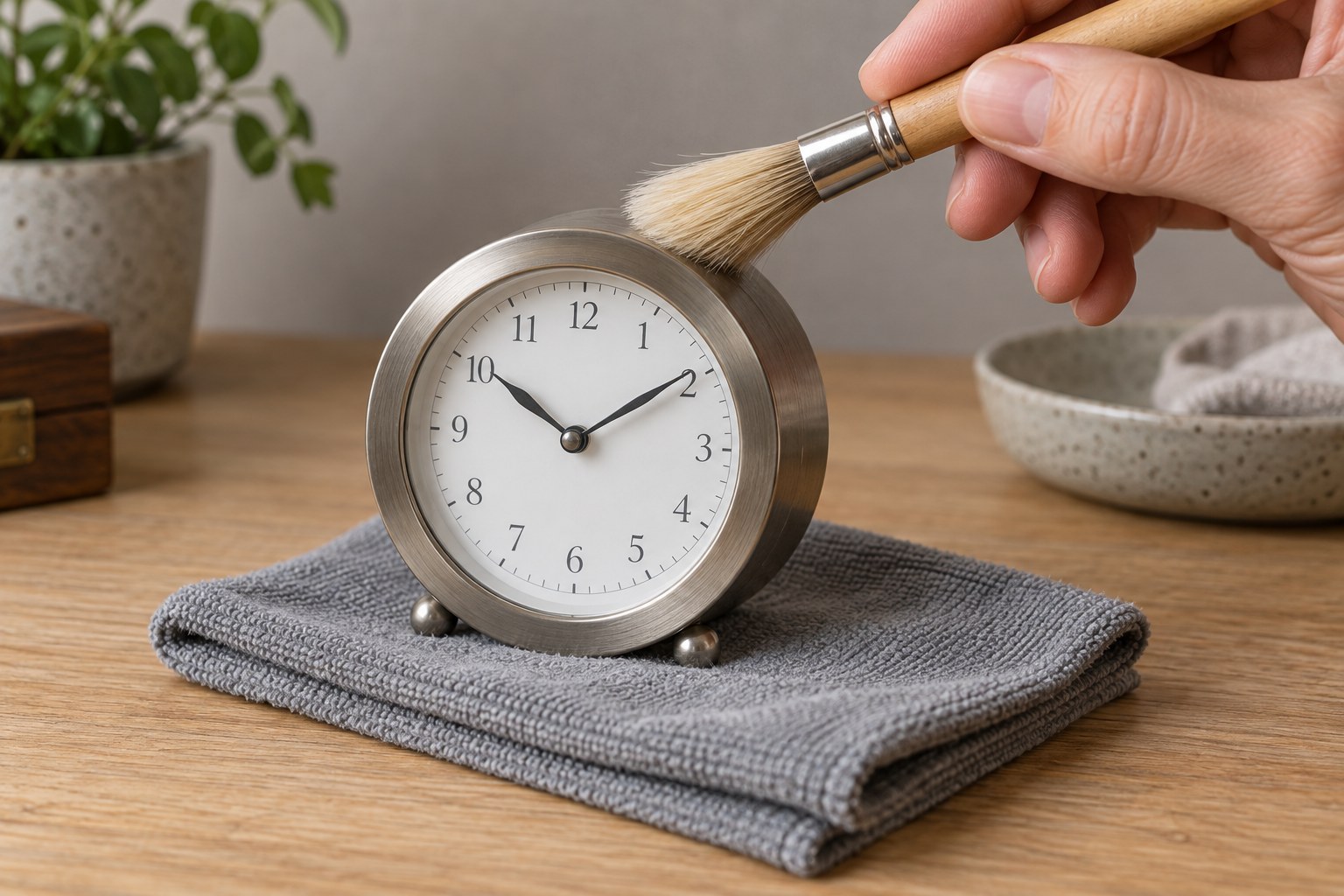
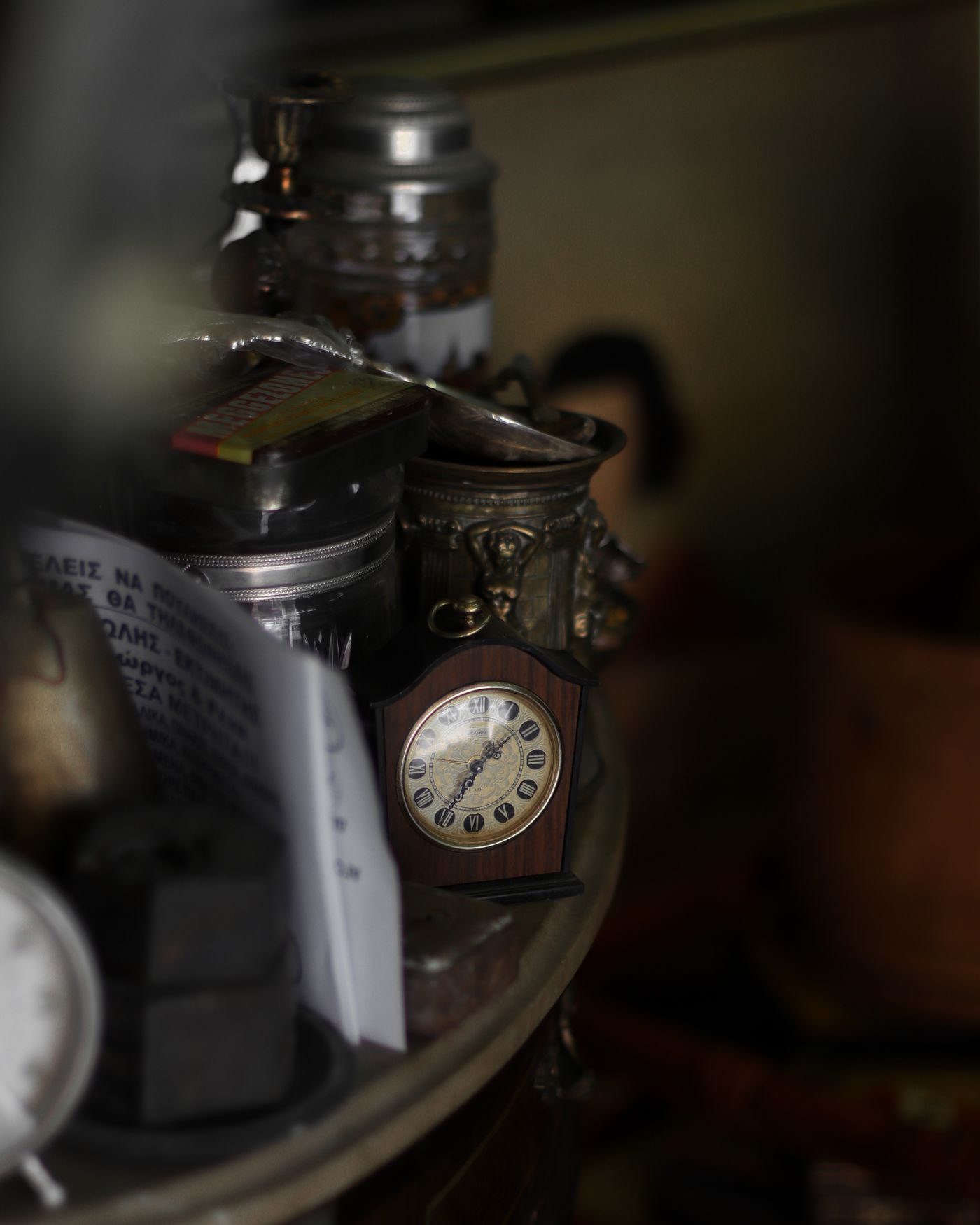
Photograph the clock as it stands, including the case, dial, rear and any labels visible without dismantling. Note flaking paint, lifting veneer, cracks or loose decoration. Do not brush away deposits to reveal a maker's mark or polish a dull surface before taking advice. An old finish can carry information about the object, and cleaning may remove more than dirt. If the clock has unfamiliar luminous markings, leave them undisturbed rather than testing, scraping or sanding them. Keep handling to what is necessary for a safe, stable position.
Separate appearance from operation
A clock that looks complete may still have a movement requiring assessment before it runs. Conversely, an attractive patina is not proof that the mechanism is healthy. Do not wind an unfamiliar clock forcefully, add household oil or move its hands to see whether it will start. Ask a horologist or conservator to identify the mechanism and advise whether continued operation is appropriate. The decision may involve preserving original parts as well as restoring function. Tell them whether your priority is regular timekeeping, display or retaining the object with minimal intervention.
Prepare a useful first enquiry
Send clear photographs, approximate dimensions and any known history. Distinguish family recollection from documented information, and say when the clock last ran if you actually know. Keep detached pieces in a labelled container; do not glue them back before assessment. Ask how the clock should be moved if an inspection is needed, particularly if it has weights, a pendulum or fragile glazing. A careful enquiry can prevent damage during transport as well as during attempted repair. There is no need to make the clock look tidier before showing its true condition to someone qualified to assess it.