Judge it from the chairs
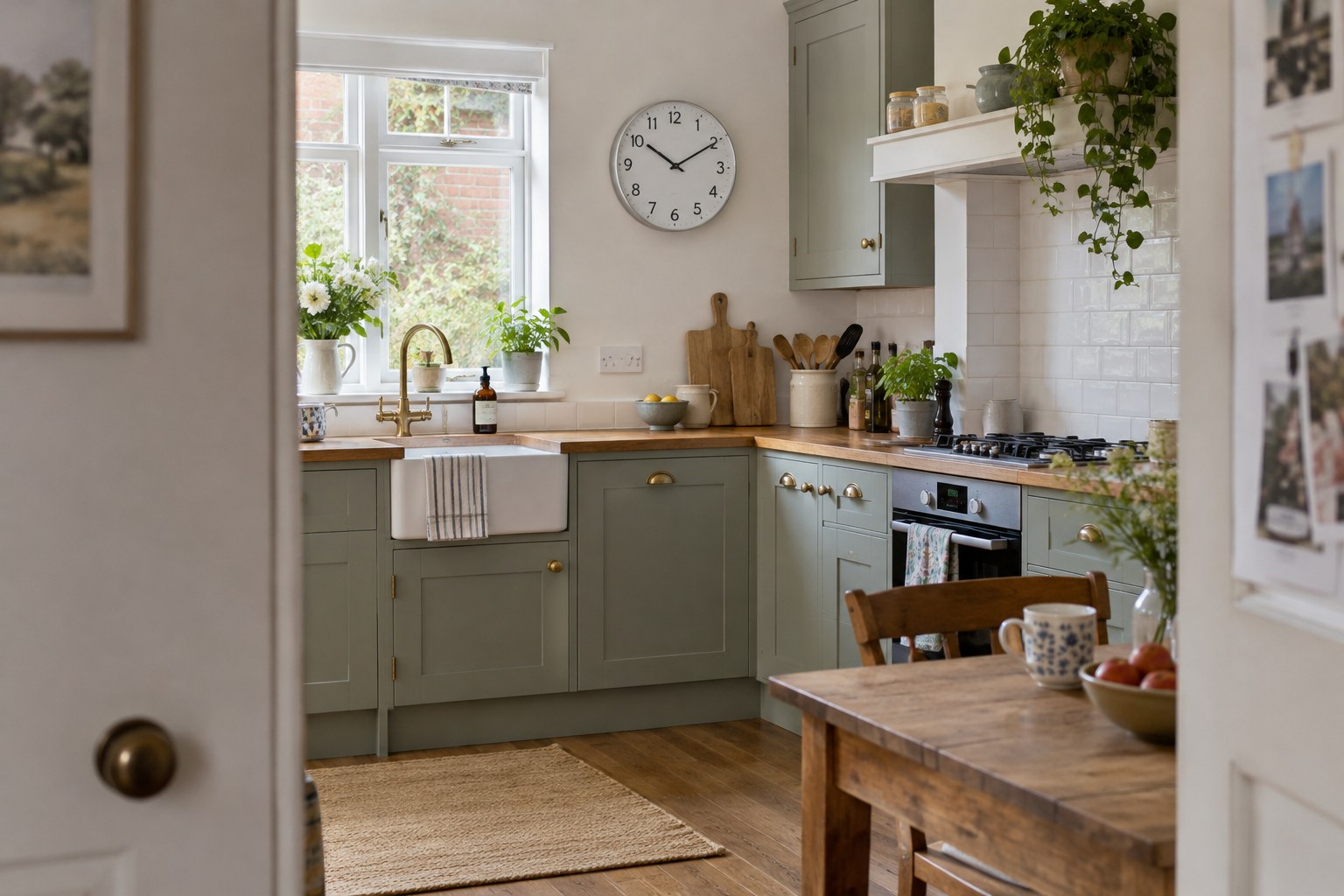
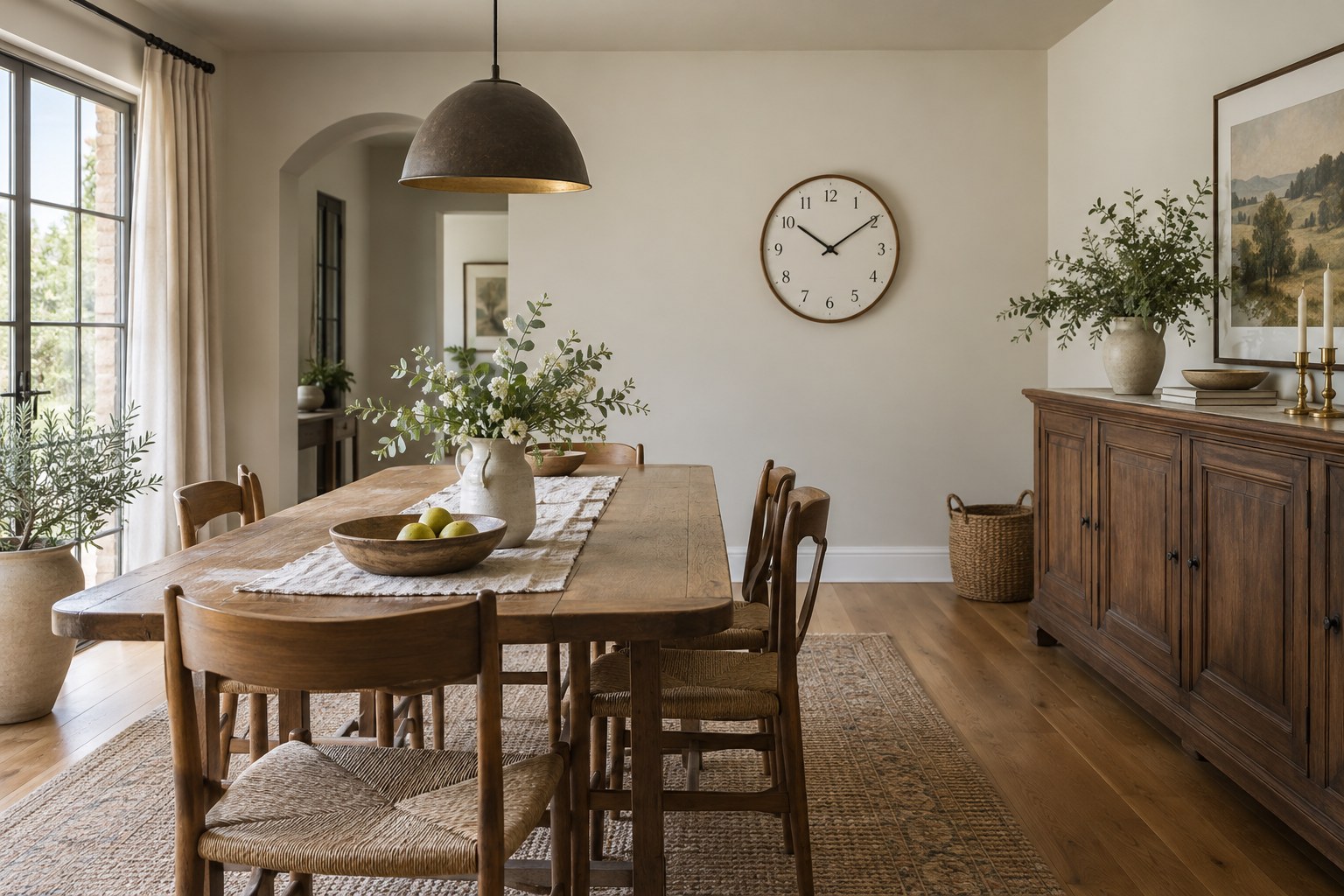
A dining room has several equally important viewpoints. Sit in the usual seats and identify which walls remain visible. The wall that looks ideal from the entrance might be behind most diners or hidden by a pendant. A clock should not require anyone to lean around a flower arrangement to find the hands.
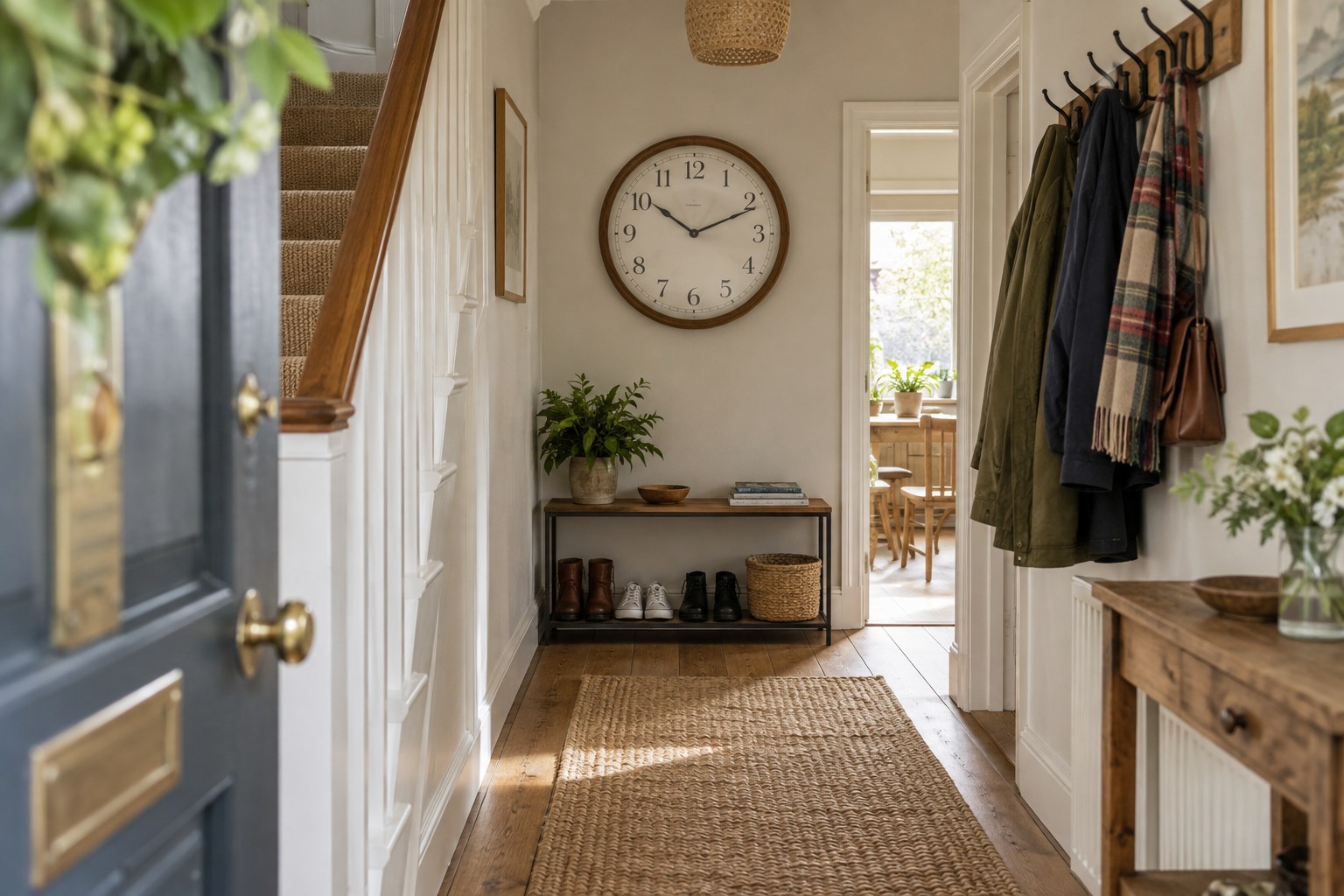
Use a paper circle to test the scale. A large table can make a small dial feel lost on the wall, but increasing the diameter is not the only answer. Moving the clock to a clearer stretch of wall can improve its usefulness without turning it into the room's dominant object.
Allow the outline to read clearly
Leave a visible margin between the clock and a tall sideboard, curtain edge or picture frame. A round case squeezed just beneath the ceiling often looks accidental. There is no universal gap to copy; use the surrounding shapes and the room's normal viewing distance to judge the separation.
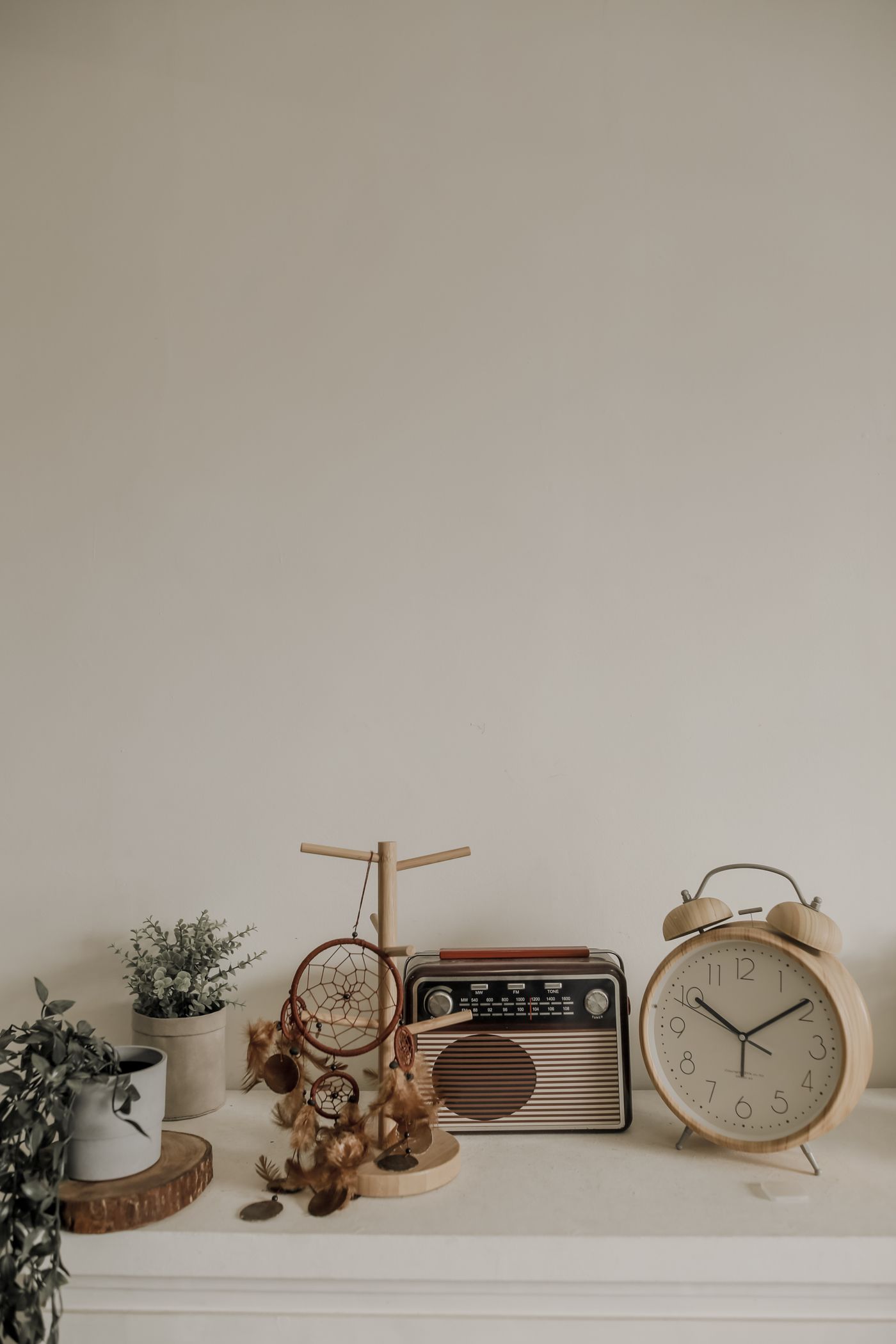
If the room already contains a strong chandelier or a patterned wall, a quieter dial may give the eye somewhere to settle. A decorative clock can work on a plain wall, while a simple clock can sit comfortably among more detailed furniture. Choose one visual emphasis rather than making every object equally busy.
Watch the evening reflections
Switch on the lights used during meals and look from the table again. A pendant reflected in the glass may obscure the hands even when the clock itself is well lit. Adjusting the position slightly sideways can change that reflection more effectively than raising it.
Finally, consider access for cleaning and battery changes. Do not put a heavy clock where reaching it requires standing on the dining table. The finished arrangement should leave enough room for everyday movement, chair backs and future changes to the furniture.