Find the reflection before moving anything
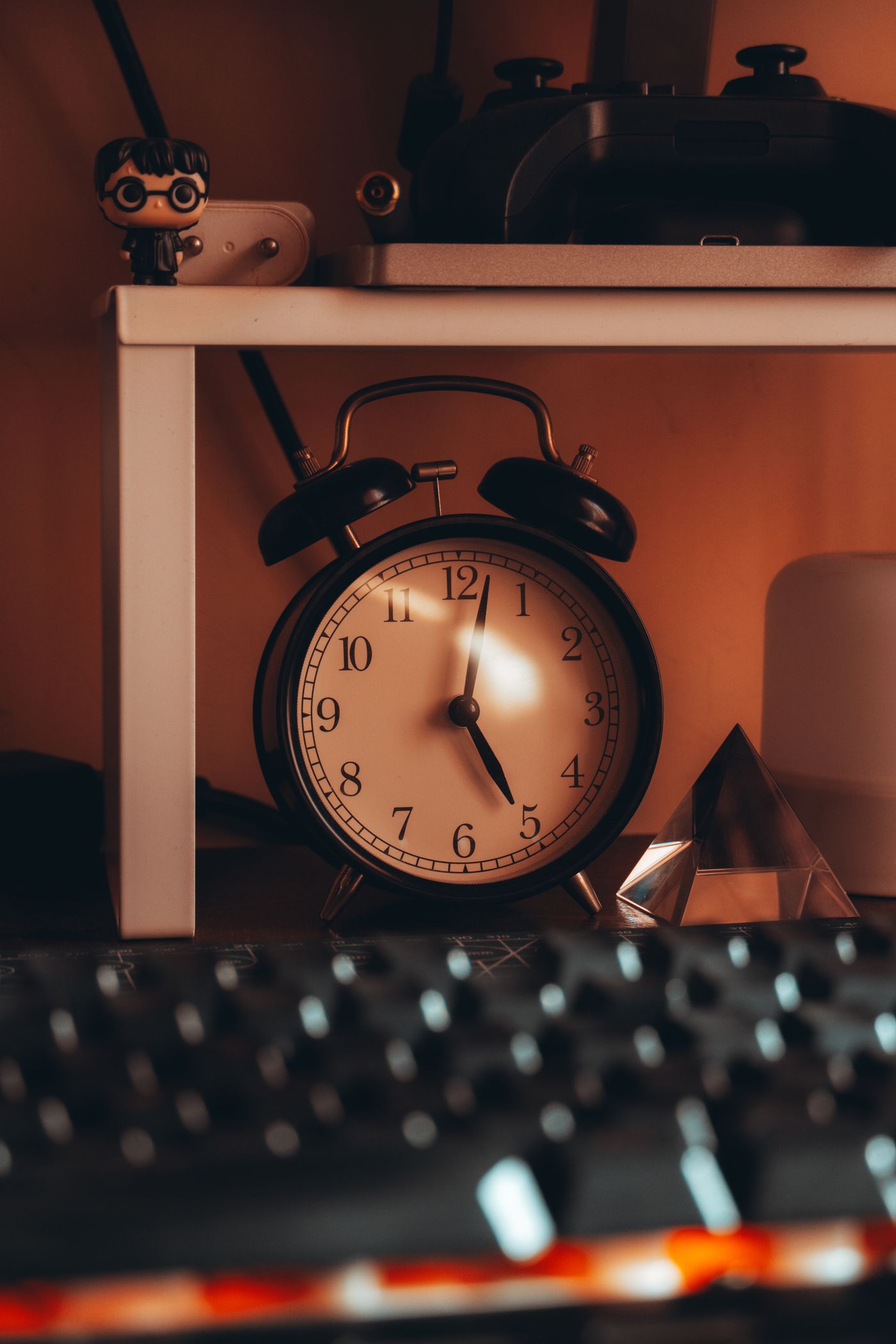
Stand where the clock is normally read and identify the bright shape crossing its face. It may be a window, a bare lamp or a pale wall catching strong daylight. Move your head a little. If the bright patch changes quickly, you are seeing a reflection rather than a problem with the dial itself.
Check from the sofa, doorway and any other important viewpoint. A position that works from directly in front can fail from the side. Take a photograph from each place, keeping the camera at your usual eye level. These pictures help compare possible positions without relying on memory.
Change one variable at a time
Try a modest sideways relocation using a paper outline before making new holes. A different wall may be more effective than a slightly higher position on the same wall. Keep the clock's mounting requirements in mind; do not tilt a clock with improvised packing just to alter a reflection.
If the source is a movable lamp, adjust the lamp and check that the new direction still works for reading or other tasks. Curtains or blinds may change daytime conditions, but do not build the arrangement around keeping a room permanently dark. The aim is a workable compromise through ordinary use.
Assess a replacement face carefully
A matt dial does not eliminate reflections from a glossy cover in front of it. When shopping, distinguish between the dial finish and the cover material. Ask about the actual model rather than assuming that all clocks with a similar appearance use the same construction.
High-contrast hands can remain easier to recognise in imperfect light, but they cannot overcome every reflection. Test the intended location before replacing a clock that otherwise suits the room. Sometimes the most effective change is moving it a short distance away from the angle of a window.