Use the current fit as a reference
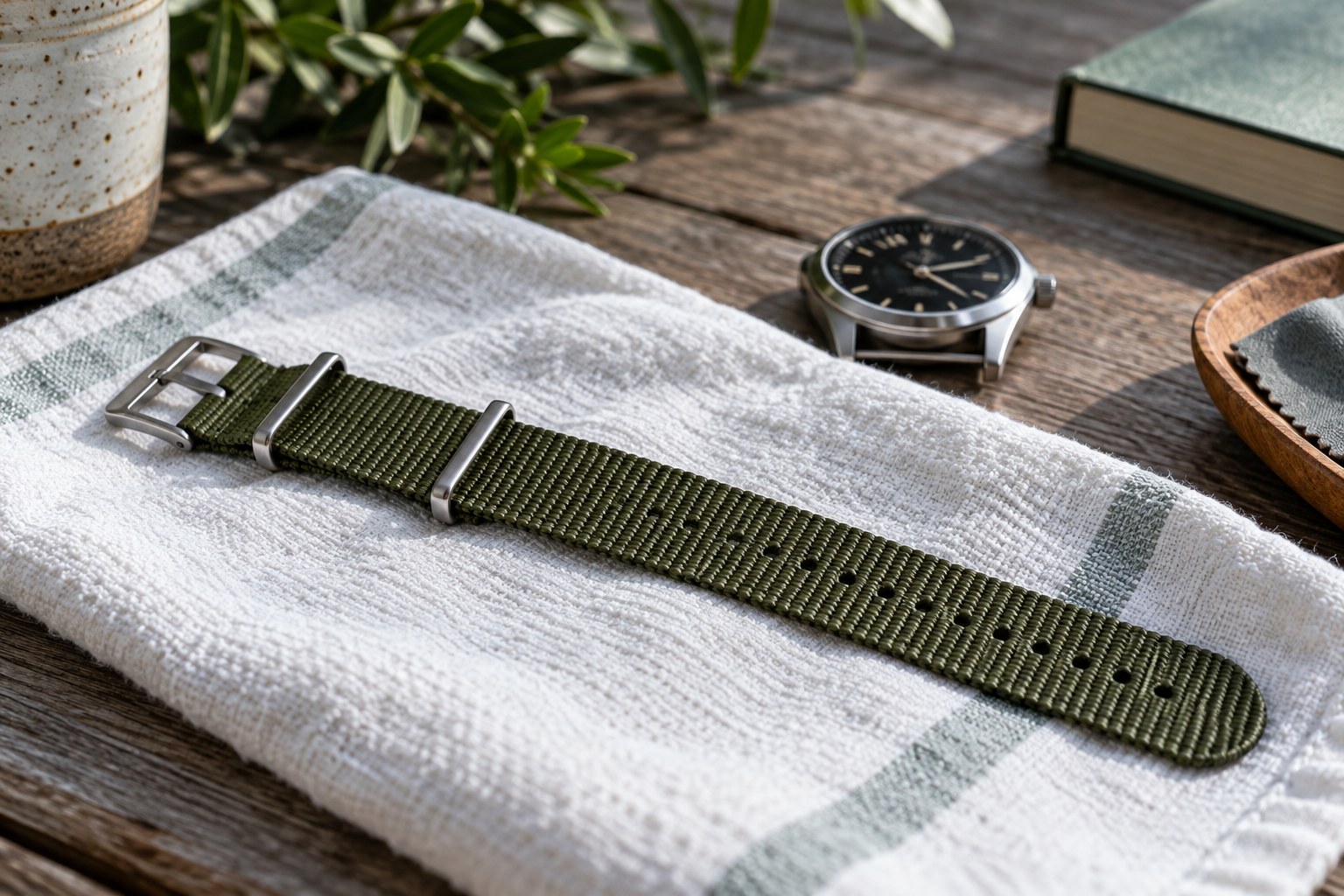
If the current strap fits comfortably, lay it flat when it is safe and appropriate to do so and note the lengths of its two sections. Record whether the measurement includes the buckle. Sellers do not always present dimensions in the same way, so read the diagram rather than comparing two unexplained totals.
Note the hole normally used and the amount of tail beyond the keeper. A strap worn on its last available hole offers little room for adjustment. A very long tail can also be inconvenient if it protrudes or folds awkwardly against the wrist.
Include the watch case in the fit
The strap does not go around the wrist on its own. The watch case occupies part of that distance, and the position of its attachments affects the curve. A length that works on one watch may feel different on another, even with the same wrist measurement.
Strap thickness and stiffness can also change the fit. A heavily padded replacement may sit differently from a thin worn strap. Use the supplier's sizing guidance and ask about the specific combination if the measurement falls between options. Avoid buying a shorter size merely to reduce the visible tail without checking the fastening range.
Check the fastening when it arrives
Try the strap carefully before treating it as a permanent replacement. The buckle should sit comfortably, the tongue should engage properly and the keepers should retain the tail without forcing it. Do not punch additional holes as an immediate solution to a sizing error.
Keep the packaging and size information until fit and compatibility are confirmed. If the strap uses a folding clasp, its adjustment method and required lengths may differ from those of a simple pin buckle. A repairer can help assess a fit that looks close but places pressure on the fastening or attachment points.