Start with how the watch is worn
Think about a normal day: commuting in rain, working at a desk, cooking or exercising. A leather strap chosen for its appearance may need more consideration around moisture than another material. Read the maker's care guidance for the particular strap rather than assuming that all leather finishes behave alike.
Consider the watch case too. A substantial case may sit awkwardly on a very thin strap, while a stiff, heavily padded strap can overwhelm a small watch. Compare the thickness near the lugs and how the strap curves around the wrist, not just the colour shown in a product image.
Check fit before finish
Confirm attachment width and usable length before selecting a grain or stitching colour. If your current strap is comfortable, note which hole you use and how much tail remains. That gives a practical comparison with the replacement's dimensions.
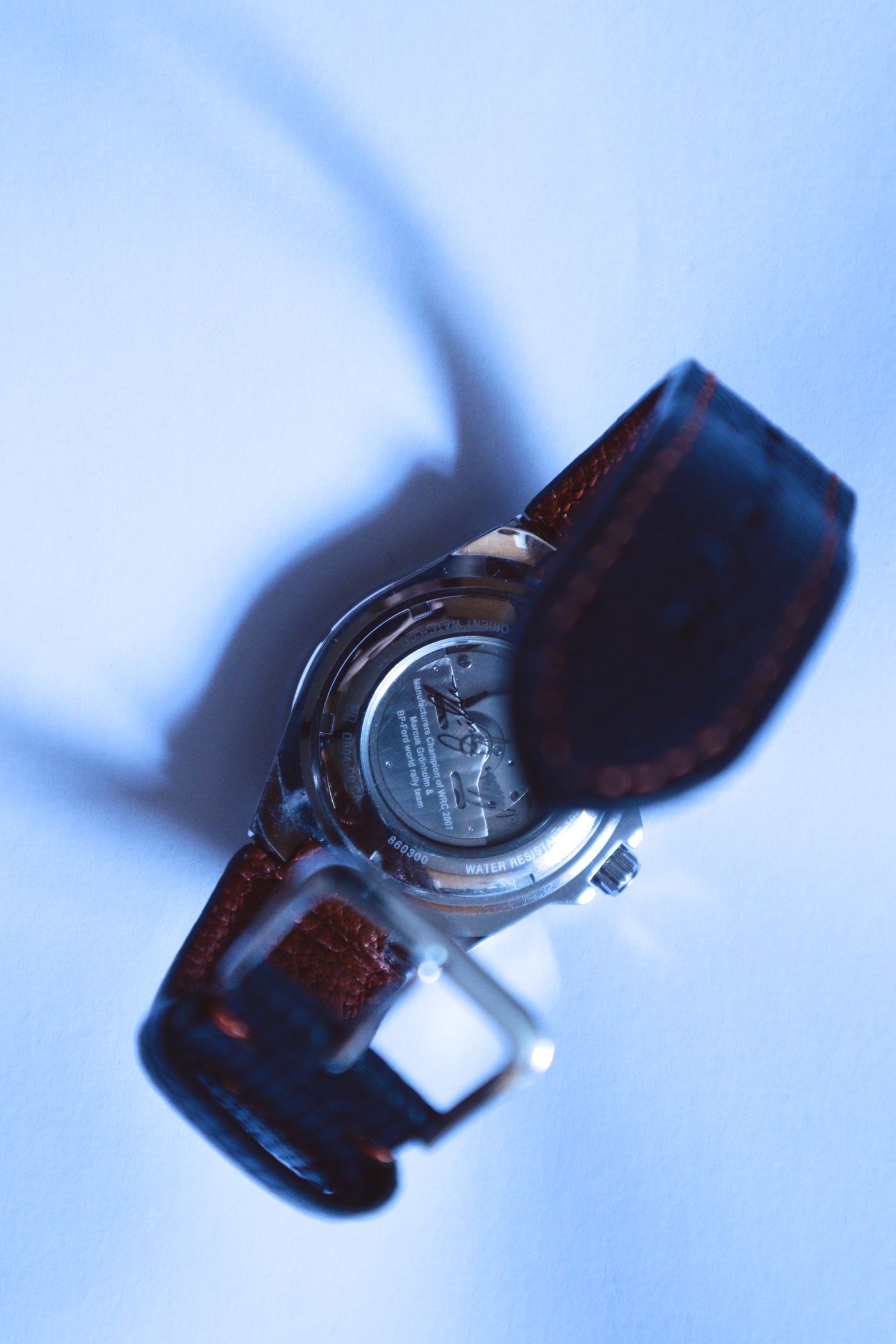
Look at the underside as well as the upper surface. Edges, lining and keepers all affect the feel during wear. If possible, try the strap or examine a sample. A catalogue description such as soft or padded does not tell you exactly how it will feel on your wrist.
Build in ordinary care
Seiko's care guidance notes that leather is vulnerable to moisture, sweat and direct sun. Follow the strap maker's instructions after wear and let it dry naturally in a suitable place. Do not assume that the watch's water-resistance rating extends to every strap fitted to it.
Inspect the holes, attachment ends and keepers periodically. A colour change is different from cracking or a weakened fastening point. Replace a strap that no longer holds securely, and ask a repairer if you are unsure about its condition. Choose a finish you can live with as it changes, while keeping security and comfort ahead of a perfect colour match.