Separate access from visibility
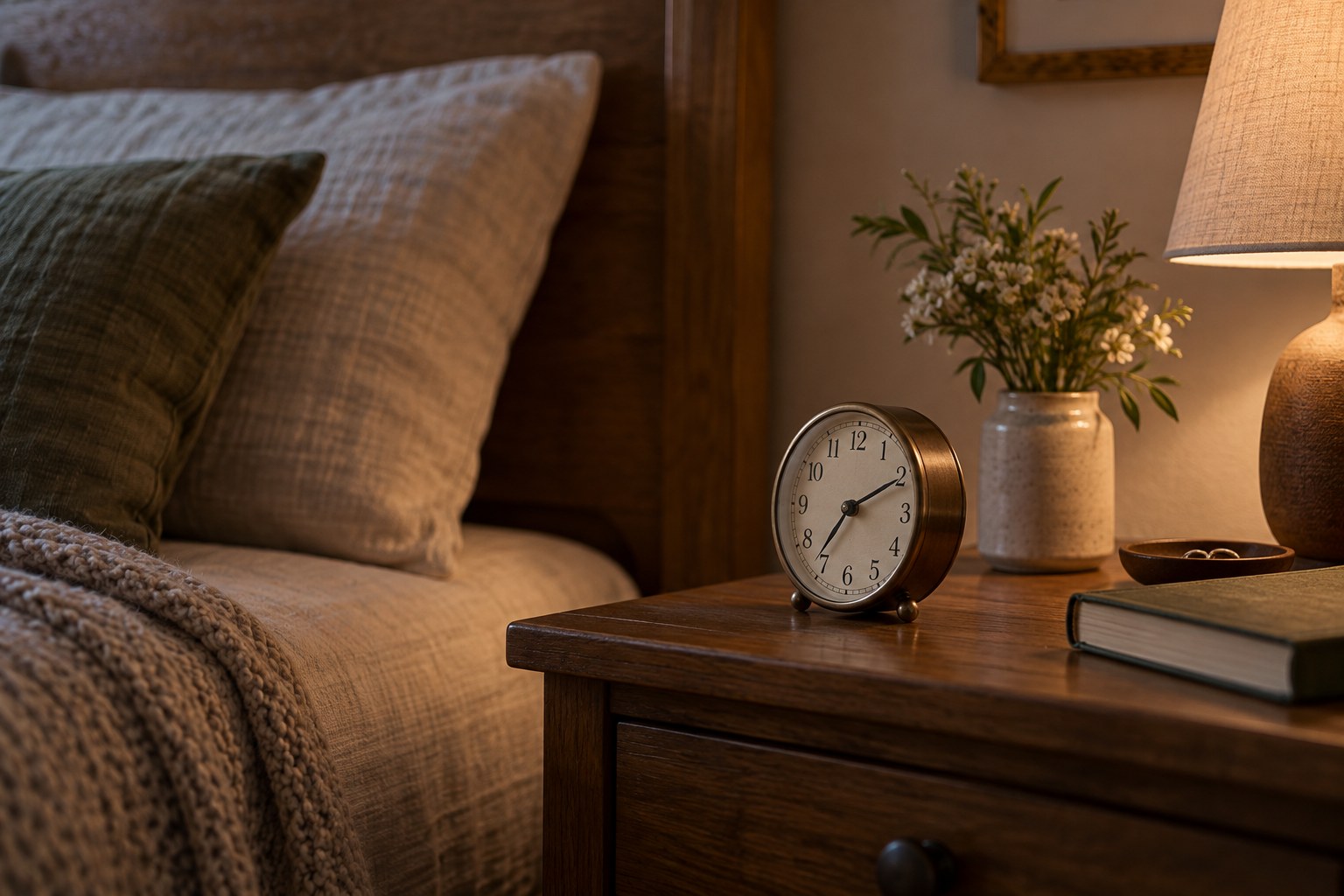
A bedside clock may be useful for setting an alarm but unwelcome as a constant view from the pillow. Start by identifying what you actually need overnight: a readable time display, an alarm control or simply a clock available in the morning. These needs do not always require the face to point directly at the bed.
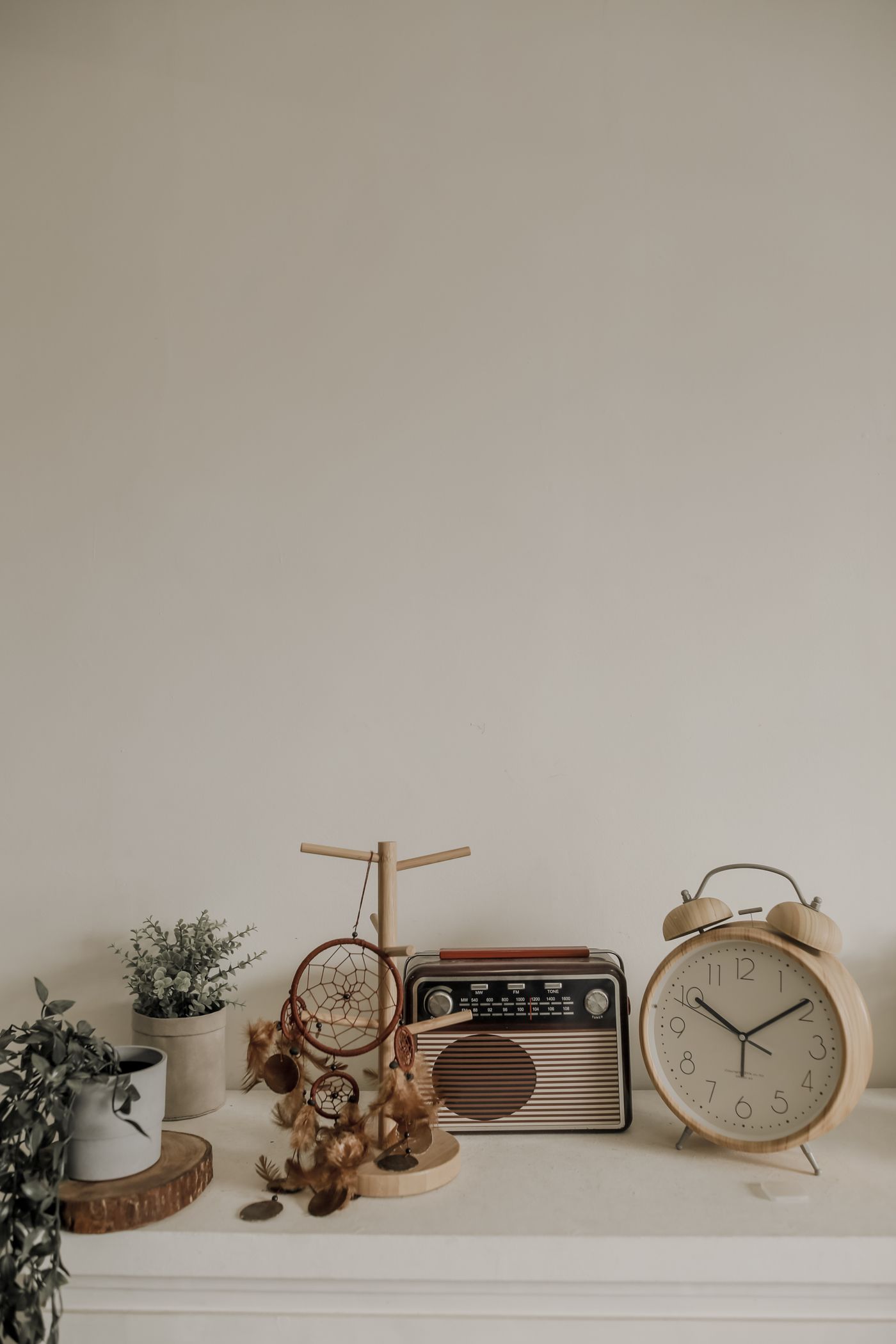
Try turning a freestanding clock slightly towards the room or moving it to the far side of the bedside table. Keep the base fully supported. Do not balance it on a book pile or cover it with fabric, which can obstruct controls, ventilation or the sound of an alarm.
Check the light in darkness
Evaluate an illuminated display after the room is dark, not just in a shop. A brightness setting that seems modest in daylight may be prominent beside the bed. Check whether dimming changes the display continuously, offers fixed levels or switches it off altogether.
If the clock uses a light button, find out how long the light stays on and whether it returns to its previous state. Position power cables so they do not cross the walking route or pull on the clock. Keep the plug accessible rather than trapping it behind a heavy headboard.
Keep the morning routine practical
Reach for the alarm control from the normal sleeping position without lifting the clock. If several similar buttons sit together, you may prefer a model with a distinct top control. Test the arrangement before relying on it for an important morning.
A dresser across the room can be another option, provided the alarm is audible where required and its controls remain straightforward. This is a placement choice, not a promise about sleep quality. The aim is to reduce an unwanted visual distraction while keeping the clock useful for your own routine.