Give the record a clear identity
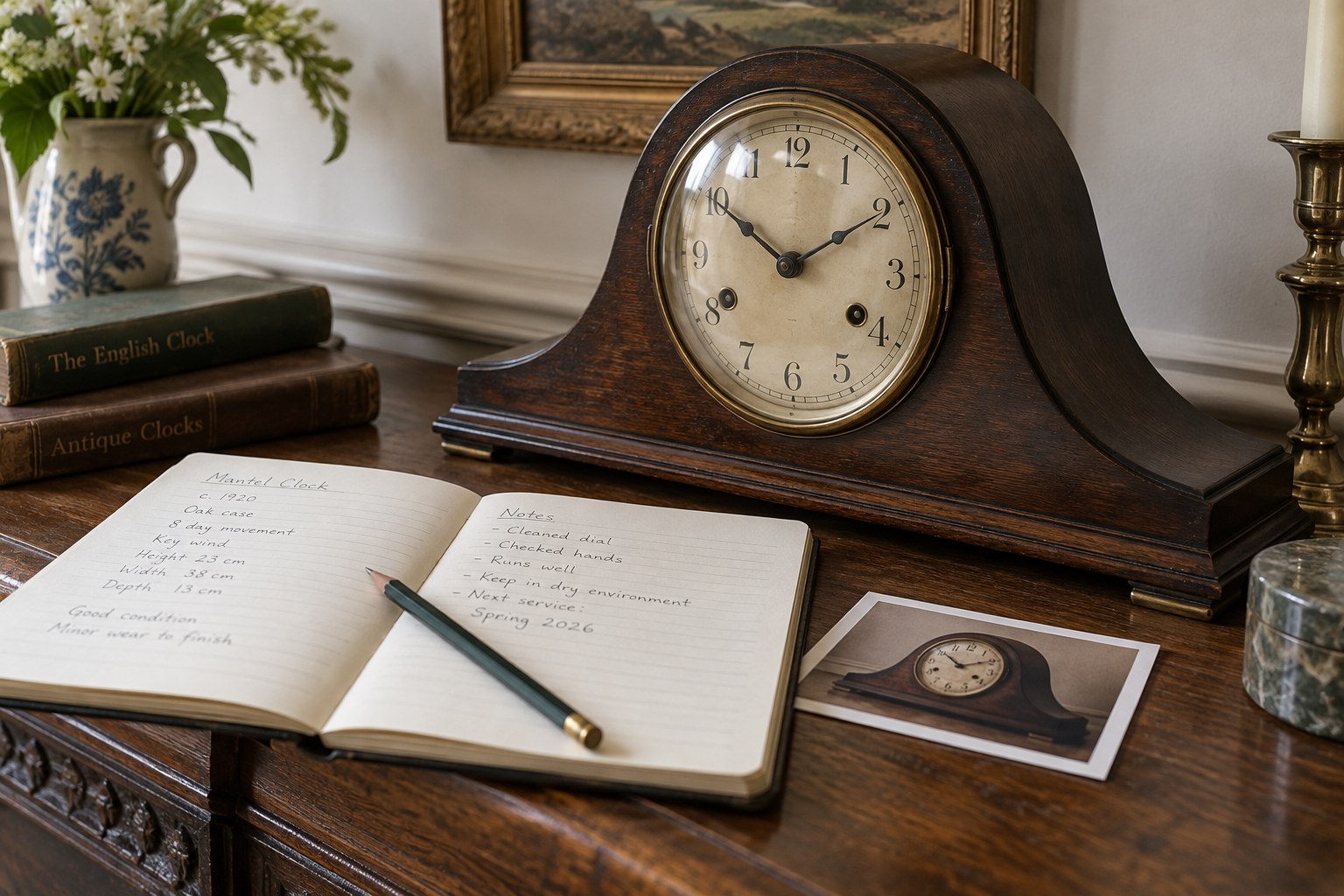
Begin with photographs of the complete clock, its sides and accessible marks. Record dimensions and a plain description of the materials as far as they are known. If a material or maker is uncertain, say so. An accurate description of visible features is more useful than a confident attribution borrowed from a similar listing. Assign a simple reference if you own several clocks and use it for the image filenames and notes. Avoid sticking the reference directly onto an old finish or paper label. A separate labelled folder can keep the information connected without altering the object.
Separate fact and recollection
Record when and where the clock was acquired, the seller's description and any documents supplied. Keep family stories in the record too, but identify who provided them and when. A remembered date and a dated invoice should not be presented as the same kind of evidence.
Note known replacements or repairs, including the source of that information. Preserve copies of service paperwork and photographs taken before work. If an original part is retained separately, describe where it is stored so that its relationship to the clock does not depend on one person's memory.
Continue with useful observations
Add entries when something changes: a move, a new crack, a service visit or a decision to stop operation. Describe what you observed rather than diagnosing a mechanism from its sound. A precise note that the clock stopped at a particular time after a move gives a repairer more to work with than a general claim that it became unreliable.
Keep a backup of digital records and place a short printed summary with the paperwork. Review the folder before a sale or transfer so important uncertainties and repair details travel with the clock. The record need not become a catalogue; a few consistent facts and photographs already prevent substantial loss of context.