Take the view you actually use
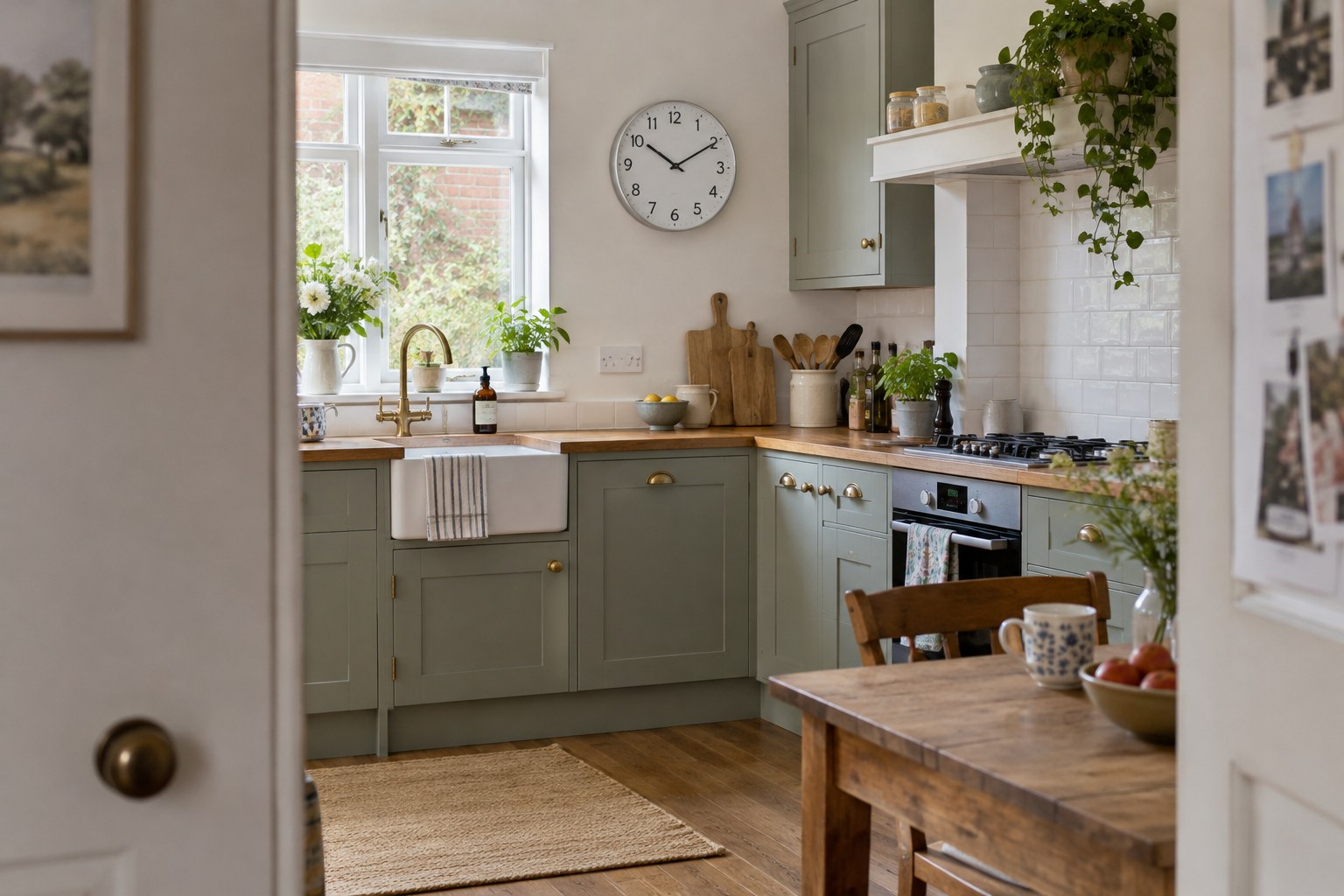
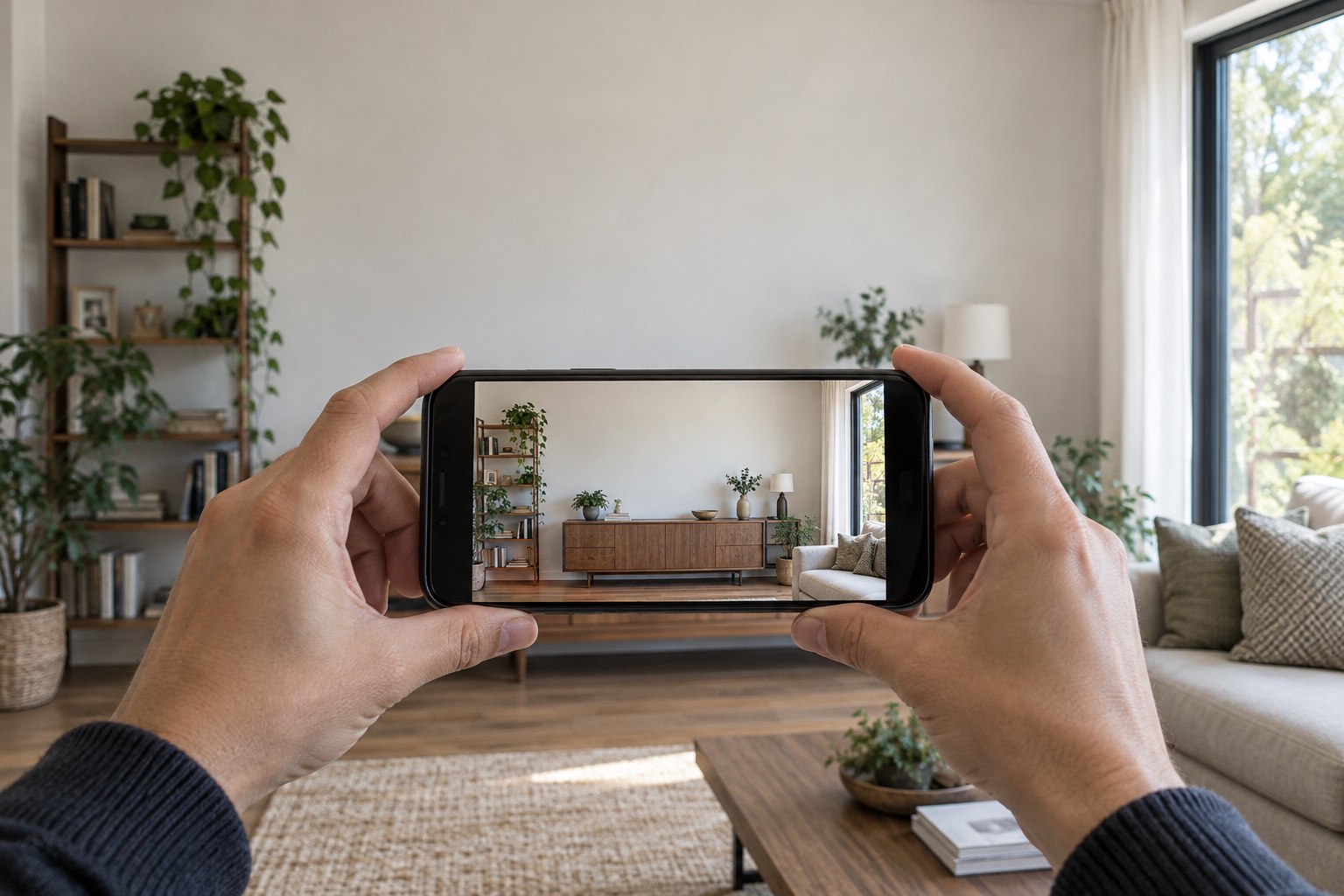
Photograph the wall from the sofa, desk or doorway rather than only from the centre of the room. Keep the camera near your usual eye level. This records the perspective from which the clock will be read, including furniture that might partly block it.
Take one wider image showing the whole wall and another showing the proposed area. Include a tape measure or a measured paper template temporarily in the scene so that you have a scale reference. Do not rely on the apparent size of furniture unless you know its dimensions.
Compare outlines before styles
Try paper circles or rectangles for two possible clock sizes and photograph each from the same position. Keep the camera distance and zoom unchanged. This makes the comparison more useful than placing unrelated product images beside a room photograph and guessing their proportions.
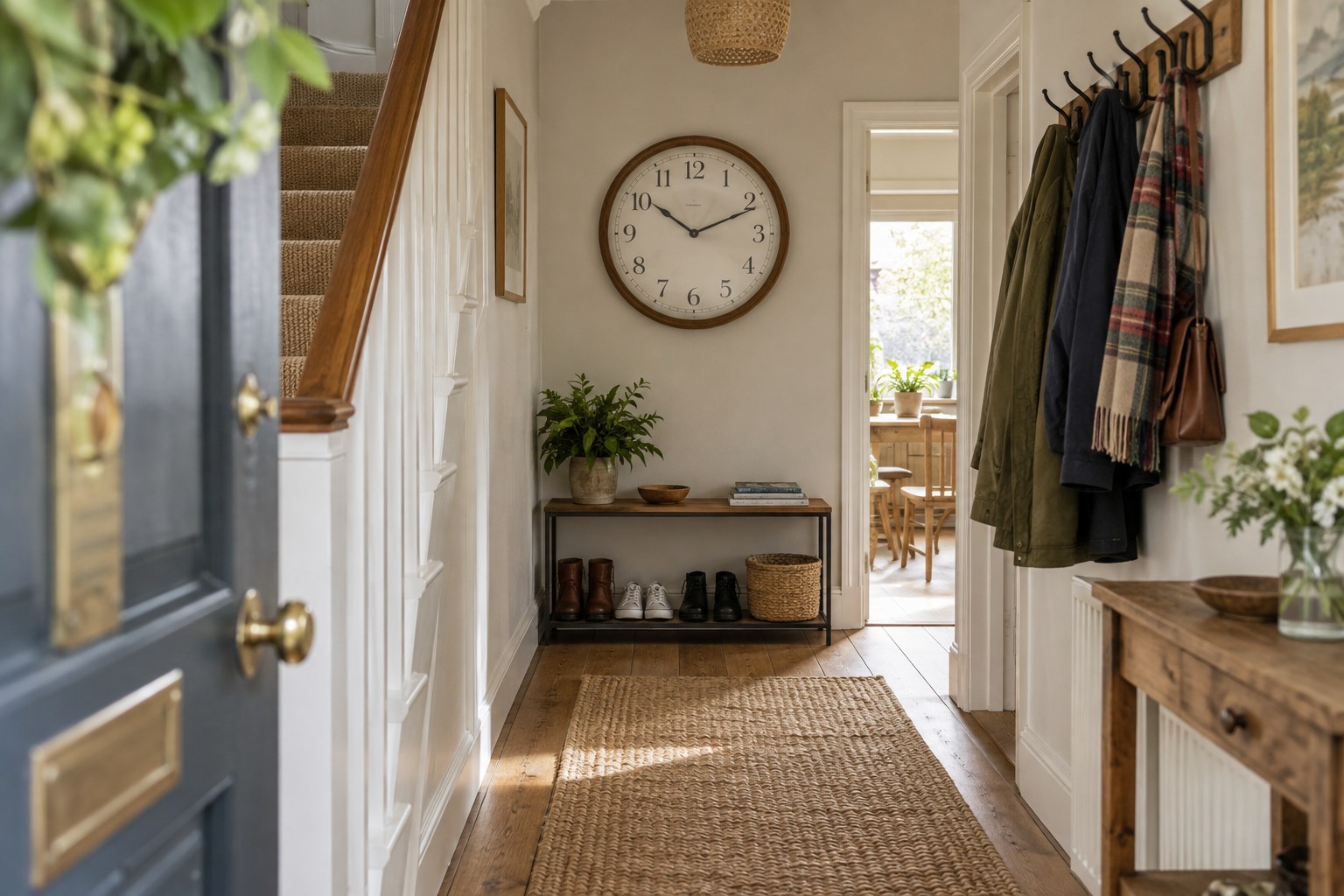
Look for awkward relationships with door frames, shelving and lamps. The case needs space, but the readable dial may be smaller than the outer outline. If a wide frame occupies much of the clock, make a second inner circle to represent the actual face.
Return to the room for the final decision
A photograph can flatten depth and hide a projection that will obstruct a door. Open nearby doors and cupboards in person. Check the wall construction and safe access for fitting separately; neither can be established from a styling photograph.
Repeat the view under normal evening lighting. Cameras often brighten dark corners automatically, so trust your eyes when judging legibility. Save the measurements and the chosen photograph with the product details. They give you something concrete to compare when the clock arrives, before you make a permanent fixing or discard the packaging.