Photograph before interpreting
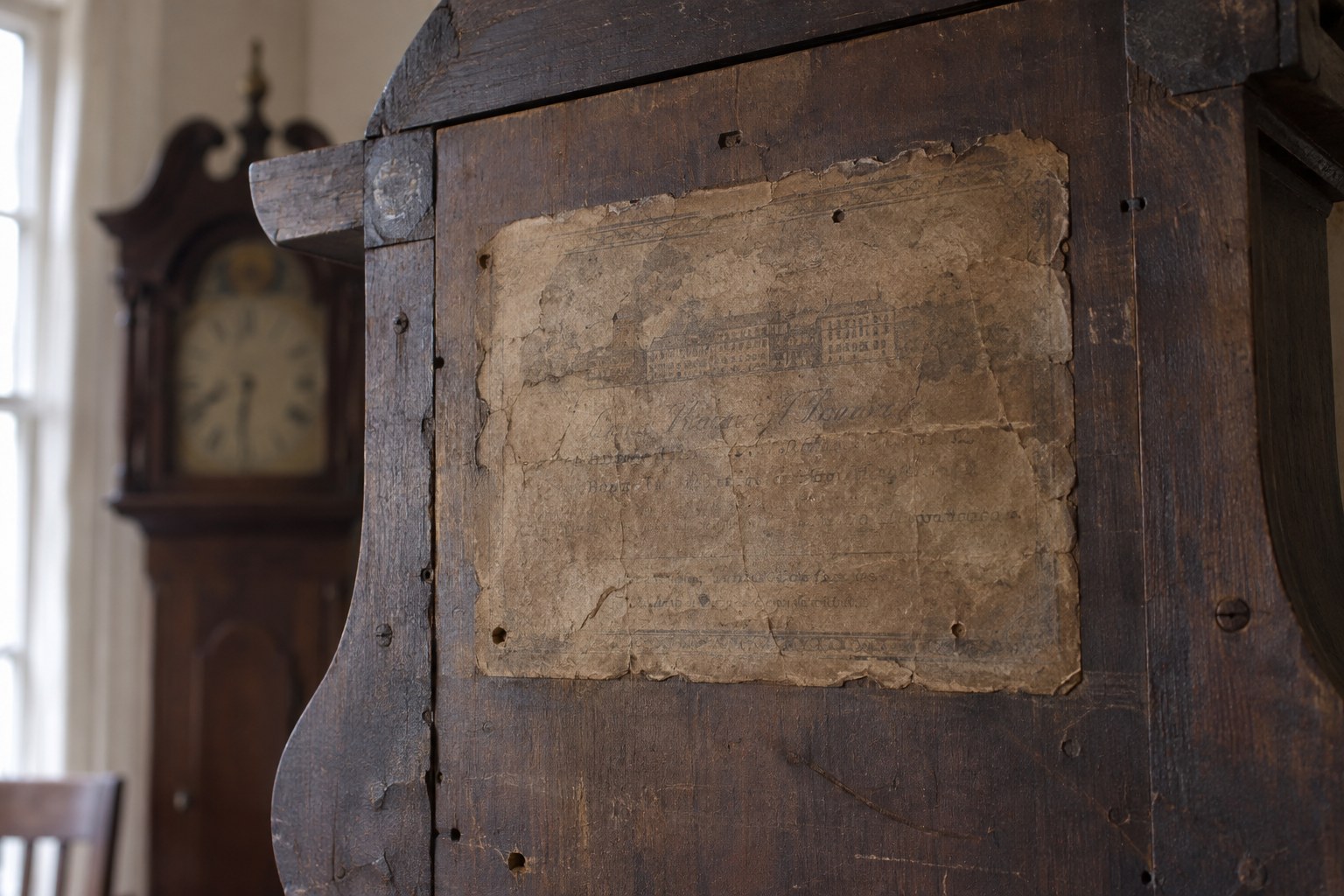
Use a clear overall photograph to show where the label sits on the clock, then take closer views in soft light. Change the camera angle to reduce reflections rather than wetting or rubbing the paper. Keep the clock supported and avoid turning a heavy case into an unstable position for a better shot.
If the label is behind an inaccessible panel, do not dismantle the clock solely to reach it. Existing photographs or a later repair visit may provide safer access. The position and attachment can be part of the evidence as well as the printed words.
Transcribe uncertainty honestly
Write the text exactly as you can read it, preserving line breaks where useful. Mark missing or uncertain letters with brackets instead of completing a familiar brand name from memory. Record numbers separately and distinguish a printed model reference from handwriting which might relate to a repair or a previous owner.
Search for the exact wording in manufacturer archives, museum collections or reliable catalogues. A retailer's label does not necessarily identify the maker, and a company address may have been used over more than one period. Treat a promising match as a lead that needs comparison with the actual clock.
Leave the original attached
Do not peel the label away to scan it or put tape over a lifting edge. Adhesives and pressure can damage paper and obscure details. If it is loose or shedding, reduce handling and ask a conservator how best to preserve it in context.
Store your transcription and photographs with the clock's record, including the date and your degree of certainty. A readable digital copy makes routine enquiries easier without exposing the original to repeated handling. Keep any detached fragment safely associated with the clock rather than attempting to stick it back with household glue.