Use the shelf's real depth
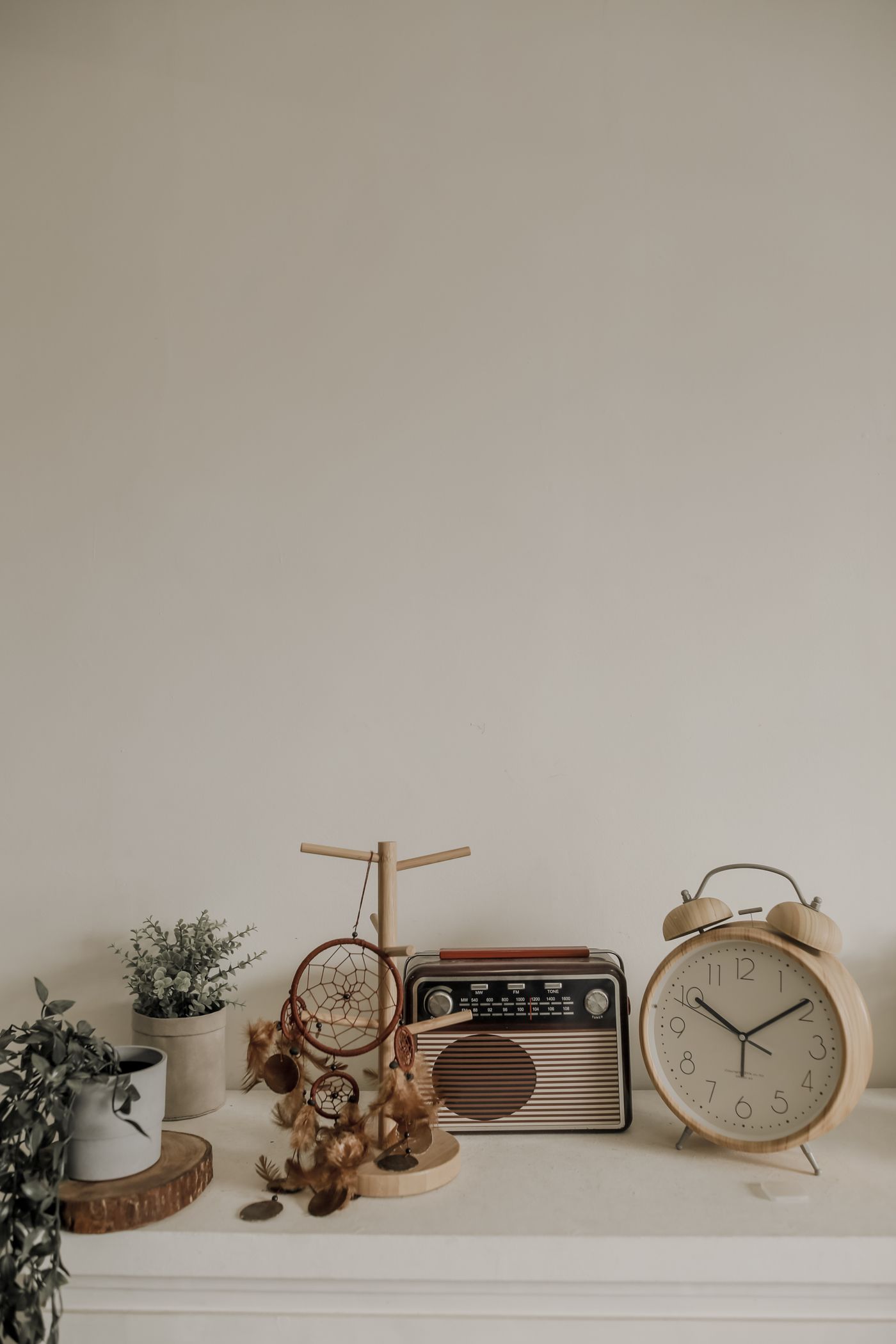
Measure from the front edge to the wall or back panel, allowing for cables, brackets and any raised lip. Compare that space with the clock's complete footprint. A rounded or splayed base can need more room than the dimensions of the face suggest. The feet should sit on the same flat surface without overhanging.
Check the shelf's load guidance and mounting condition before adding another object. A clock is a poor way to disguise a bowed board or a loose support. If you are uncertain about the shelf, resolve that first rather than distributing objects until it appears balanced.
Keep a clear route to the dial
Arrange the clock before the books and plants. View it from the chair or doorway where you normally check the time. A small clock tucked behind a trailing plant may look appealing in a close photograph but disappear from the room's ordinary viewing angle.
Leave growing space around plants and avoid putting a pot where watering can reach the case. Books should not lean against the clock. A simple grouping of different heights works better when each object has its own stable footprint, rather than depending on the next object for support.
Make care easy
Leave enough space to pick up the clock with both hands if its size calls for that. Battery doors, winding points or rear controls should remain accessible without pulling a heavy stack of books forwards. A small tray can organise loose objects nearby, but it should not become an uneven pedestal for the clock.
Observe how the shelf behaves when doors close or people walk past. A clock that moves or wobbles needs a more suitable location, not a hidden improvised wedge. Consider a lower shelf if the only available space requires awkward reaching, particularly where children or pets share the room.