Look at stability first
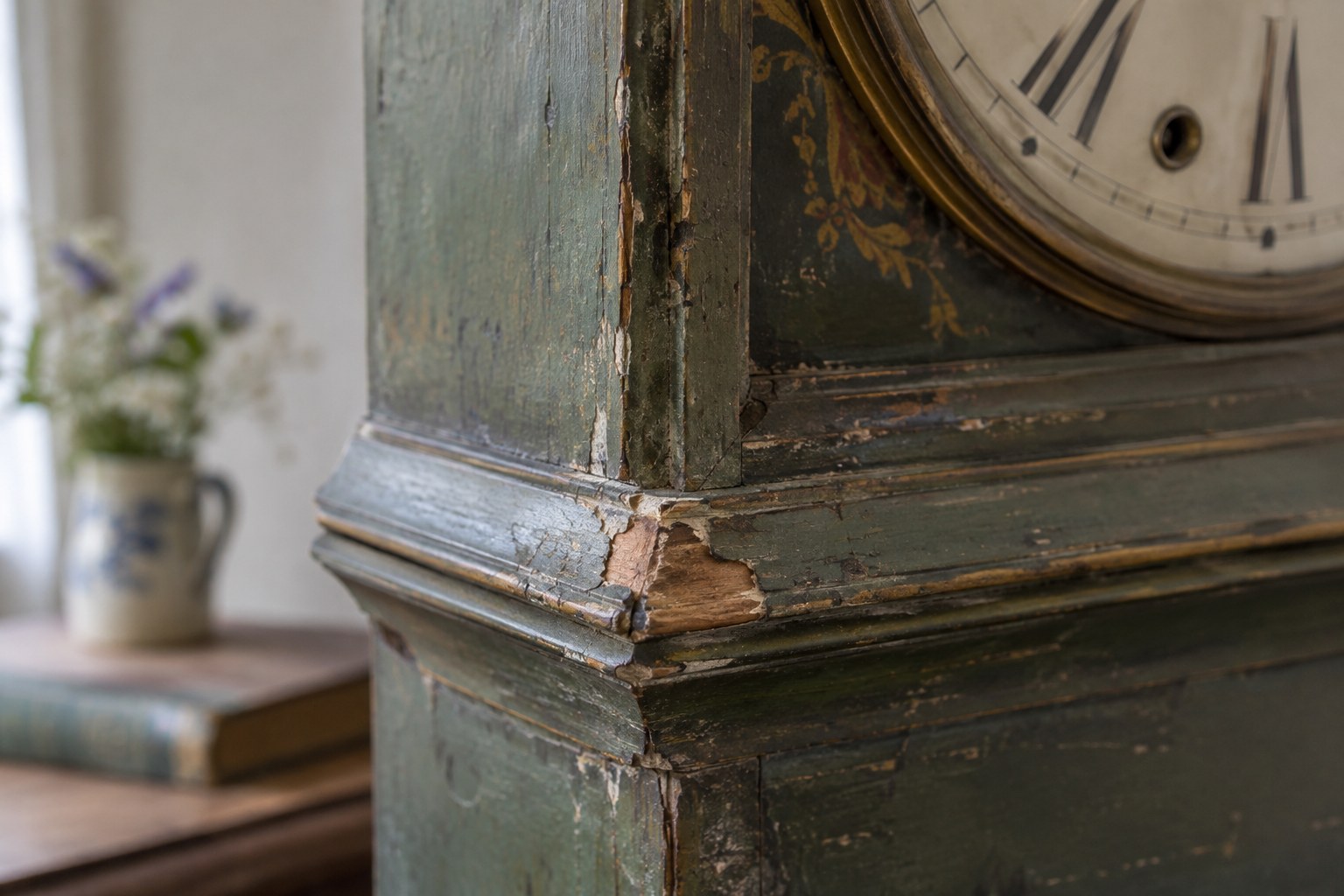
A chip in a case can be cosmetic, but it may also sit beside a crack or an old repair. Examine it without probing and take a clear photograph in soft light. Note whether any fragment is loose or whether the area has changed since an earlier photograph, rather than judging solely by how noticeable it looks.
Support the clock from sound areas and avoid the damaged edge during handling. If stability is uncertain, move it only with appropriate help and choose a safer temporary position. A decorative repair should not distract from a case that cannot safely carry its own weight.
Keep fragments without fitting them
If a piece has detached, retain it with the clock's record. Cushion it separately in a suitable container so its edges cannot knock against other fragments. Do not repeatedly test the fit, clamp it into place or apply household glue to keep it from being lost.
A repair method depends on the material and existing finish. Painted wood, plated metal, ceramic and moulded plastic cannot be treated as one substance. Old adhesives or previous fills add further uncertainty. A conservator can assess whether intervention is appropriate and what information or surface may be affected.
Decide what the display needs
From the normal viewing position, a small stable chip may be less intrusive than it appears in a close photograph. Adjusting the arrangement can make the clock comfortable to live with without hiding damage from a future buyer or permanently changing the surface.
Agree the treatment scope
If treatment is chosen, discuss the intended result, the limits of matching and the documentation before work begins. Keep photographs of the original loss and a description of any repair. Leaving a stable chip alone can be a deliberate preservation choice, while loose material, spreading cracks or unsafe support call for assessment rather than cosmetic concealment.