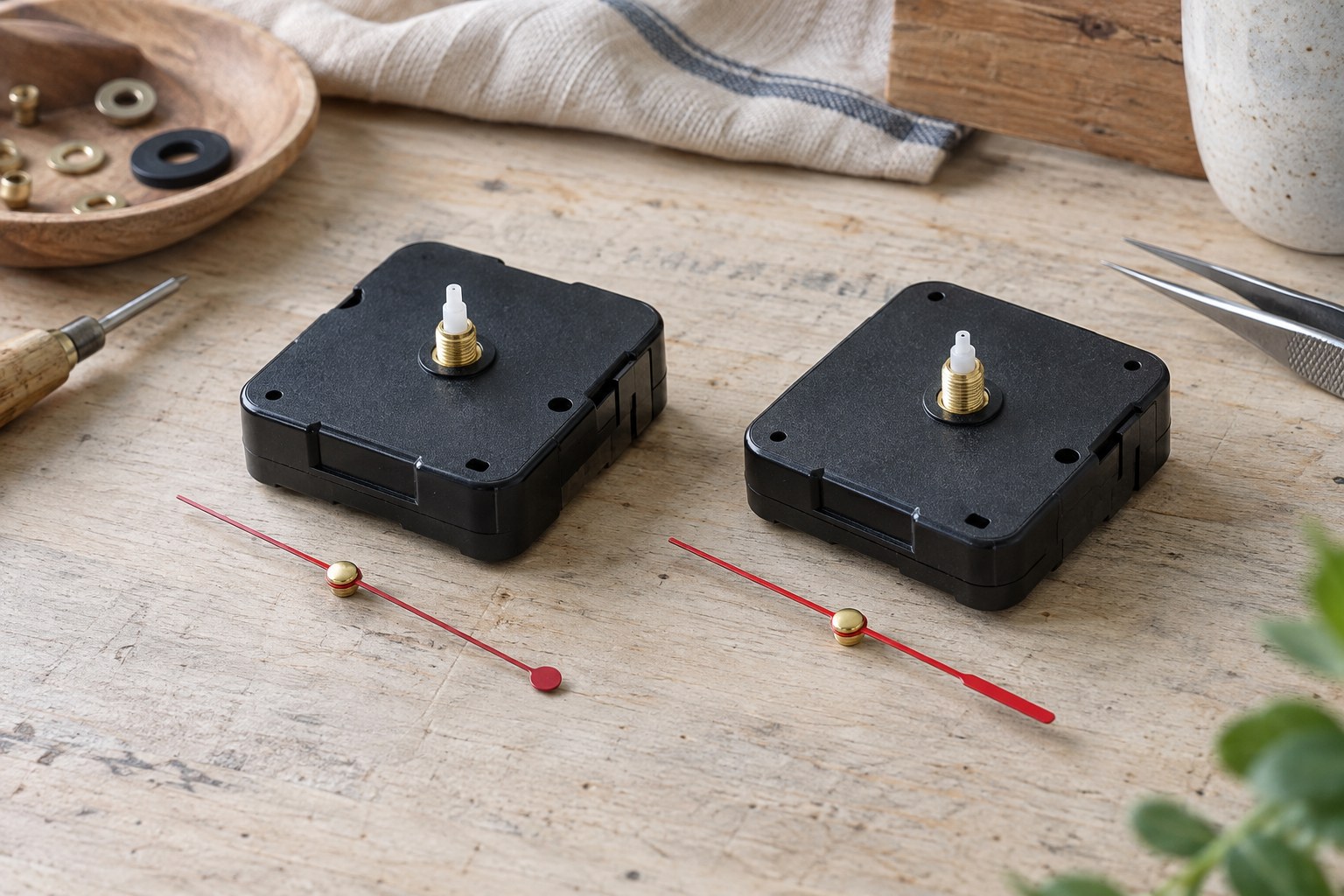
Inspect the back as carefully as the dial
Find a photograph of the rear case or download the instructions. Check whether the battery compartment opens with a sliding lid, a latch or a small screw. Consider whether you can operate it comfortably and keep any loose screw safely contained. A decorative rear panel may conceal a second cover or require the whole clock to be removed from a stand. Ask the seller if the photographs do not show the arrangement clearly. Do not assume the largest visible panel is intended to be opened by the owner.
Think about the change in its real location
A high wall clock has to come down safely before its battery can be changed. Work out where you will put it while opening the compartment, particularly if the front has exposed hands or a projecting glass cover. A clock wedged between shelves may be difficult to lift off its fixing. For a bedside model, check whether changing the battery requires unplugging a separate supply or resets the alarm. Follow the particular manual rather than experimenting with removal sequences. Accessible does not mean unsecured: a proper compartment closure remains important in a home with children.
Compare the ongoing requirements
Read the specified cell size, quantity and type. A clock with several lighting or alarm features may use different compartments for different functions, so count all of them. Keep the model information with the battery specification rather than relying on memory. When replacing a set, follow the maker's instructions and observe the polarity markings. Never force an ill-fitting cell or bend a contact to make another size fit. If the compartment shows damage or leakage, stop the ordinary battery-change routine and ask the manufacturer how to proceed.