Try the room before the shop
A clock can look generous on a white product page and still be difficult to read above a bookcase. Stand where you normally check the time: the sofa, the kitchen doorway or the far end of the dining table. Note the distance and whether you see the face straight on. A clock used from several places needs to work from the least convenient of those views.
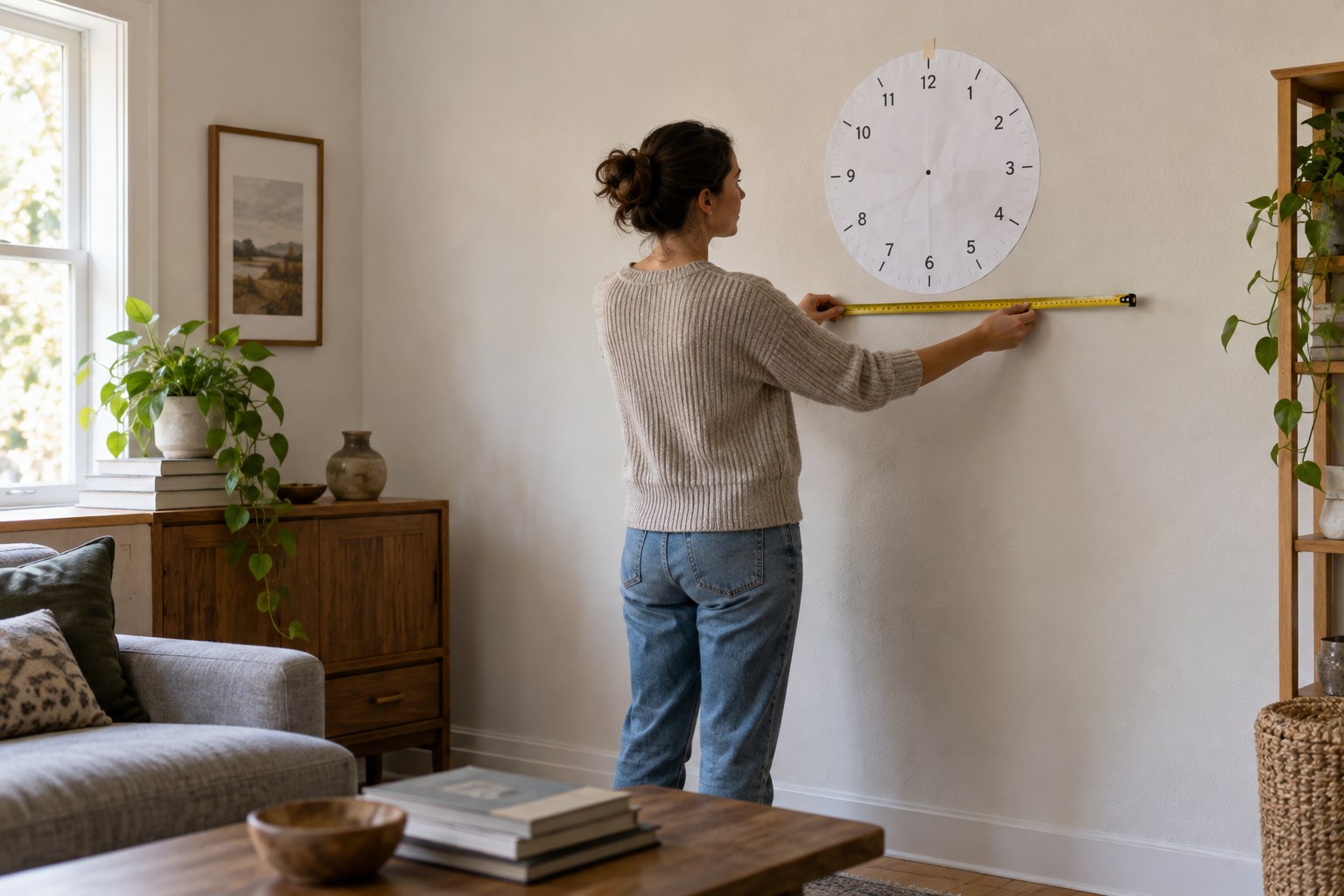
Cut a paper circle to the advertised diameter and put it temporarily against the wall without damaging the finish. This shows the footprint of the case, not the size of the readable dial. Check the listing for both measurements; a broad frame can take up much of the available space.
Look at the hands as well as the numbers
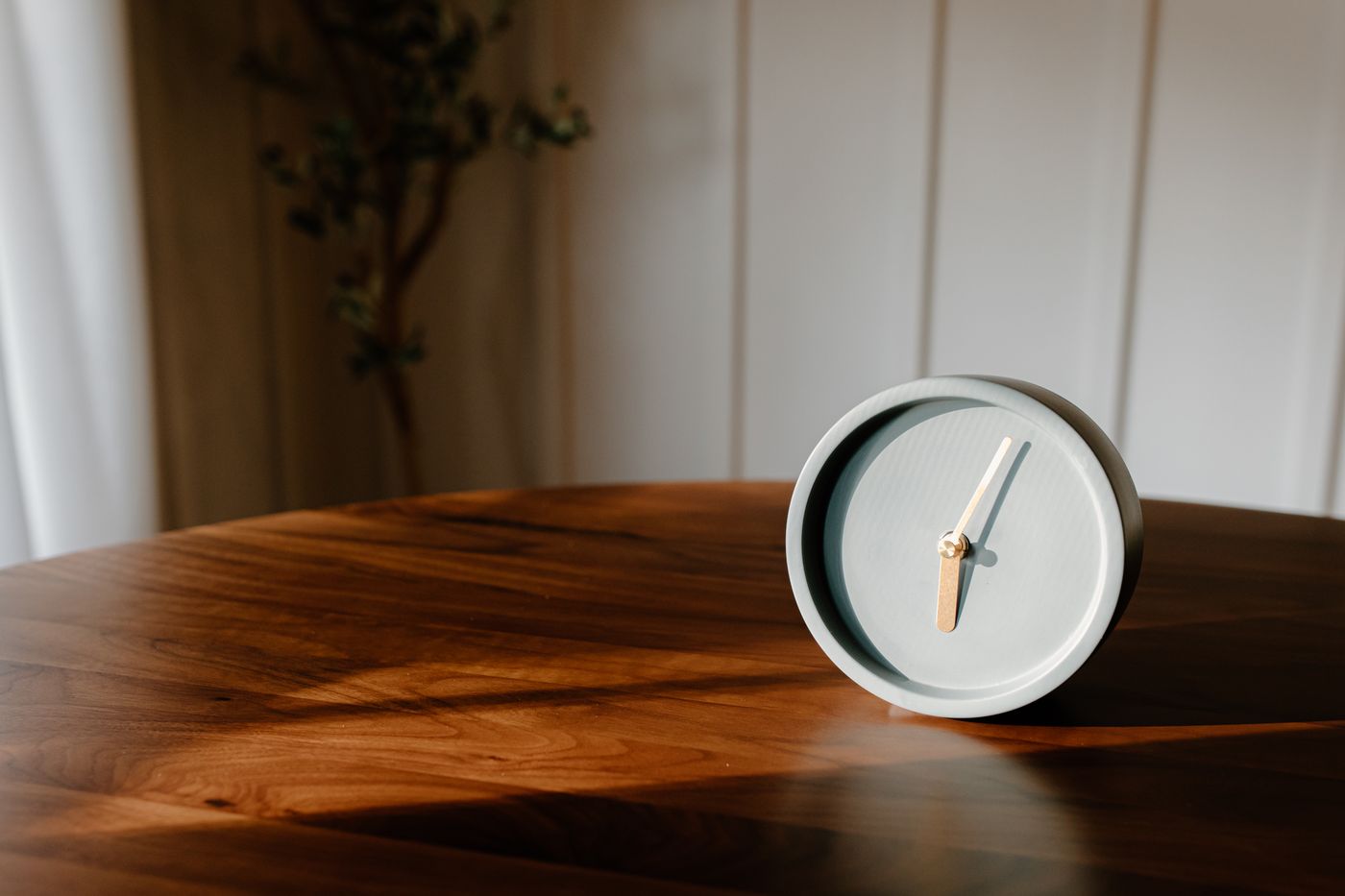
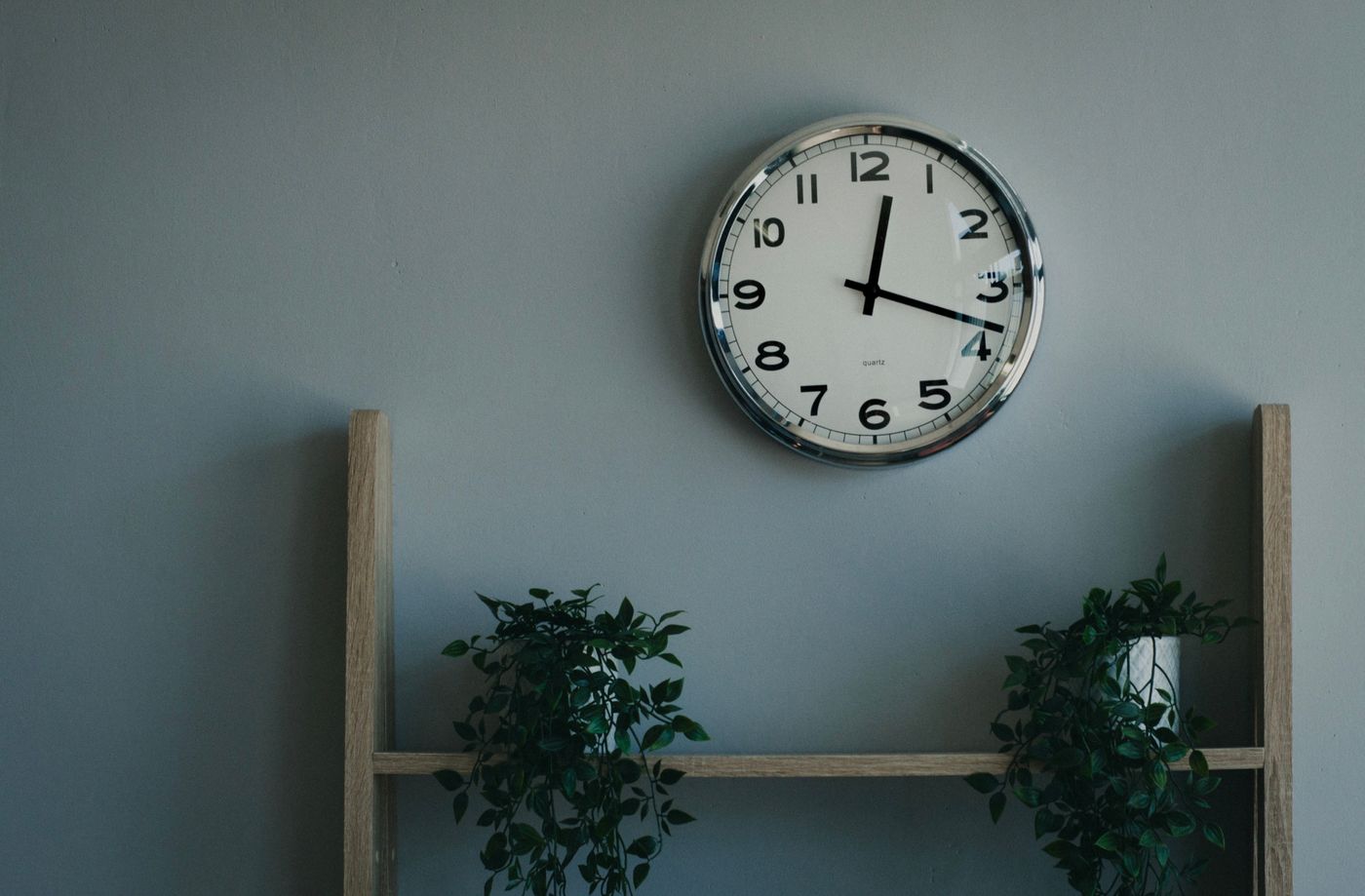
Large numerals help, but the hands must remain visible against the whole face. Dark, reasonably broad hands on a pale, plain dial are easier to distinguish than fine metallic hands over a busy pattern. Look for a clear difference between the hour and minute hands. A decorative tail or counterweight should not make the reading ambiguous.
View a photograph at roughly the size the dial will appear from your seat. This is only a screening exercise, because screen brightness and reflections differ from real life. If possible, see the clock in person or check the return arrangements before ordering.
Make a second check in evening light
A window opposite the face can turn a glass cover into a bright patch. Move your paper mock-up a little to either side and consider where lamps will be used after dark. A readable position often matters more than adding a few centimetres to the diameter.
Before buying, confirm the clock's weight, its hanging arrangement and whether the battery can be reached once it is mounted. Choose a fixing suitable for the wall and the manufacturer's requirements. A legible clock is only useful if it can be fitted securely and maintained without an awkward balancing act.