Find the signal name, not just a frequency
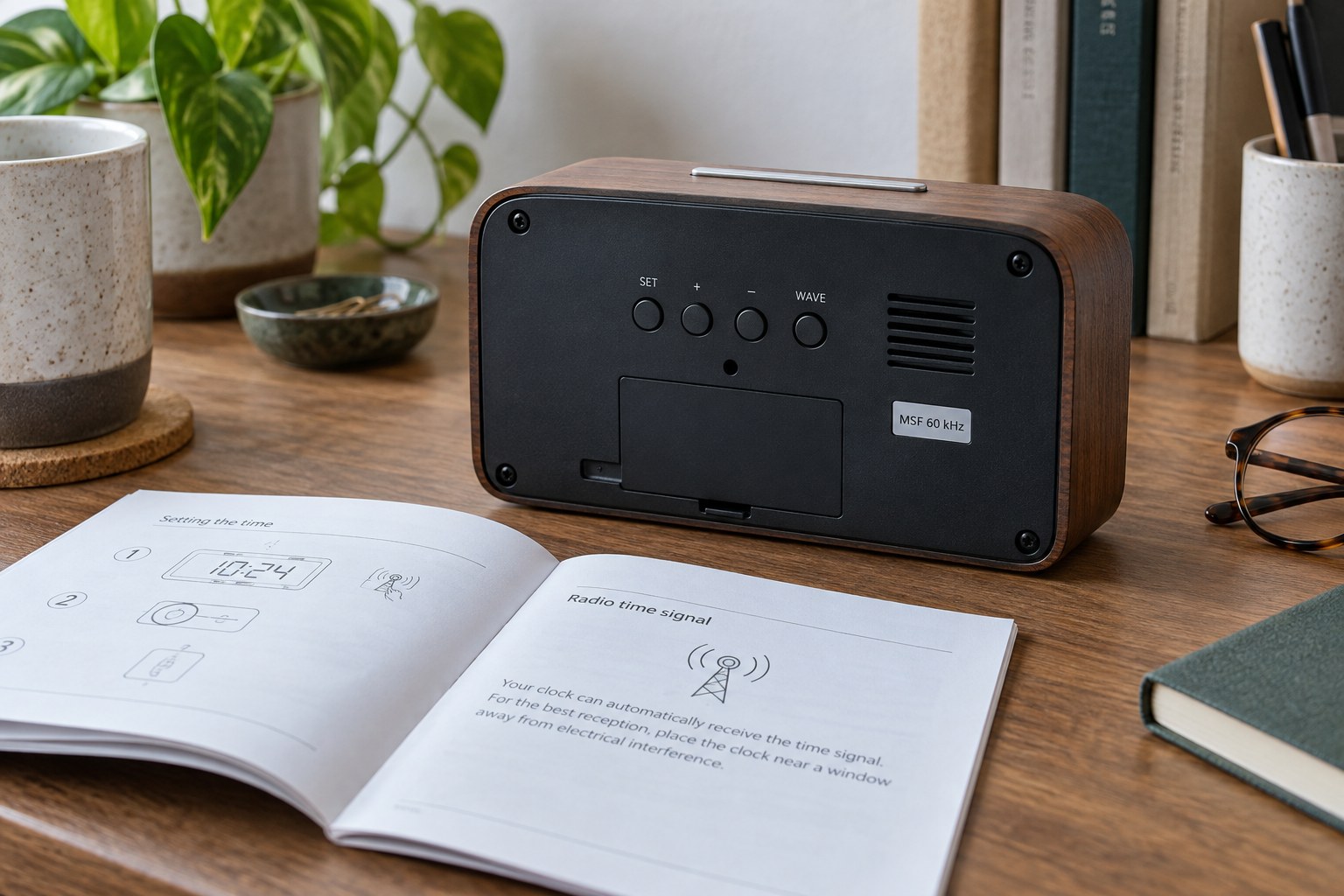
NPL describes the UK MSF service as a time-and-date broadcast on 60 kHz. In a clock specification, look for an explicit statement that the receiver supports MSF. A frequency tells you where a receiver listens; it does not, by itself, establish that the clock understands the time code carried there. Treat a frequency-only description as a question for the supplier, not a confirmed match.
The words automatic, atomic and self-setting are also incomplete specifications. They may describe different arrangements. Find the manual for the exact model and identify what actually provides the time information before comparing the feature with another clock.
Compare two hypothetical listings
Imagine one unbranded listing says only radio controlled, 60 kHz. Another explicitly says MSF receiver and gives a model identifier matching the manual. The second description answers the receiving-system question more clearly. This example describes wording to compare, not two real products or a guarantee that either clock will receive a signal in your room.
Now check the selected variant in the basket. Shared photographs and a common range name can conceal different regional versions. Record the full model reference and ask the retailer to confirm that the supplied version has the named receiver. A plug adaptor changes neither the receiving system nor its decoding capability.
Record what the clock does with the information
Make a short specification note covering the supported signal, regional model, manual-setting option and documented summer-time behaviour. Add any time-zone adjustment separately: changing the displayed offset is a different function from receiving and decoding a broadcast. Leave an unanswered field marked unknown rather than filling it from a similar model.
Save the relevant manual page or written supplier confirmation with your note. You can then compare candidate clocks on stated functions without turning an advertising label into a technical promise. Reception quality remains a separate check after compatibility has been established.