Decide whether you need one
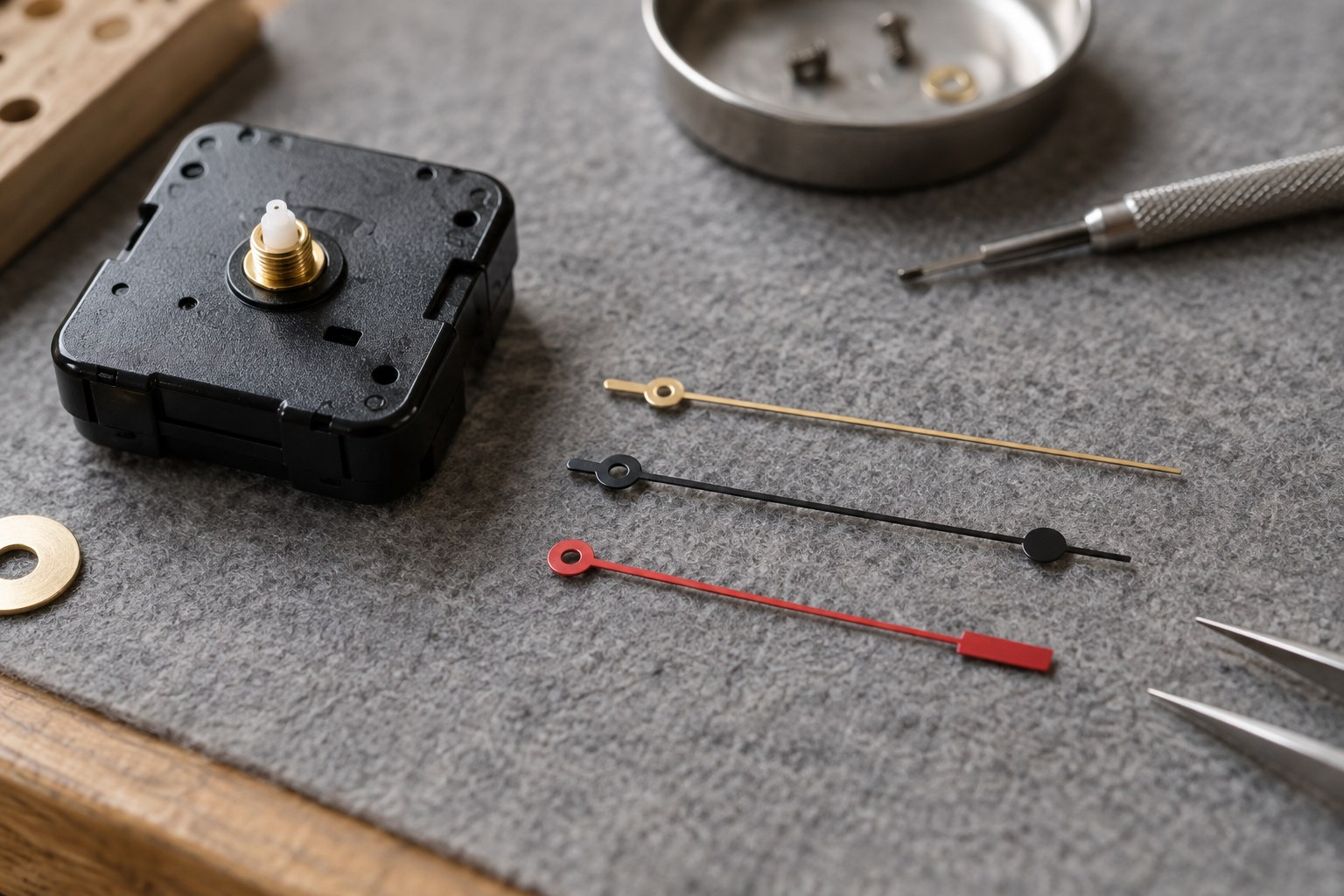
Think about what the clock is for. A simple living-room display may be easier to read with only hour and minute hands, while a visible second indication can help with a brief timed task. Check whether the chosen movement supports the arrangement you want, including operation without a second hand if that is your preference.
A second hand should not be used as a promise of precision. It shows the movement's progress but does not by itself establish accurate timekeeping. Choose the clock's overall specification separately from this visual detail.
Match the fitting and reach
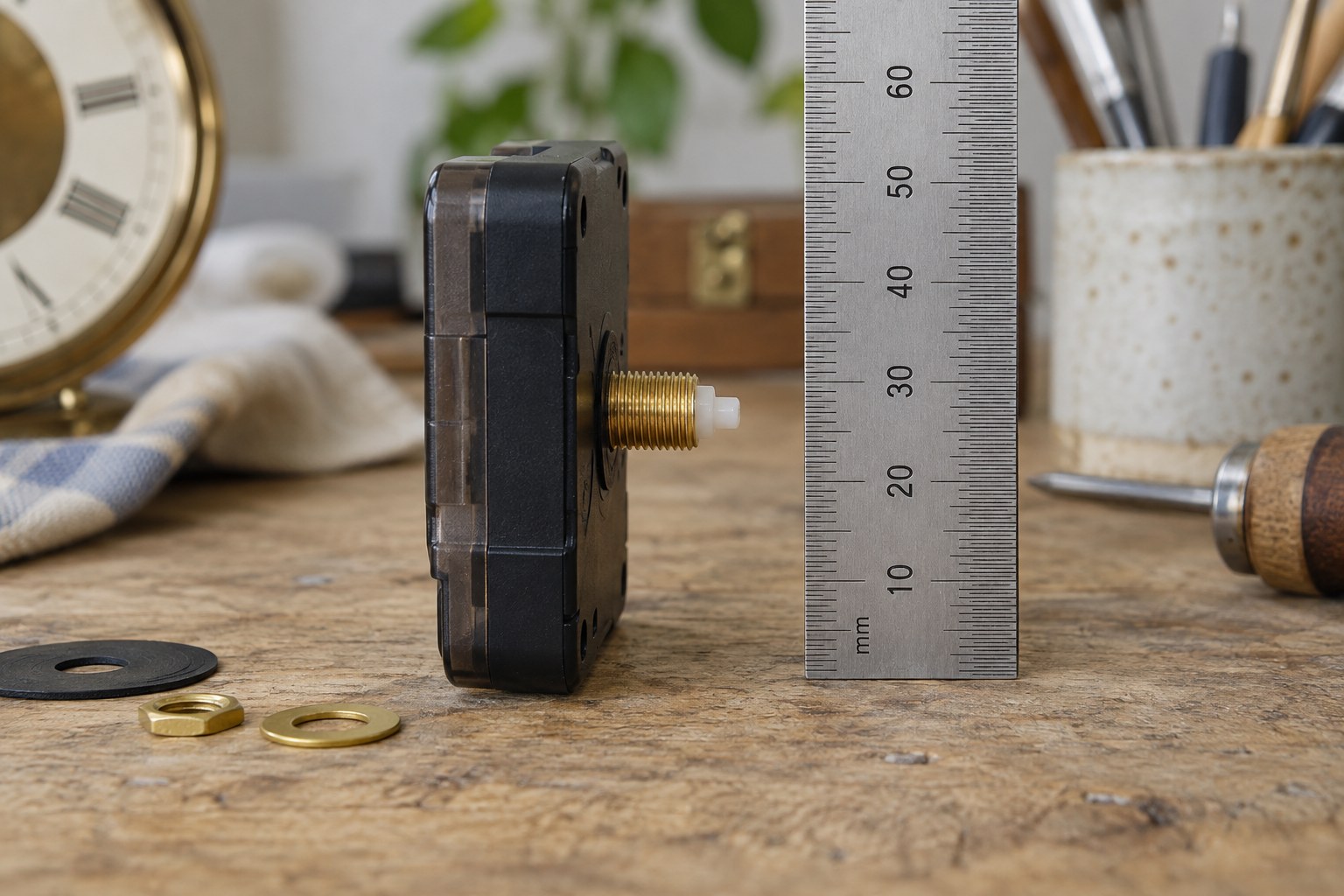
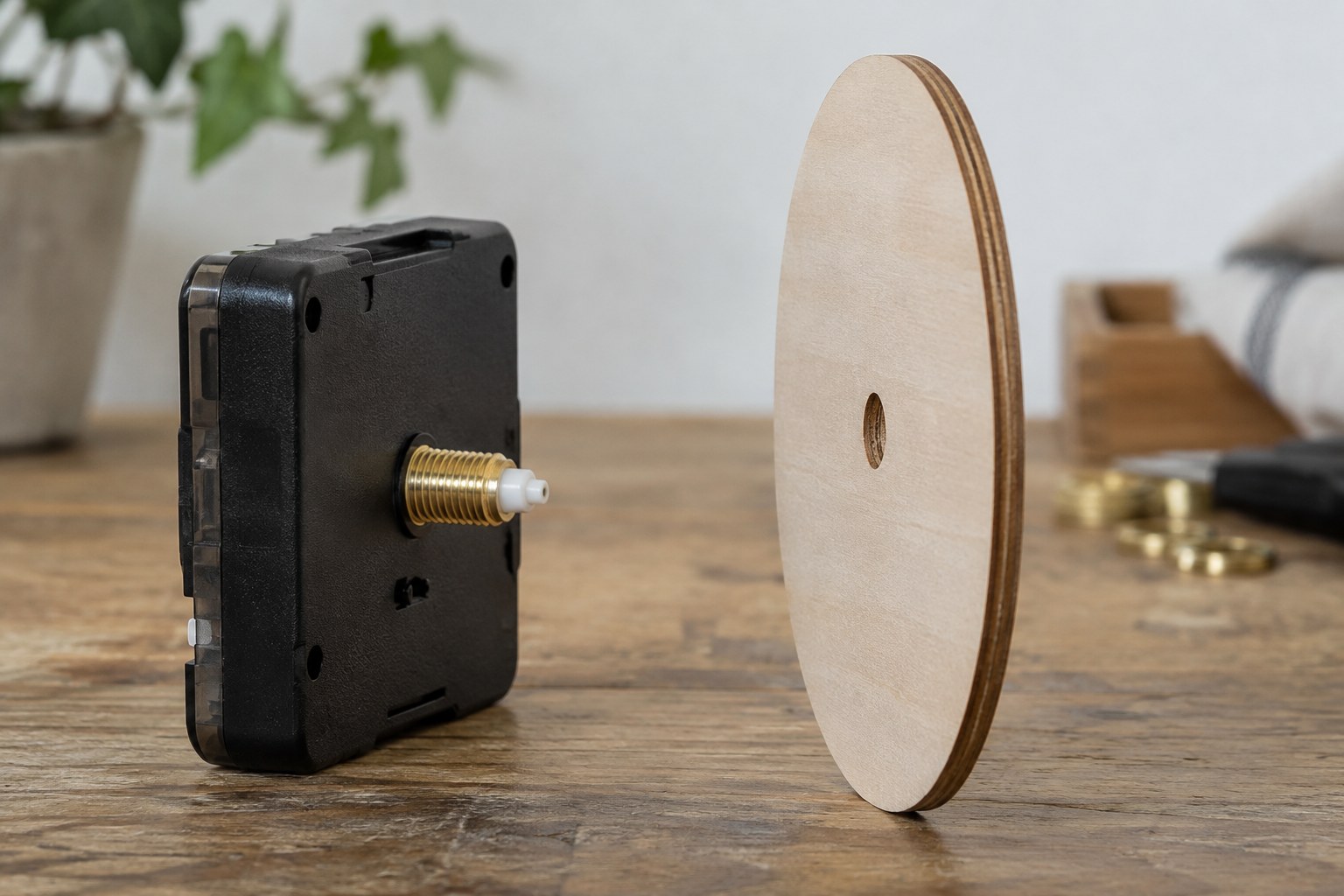
Use the movement supplier's listed compatible second hand. The tiny centre connection is not reliably identified from its colour or apparent diameter in an online photograph. Do not force a hand from another kit onto the spindle because the hour and minute pair happened to fit.
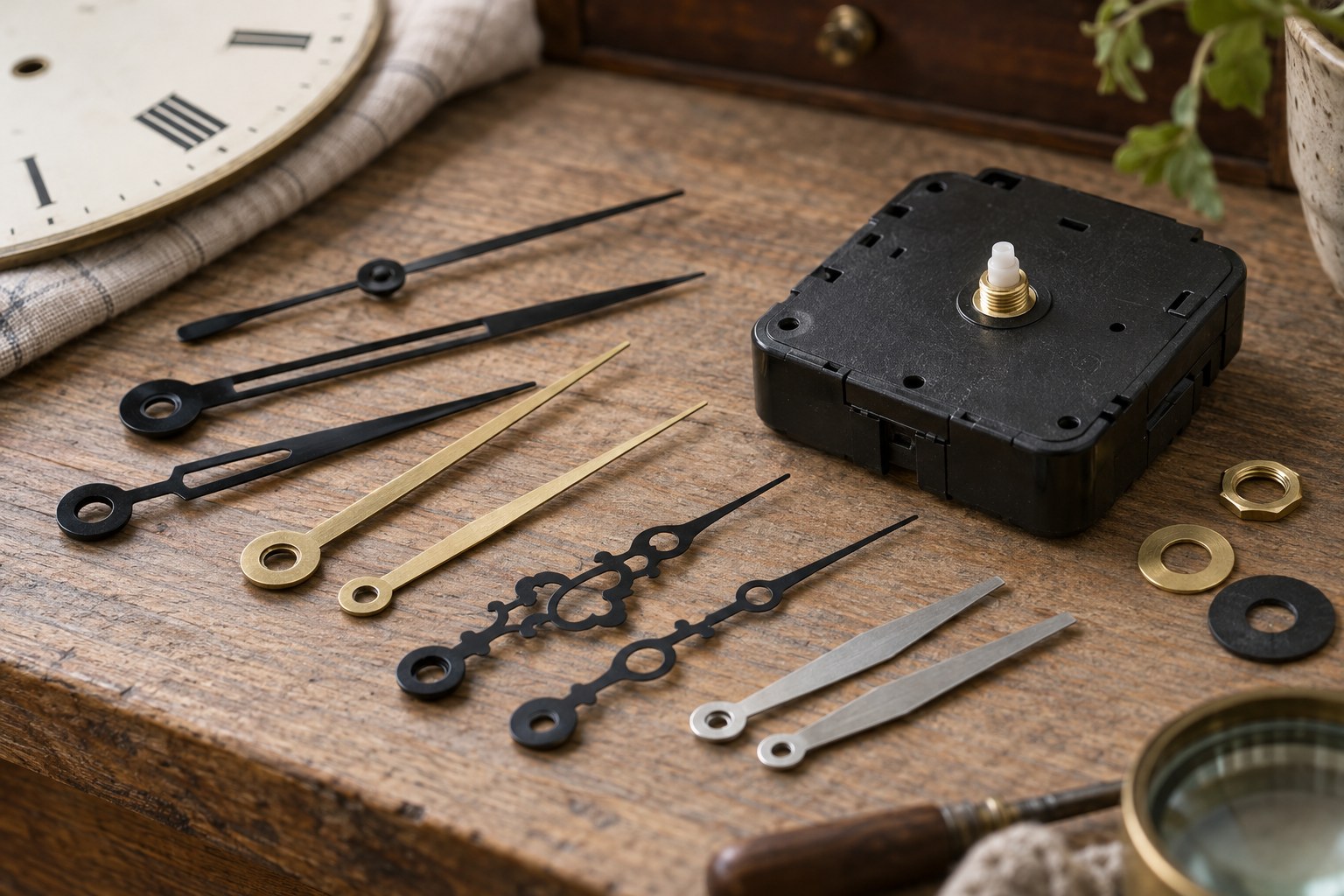
Compare the centre-to-tip length with the visible dial and inspect the counterbalance behind the centre too. Both ends must clear the surrounding structure. Check any limit on hand size or weight in the movement instructions, especially when the proposed hand is unusually long or decorative.
Observe the assembled clock
With the battery removed, assemble the hand stack in the documented order and inspect it from the side. The second hand needs separation from the minute hand as well as the cover. Do not close the lens by pressing it down against a projecting centre fitting.
Once the clock is securely assembled, run it in its intended orientation and watch several passages around the face. Stop if it catches, hesitates or rubs. Recheck compatibility and assembly rather than adding weight, oil or improvised bends. If a quieter appearance is your aim, compare a suitable two-hand design with a compatible sweep movement before buying.