Start with a record
For a modern battery quartz clock, photograph the front, back and movement label before considering removal. Take out the battery and find the maker's assembly instructions. If the hands or bezel cannot be released by the documented method, stop rather than levering against the face. Measuring a partly dismantled clock is not worth damaging a dial you hoped to keep.
Write down the movement's identifying marks, case dimensions and the position of its setting wheel. A replacement can have the right shaft and still collide with a recess or leave its battery compartment inaccessible. Include the depth available behind the dial in your sketch.
Separate the measurements
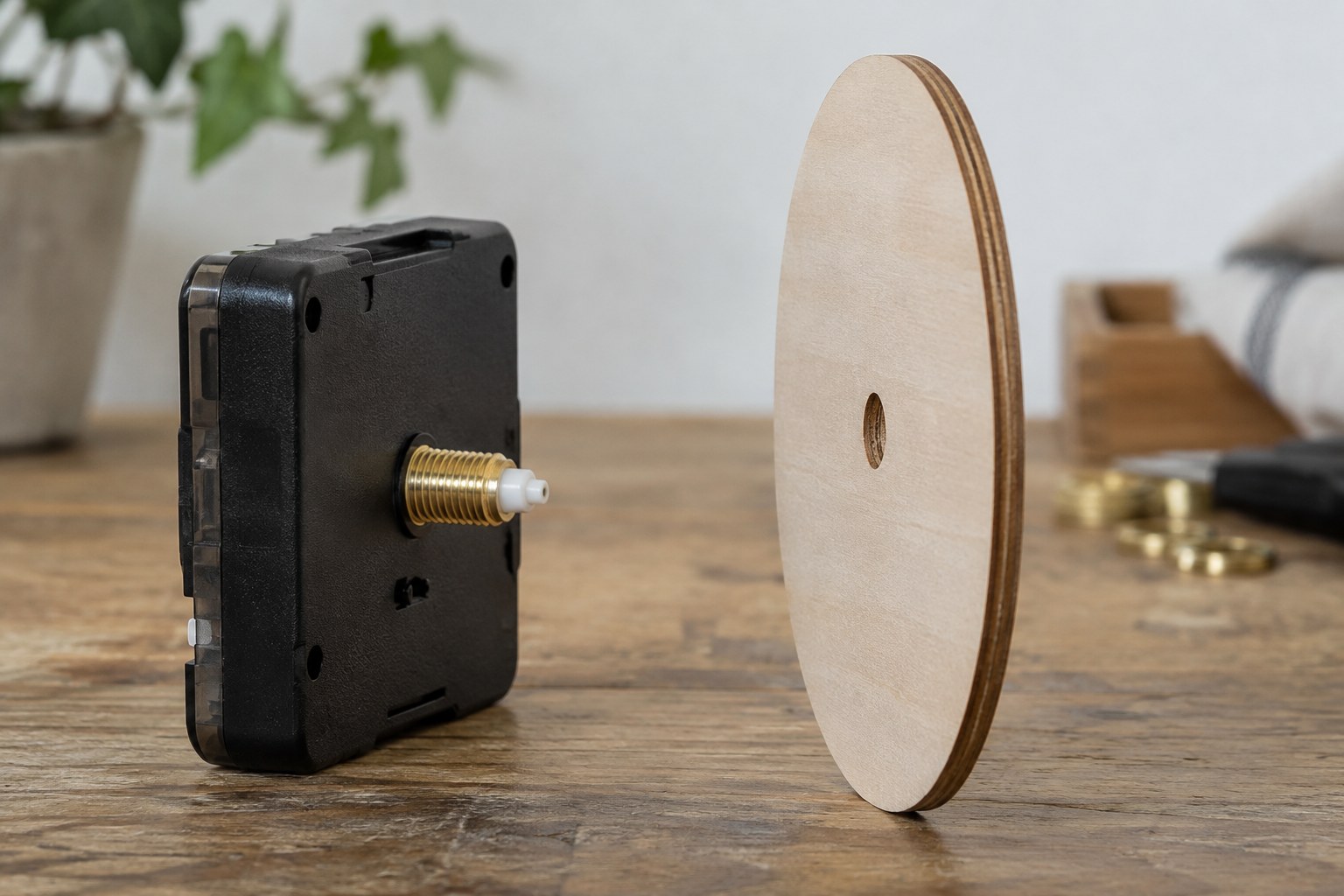
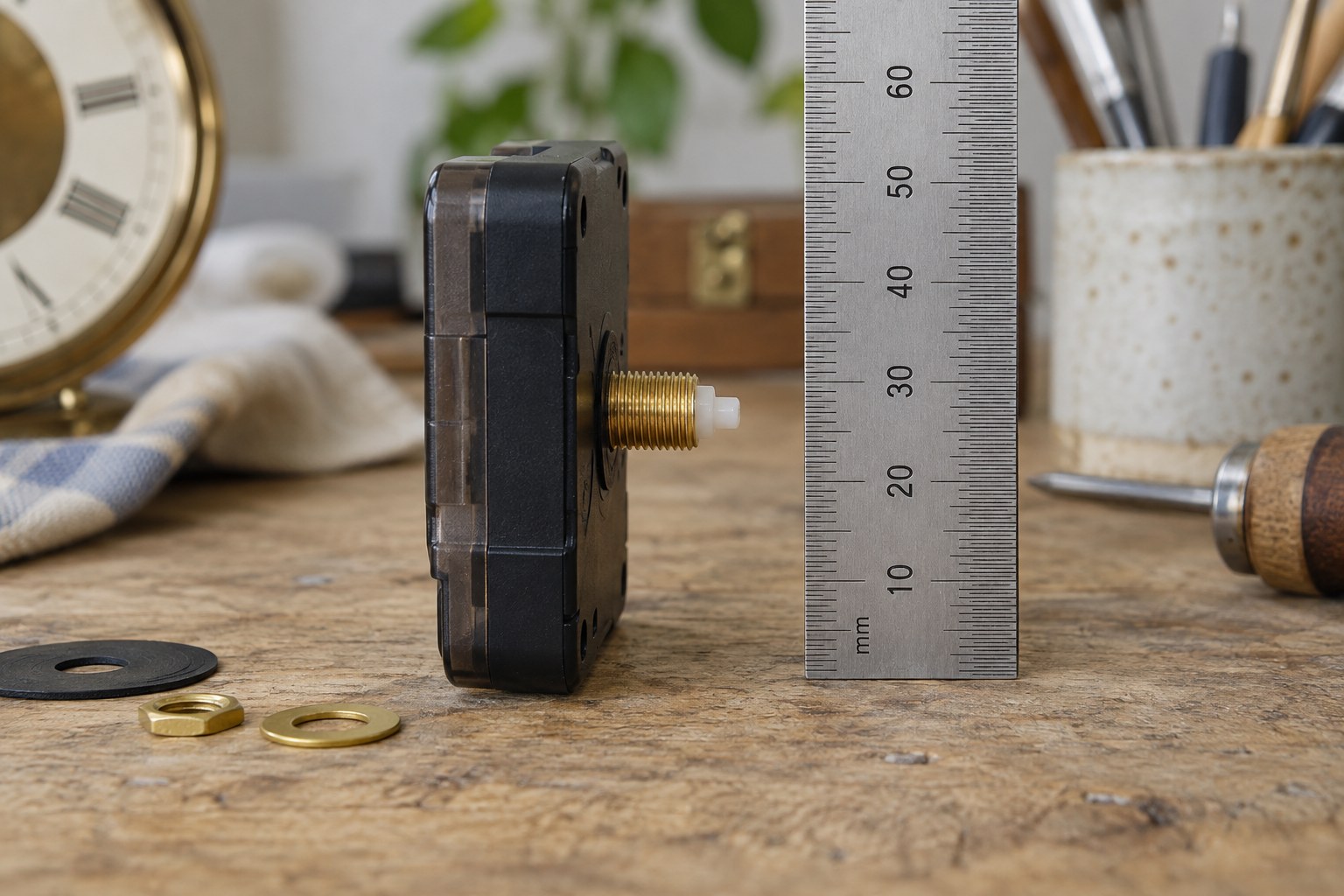
Record the total shaft length and the length of its threaded fixing section separately. Also measure the complete material stack through which the shaft passes, including any backing board. A supplier's drawing should show which surface each dimension starts from; comparing numbers with different reference points gives a misleading match.
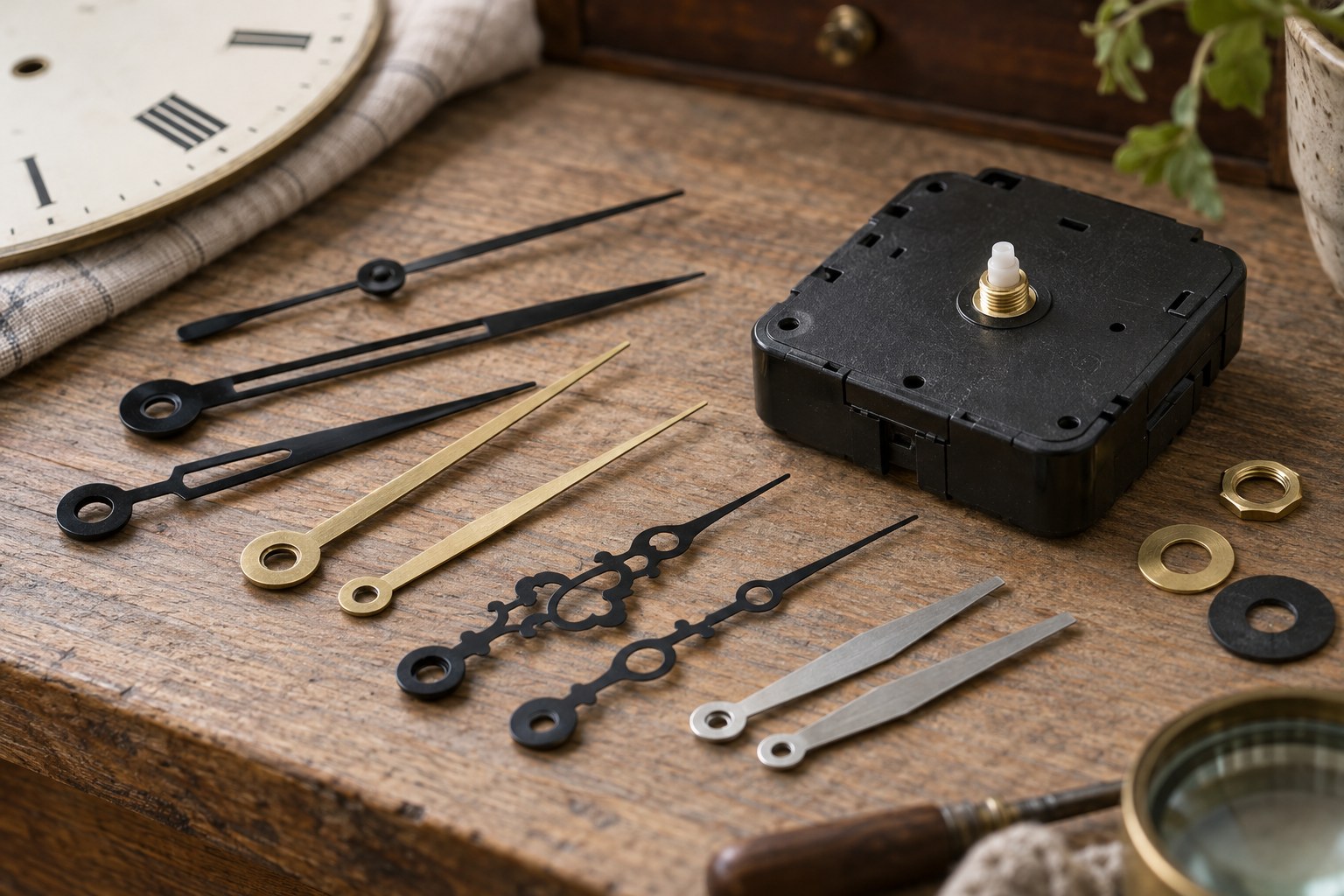
Measure hand length from the centre of its mounting hole to the tip. Note the attachment shape and any retaining nut. Similar-looking hands are not necessarily interchangeable. Where those small fittings are difficult to identify, send photographs and measurements to the supplier or choose a documented compatible movement and hand set.
Check the assembled envelope
Look beyond the fixing nut. The hands need room in front of the dial, below any cover and around the rim throughout their movement. Compare the proposed hand lengths and total projection with the case rather than assuming a shorter movement body solves every problem.
Send one complete enquiry
Keep the original parts together while you seek a match. Ask the supplier to confirm the whole combination, including the dial thickness and hand set, in one enquiry. That creates a useful written specification and avoids ordering a succession of almost suitable components.