Identify the connection
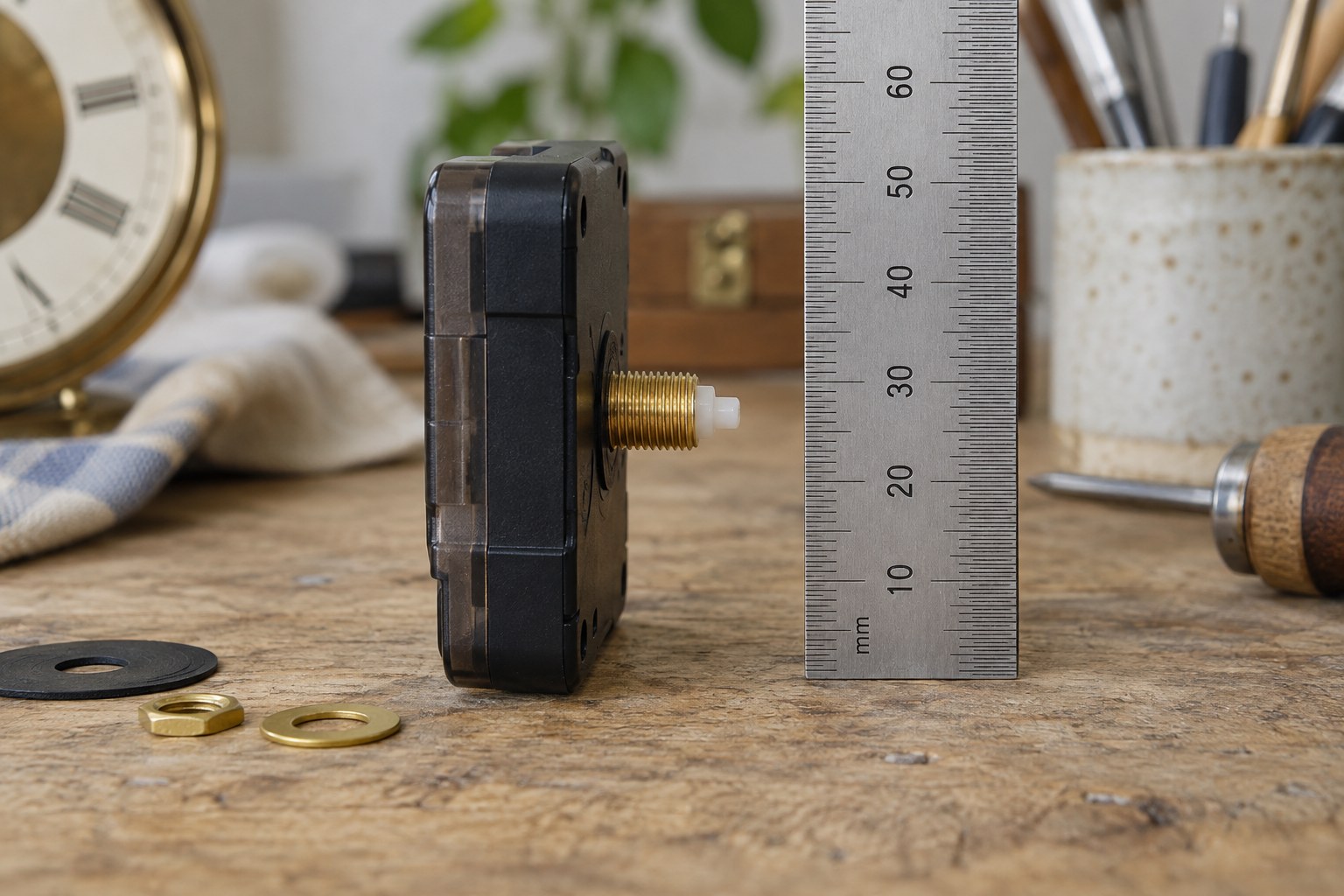
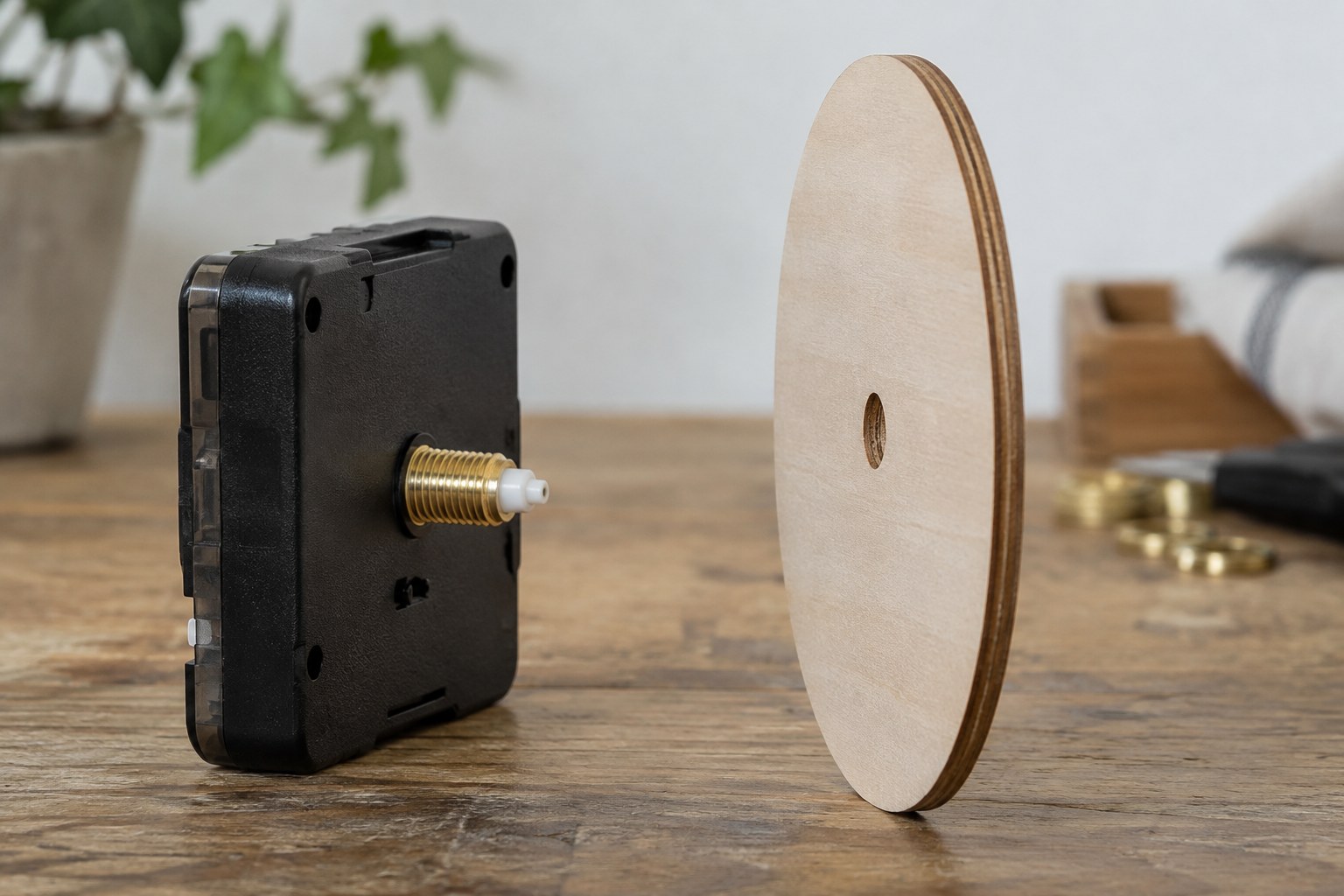
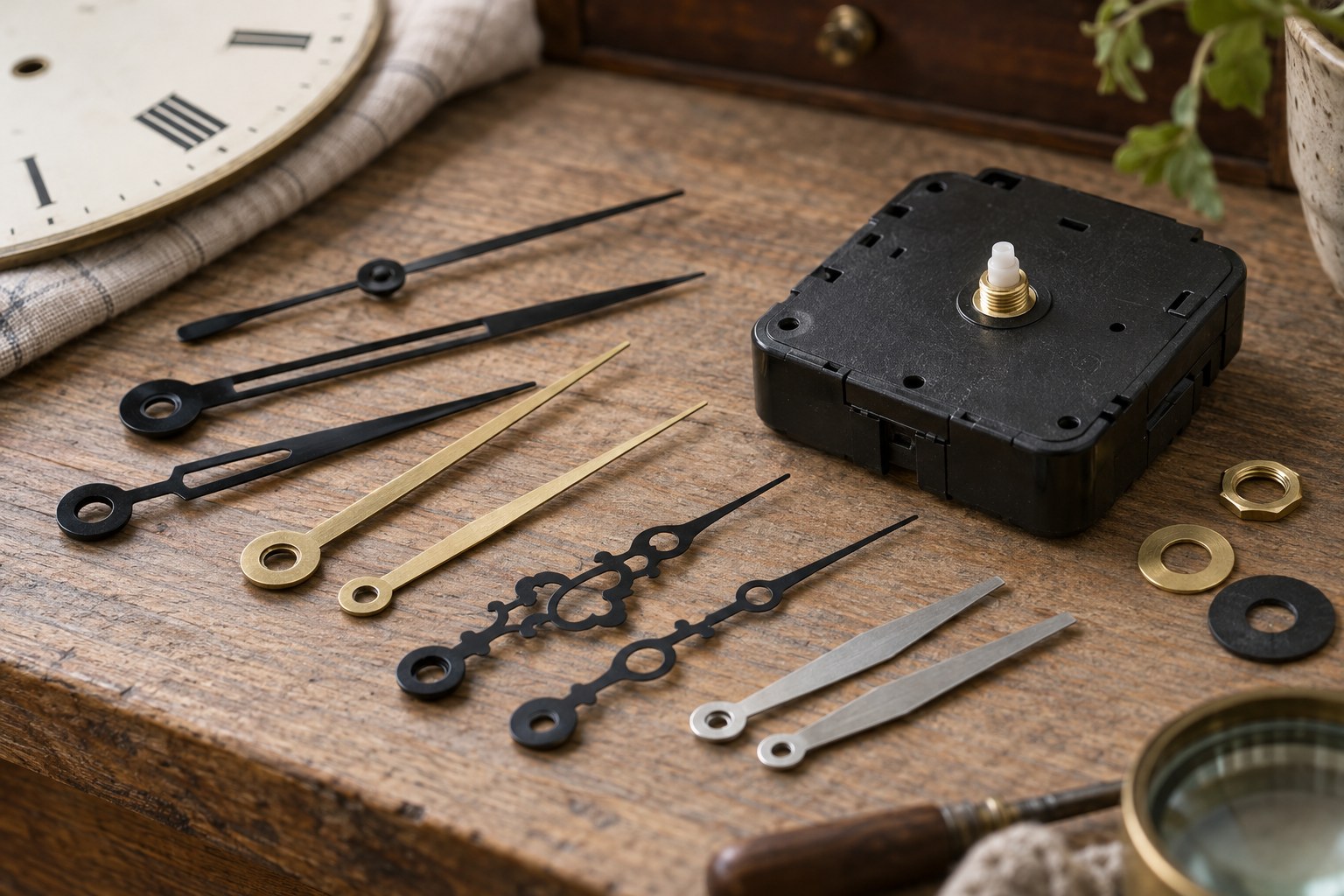
A replacement hand needs more than the right colour and length. Its centre fitting must suit the particular movement. Some quartz arrangements use a shaped minute-hand hole and retaining nut, while others use press fittings. Photograph the original arrangement before removing anything, and follow the instructions for that modern battery clock with its battery removed.
Do not enlarge a hole or squeeze it smaller because a new hand nearly fits. A loose or distorted connection can look convincing while failing to hold its position. If the fitting is unclear, ask for a movement and hand set explicitly sold as compatible.
Measure the useful length
Measure from the mounting-hole centre to the tip, not from the end of a decorative counterweight. Compare the minute hand with the dial's minute marks and inside edge. A long tail behind the centre also needs clearance, even though it is not included in the usual centre-to-tip measurement.
Lay a paper outline of the proposed hands over a life-size dial drawing. Check that the hour hand remains recognisable and that neither tip disappears beneath a deep bezel. The mock-up answers a visual question; it does not establish that the movement can drive the hand's weight or that the attachment fits.
Match the complete set
Check the supplier's permitted hand length and weight for the chosen movement. A large ornamental hand may require a different movement even if its hole shape is familiar. Confirm second-hand compatibility separately, including whether one is needed at all for the design.
Retain the fitting instructions and keep each supplied washer or nut identified. During assembly, do not substitute an apparently similar part from another kit without confirmation. Once fitted as directed, inspect the hand stack from the side and use the approved setting method to check for contact before powering the clock.