Map the available wall
Begin with the wall area between objects, rather than the full width of the room. A door opened against the wall, a tall plant or the edge of a cupboard can reduce the space that is actually available. Write down the width and height of that clear patch. Include the likely swing of doors and the position of curtains when drawn. If the clock will sit above furniture, measure from the furniture itself; a low sideboard and a tall dresser create very different viewing conditions.
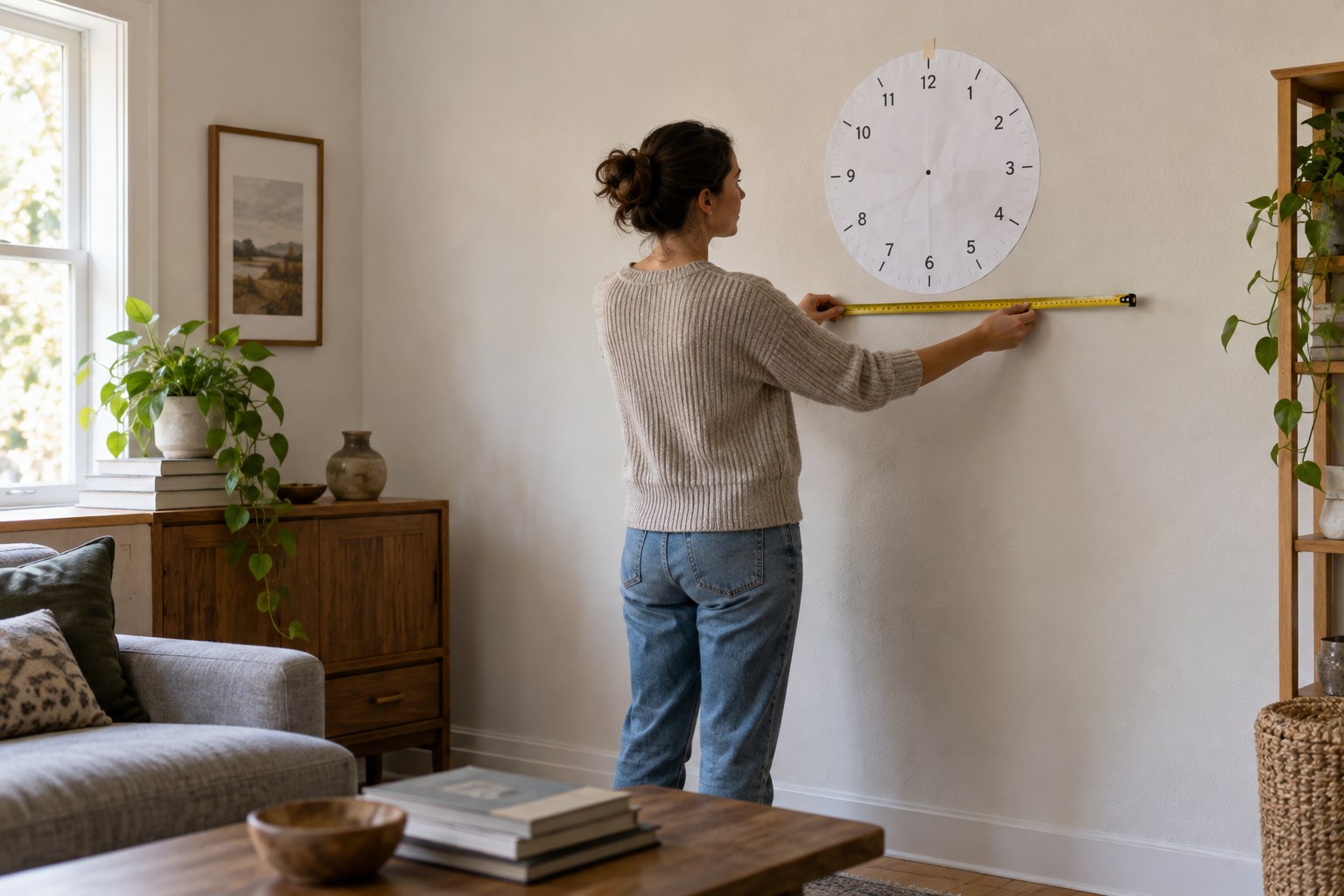
Make a full-size stand-in
Use plain paper to represent the advertised outside dimensions. For a round clock, cut a circle; for an irregular design, include the longest projections rather than only the central dial. Place it temporarily using a method suitable for your wall finish, or ask someone to hold it. Stand at the doorway and sit in the chair from which you will read it. Add a second, smaller circle to show the visible dial if the frame is broad. This catches a common surprise: a large clock whose readable area is much smaller than expected.
Leave room for fitting and upkeep
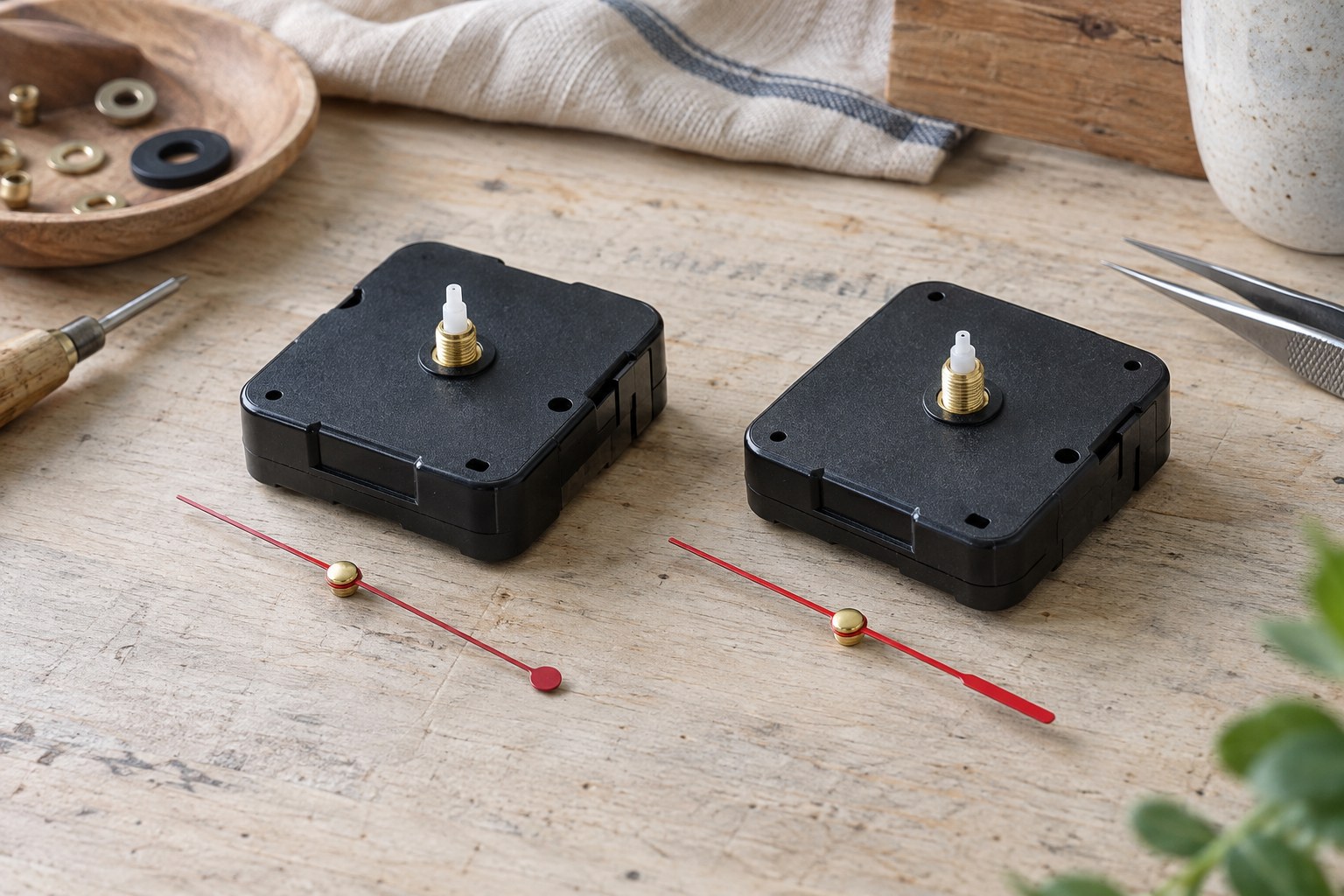
Measure the case depth and any rear projection if the location is beside a door or along a narrow passage. Check how the hanging slot engages with its fixing; some designs need to be lifted above their final position before they can settle onto the hook. Leave enough clearance to do that safely. Also decide how you will take the clock down for a battery change. A size that only just fits between shelves may be awkward to maintain. Record the intended position with a photograph and keep your measurements beside the product specification.