Choose the right starting point
Work with a modern battery quartz clock whose construction is documented and whose face is intended to be accessible. A vintage dial, uncertain luminous coating or fragile printed surface is not a blank canvas. If originality or material safety is unclear, keep the existing face intact and make a separate project instead.
Photograph the complete clock before preparing a design. Note what you want to improve: contrast, number size, colour or alignment with the room. One clear purpose helps prevent a decorative change from making the time harder to read.
Map the fixed features
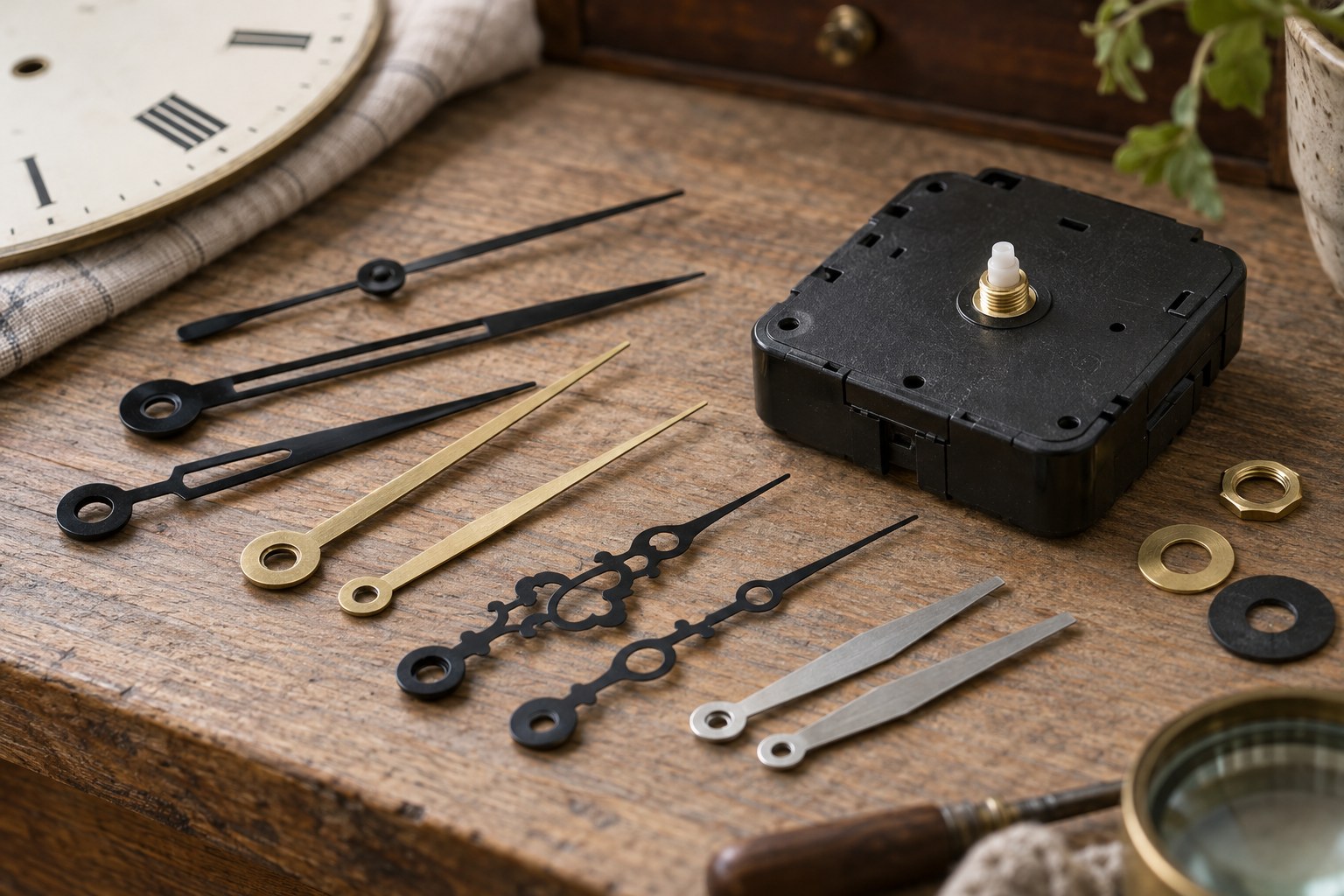
Measure the visible face and mark its centre on a paper drawing. Include the bezel overlap, any raised features and the sweep of the longest hand. The available design area may be much smaller than the outside case diameter. A numeral placed beneath the rim can look correct on paper but disappear in the assembled clock.
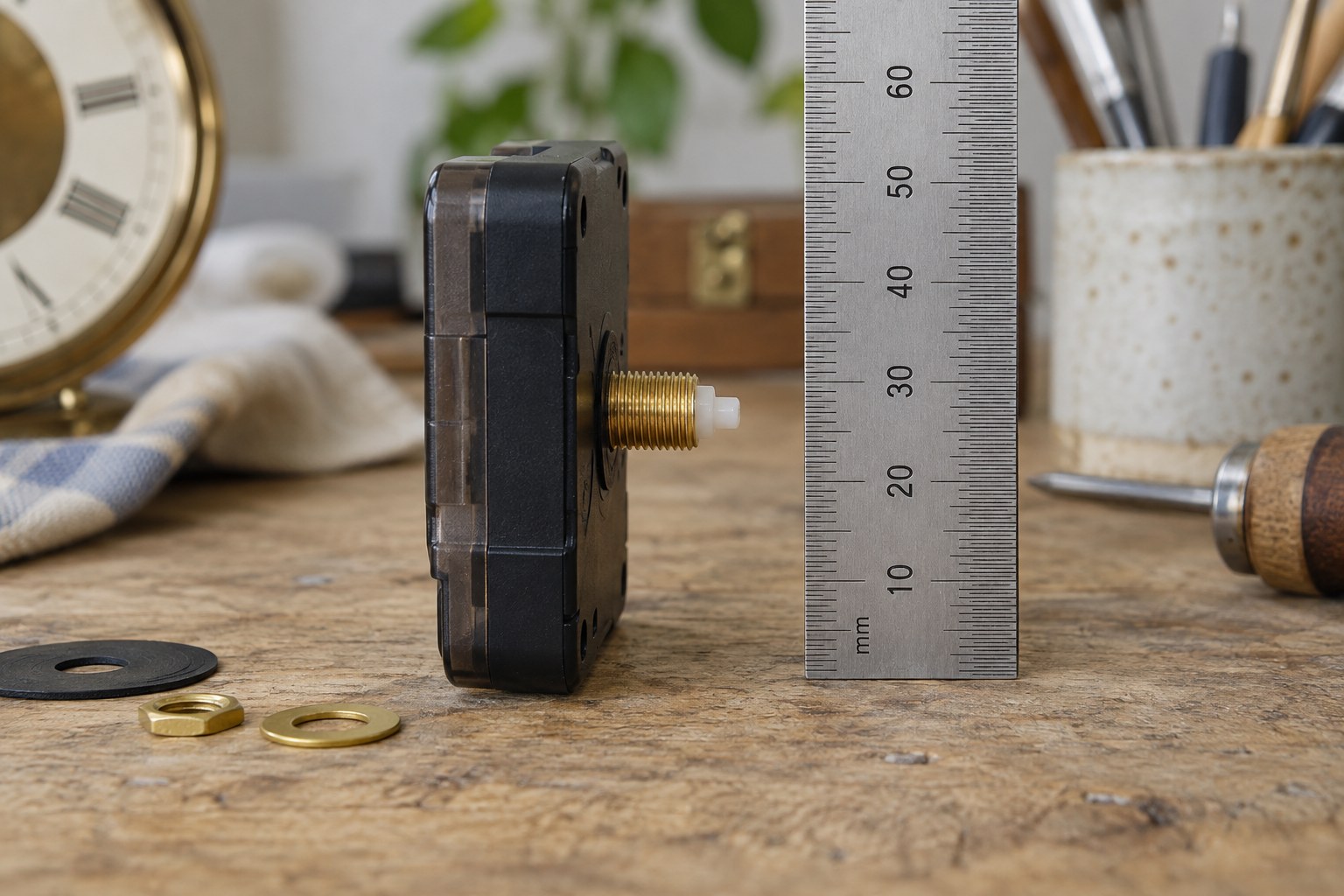
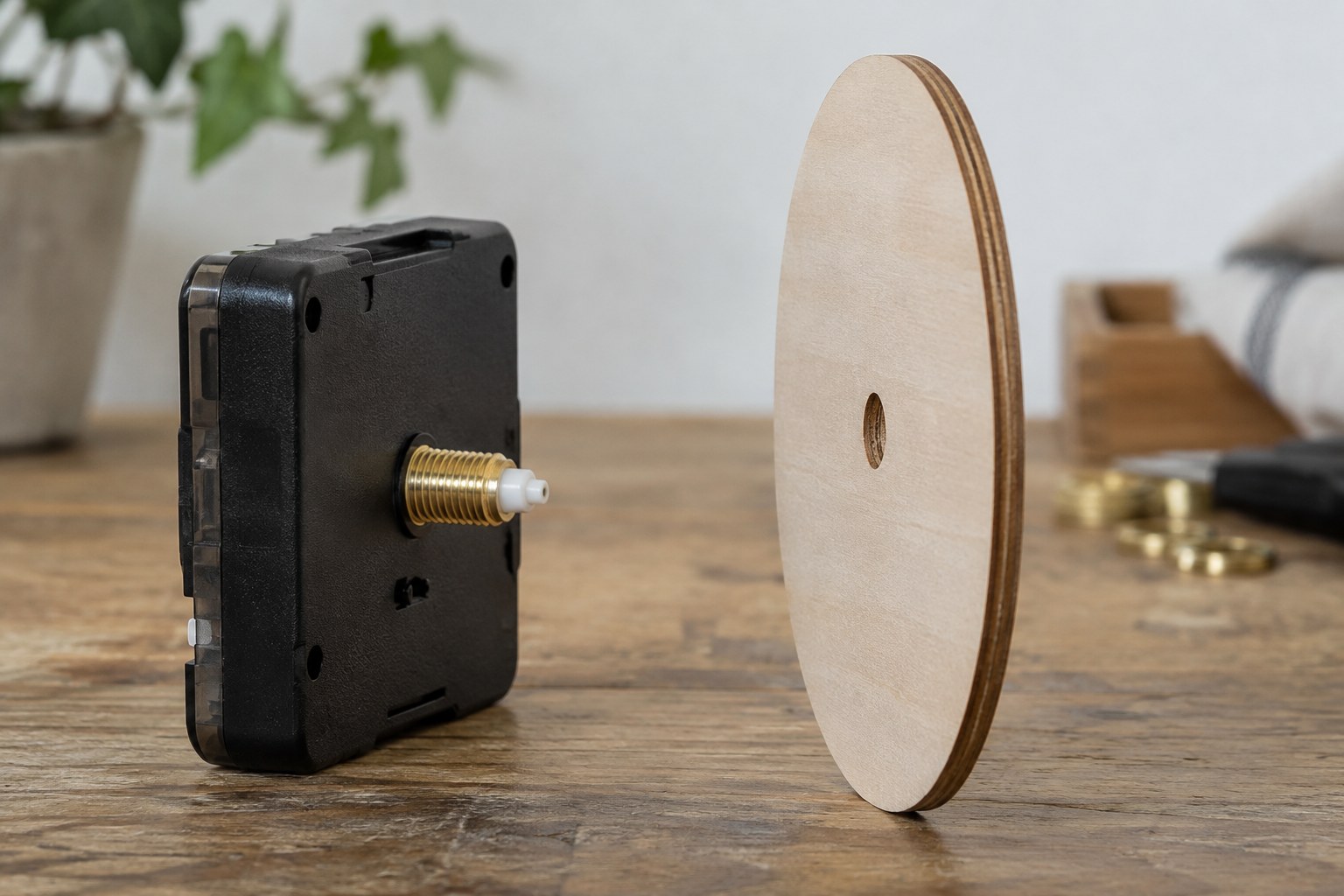
Plan for the material thickness as well as the printed design. An added layer can alter the fixing stack or reduce hand clearance. Ask the movement supplier about any change that affects its specified fit, and avoid building decoration around the shaft where it can catch moving parts.
Decide how it comes apart
Find the instructions for accessing the face and identify which pieces must be removed. With the battery out, only proceed if you have the suitable tools and can release parts without levering against delicate surfaces. Keep a labelled tray ready and take photographs of each stage for your own reassembly record.
Keep a route back
Before dismantling, decide how the original dial will be stored and how the update can be undone. Test colours and proportions with a full-size mock-up first. Ordering or printing the final face after that review is less wasteful than discovering that a favourite pattern hides both hands when viewed across the room.