Start with its footprint
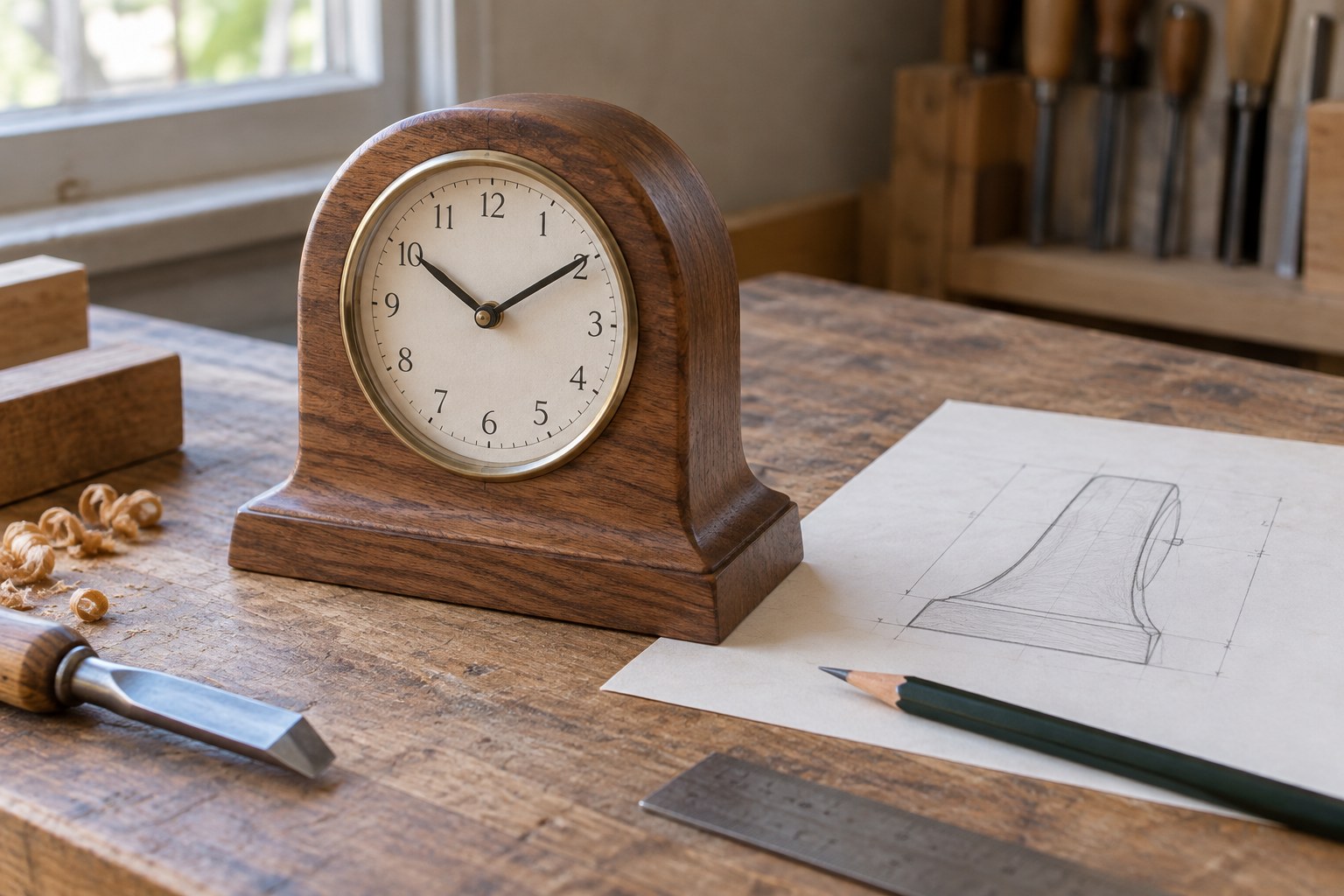
Draw the proposed base at actual size and place the outline on the desk. Allow room for the keyboard, lamp and the movement of your hands. A clock squeezed behind cables may be difficult to read and easily knocked whenever the workspace is tidied.
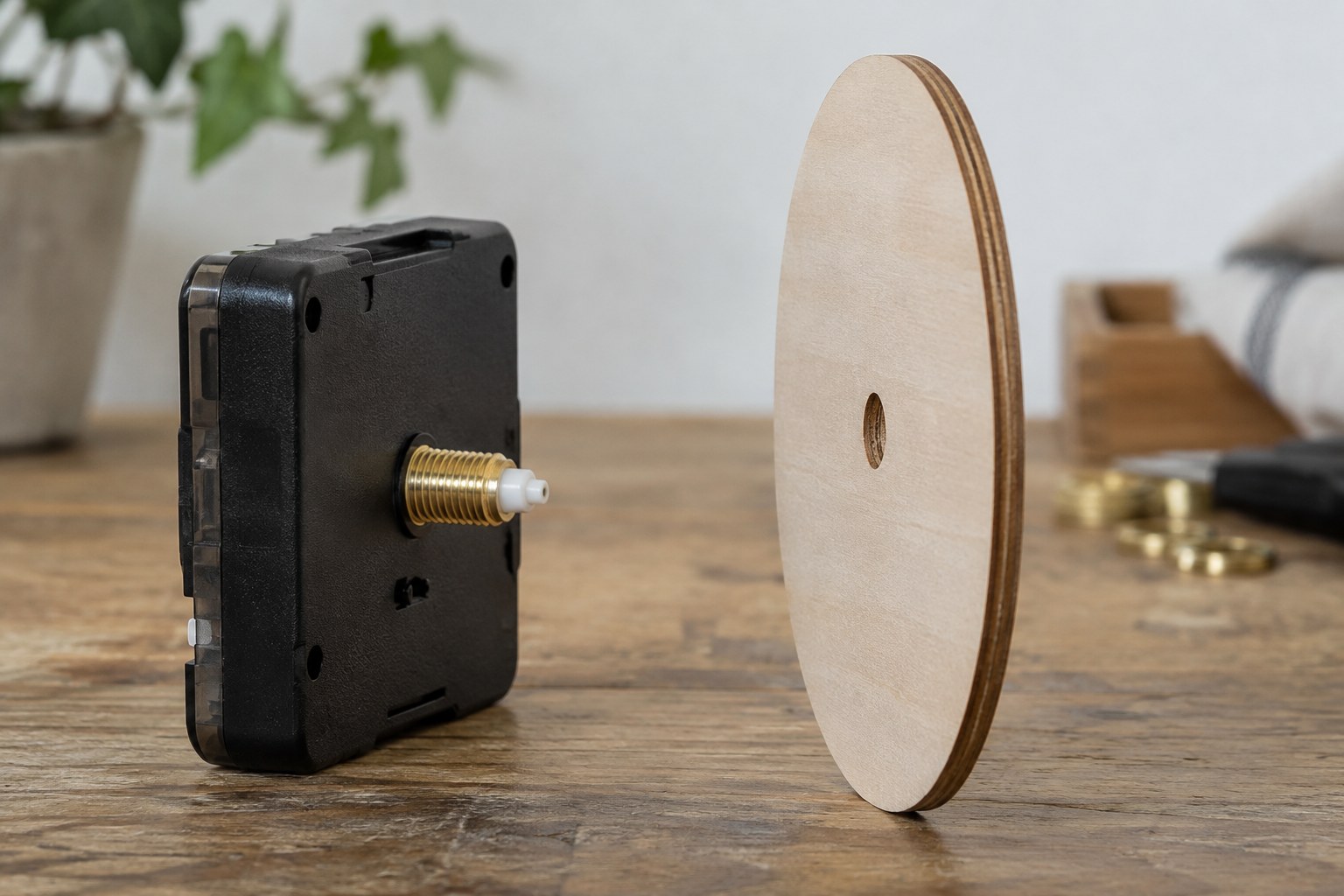
Consider the finished weight distribution, including the movement and any cover. A tall face on a narrow base can be unstable even when the empty stand appears adequate. For a first build, a purpose-made desk-clock blank or stand with documented assembly requirements is easier to assess than an improvised joint.
Choose the viewing angle
Prop a paper dial securely at the proposed angle and sit in the usual working position. Check reflections from the window and desk lamp. A face tilted attractively for a photograph may be less readable from a low chair, particularly if the rim partly hides the lower numbers.
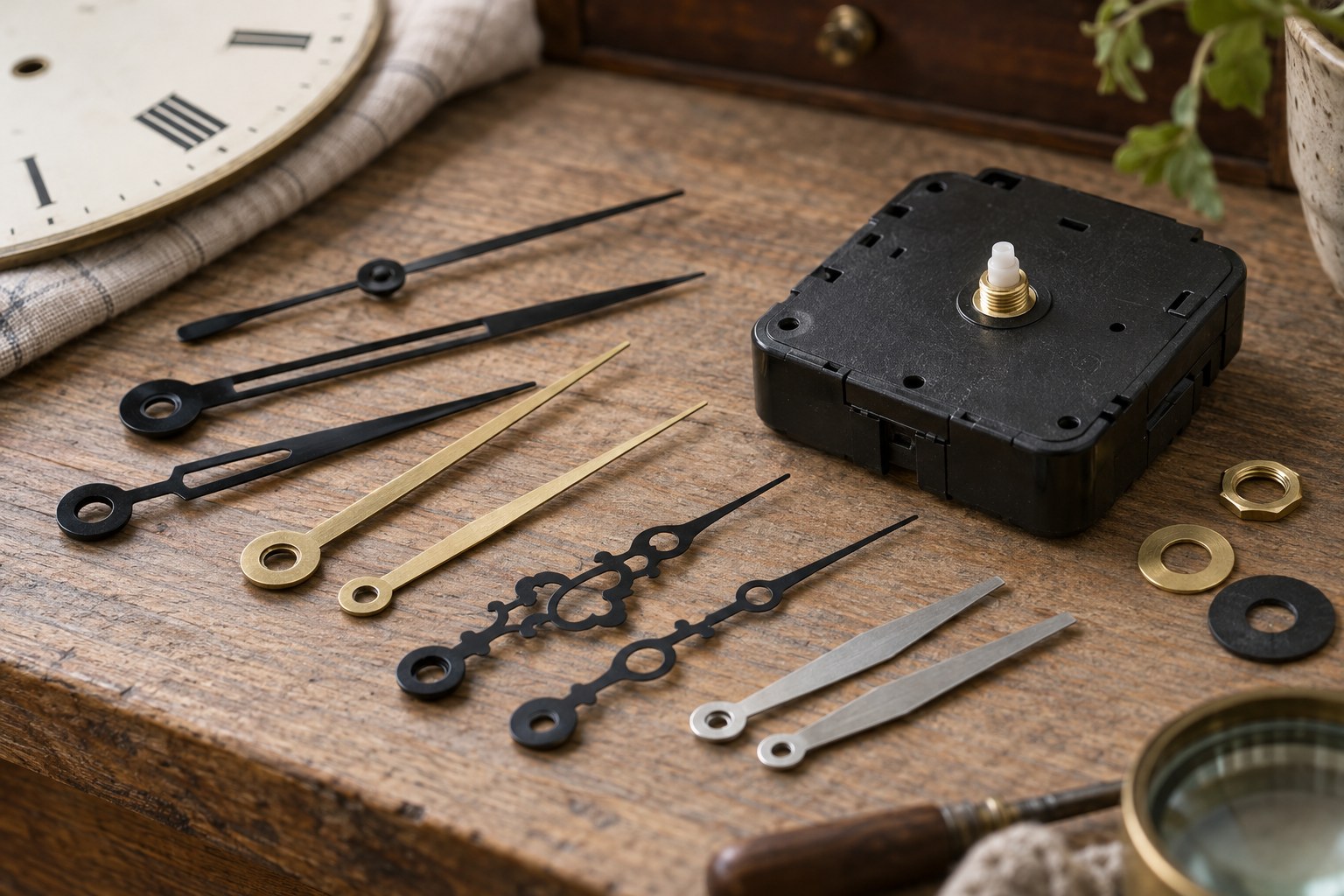
The tilt must also suit the movement and mounting instructions. Do not assume every mechanism is intended to operate at any angle. Keep the movement reference and the stand design together so that an aesthetic decision does not become an untested mechanical assumption.
Make maintenance possible
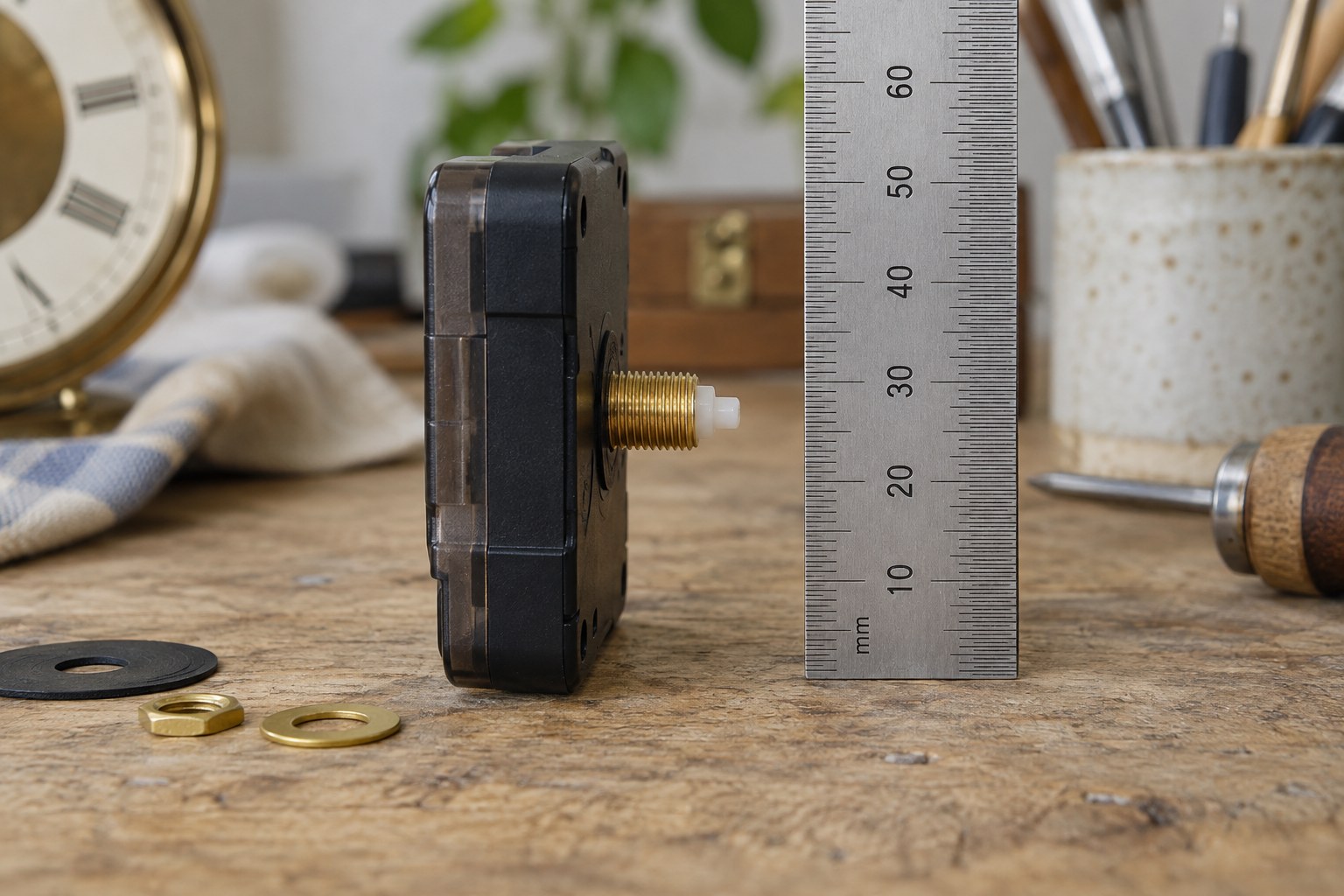
Plan access to the battery and time-setting control without taking the stand apart. Leave enough space to remove the battery cover normally; a cable slot or decorative brace should not block it. Use the required fastenings and avoid relying on felt or paper decoration to conceal an insecure connection.
Assemble and run the clock on a clear surface before moving it to the desk. Check that ordinary nearby movement does not make it rock or slide, and that the base sits flat. If stability is uncertain, change the design before use rather than adding loose weights which may shift or fall out later.